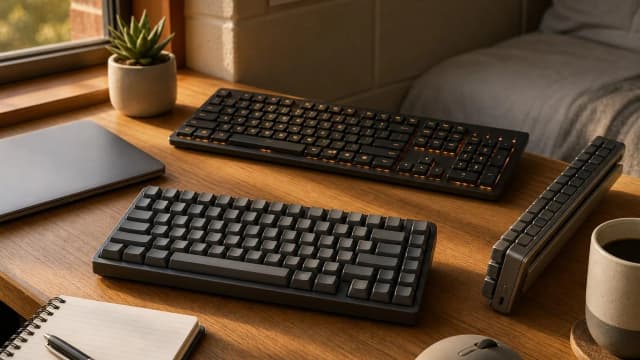


Best Quiet Mechanical Keyboards for a Dorm (2026)
The constraint is not typing feel. It is a roommate asleep three feet away and a silent library floor at 1am. Scored on the four noise-control features manufacturers actually publish -- because the one lab that measures decibels now paywalls the numbers.
This article contains affiliate links. We may earn a commission at no extra cost to you. Learn more
Featured in this Guide
NuPhy
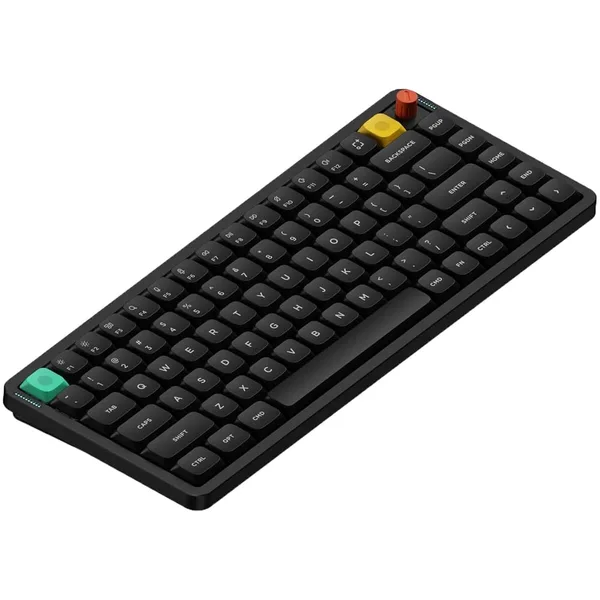
Air75 V3 (Gateron Nano Blush silent linear)
- •Named best quiet keyboard by RTINGS with the silent Blush Nano switches, and that is the configuration sold, ,
Lofree
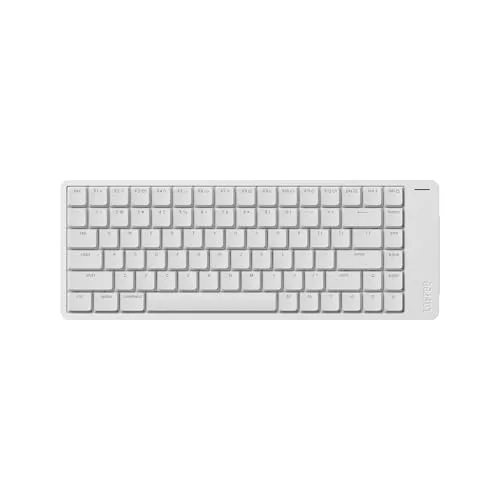
Flow 2 84 (Void silent linear)
- •Five dampening layers, aluminum case, factory-lubed switches and stabilizers, and a silent linear option called Void, ,
Keychron
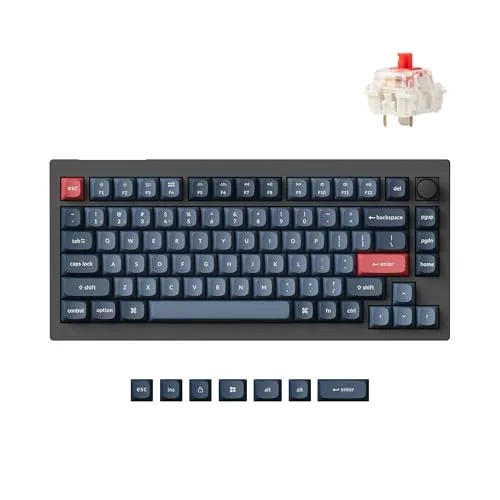
V1 Max (Gateron Jupiter Red)
- •Gasket mount, sound-absorbing foam, pre-lubed switches and screw-in stabilizers at $99.99, ,
Keychron
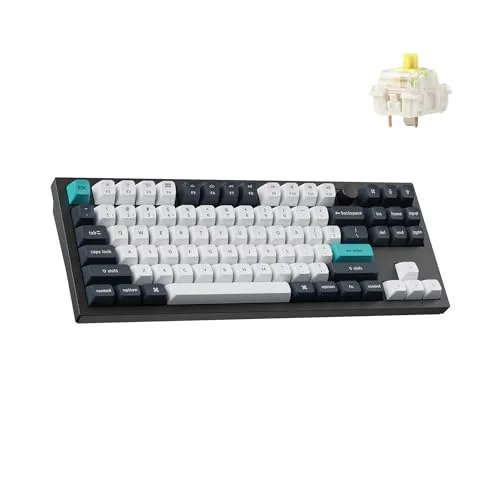
Q3 Max (Gateron Jupiter Banana)
- •Six published acoustic layers and a double-gasket design with silicone pads between the metal cases, ,
EPOMAKER
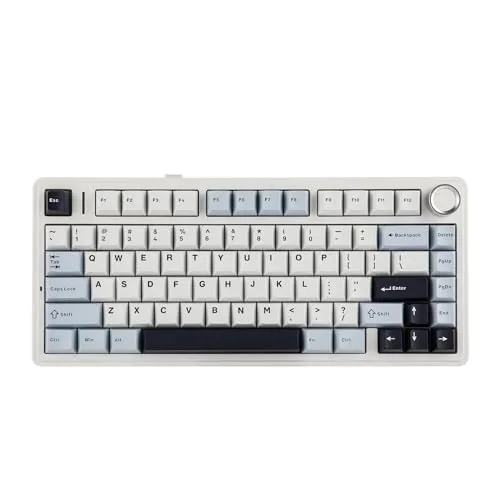
x Aula F75 (LEOBOG Reaper linear)
- •Five damping layers and a gasket structure for a $79.99 list price, with documentation you should verify on arrival, ,
Keychron
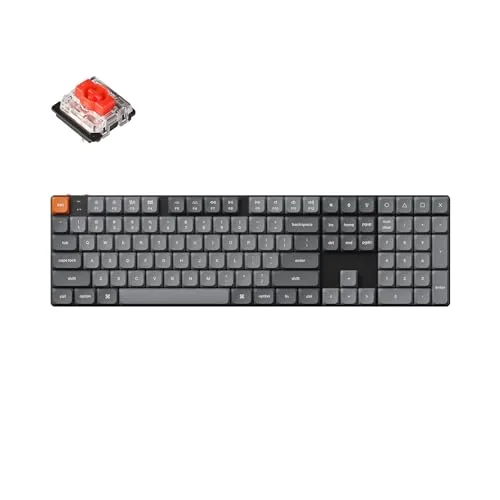
K5 Max (low-profile Gateron Red)
- •The only full-size board here, and the one with the fewest published noise-control features, ,
The Short Answer
Buy the NuPhy Air75 V3 in the Blush nano switch, at $139.95. RTINGS names it the best quiet keyboard it has tested, and that silent switch is the version sold. On a budget, the Keychron V1 Max at $99.99 has the same acoustic build. Check the switch name before you pay.
Most keyboard guides rank typing feel and treat noise as a footnote. In a shared dorm room that ordering is backwards. You are typing a paper at 1am with someone asleep three feet away. Or you are on a silent library floor where a clacky spacebar earns you a look.
So the DGH Dorm Quiet Build Score below ranks these six boards on the noise-control features their makers publish, plus what RTINGS says in public about typing noise. It measures published construction, not sound, and every factor is explained under the chart.
The composite is a weighted formula over four factors: silent switch path at 35%, acoustic build at 30%, desk footprint at 20% and RTINGS' public quiet standing at 15%. Every factor was checked in September 2026. Compared to a decibel ranking, this calculation rewards what a maker commits to in writing.
Head to head on published noise control
Tech Charging
Chart
 DormGearHQ.com
ASUS ZenScreen MB16NCG
$266.99Must BuyCheck price
Canon MegaTank G3270 All-in-One Wireless Inkjet Printer, Home Use, Print, Scan and Copy
$159.99Must BuyCheck price
iPad Air 11-inch (M4)
$749.00Must BuyCheck price
Keychron K2 Pro
$119.00Must BuyCheck price
MacBook Air M5 13-inch
$1259.99Must BuyCheck price
Microsoft Surface Pro 11
$1249.99Must BuyCheck price
Best Overall: NuPhy Air75 V3 (Gateron Nano Blush silent linear)
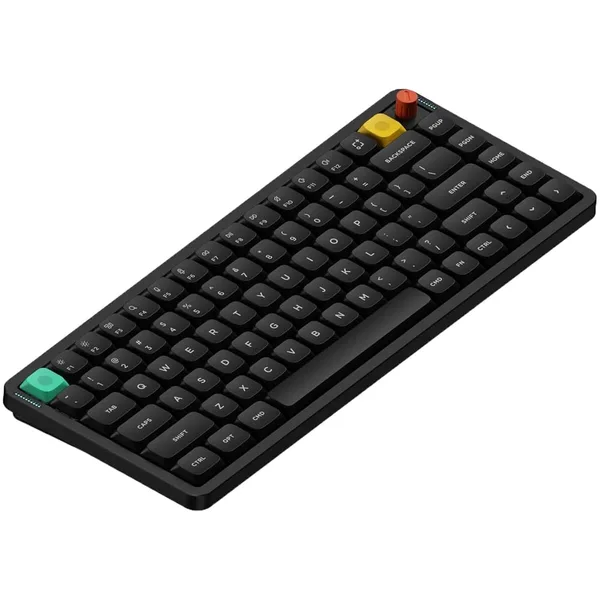
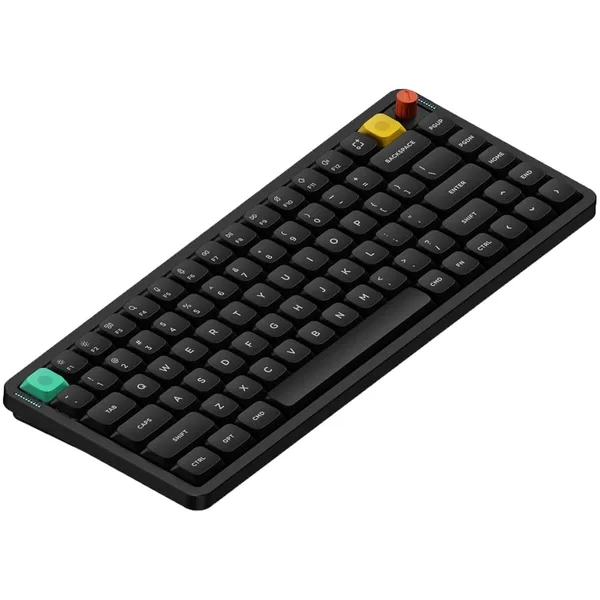
NuPhy Air75 V3 (Gateron Nano Blush silent linear)
Not scoredOnly one approved outlet (Tom's Guide, 4.5/5) has rated this board; we need two.
(Current price, subject to change)
- 75% low-profile board, 84 keys, 318.9 x 128.9 x 13.2 mm at 724 g
- Gateron Nano Blush silent linear switches fitted from the factory
- Gasket mount with aluminum top case, ABS bottom and a PC plate
- Hot-swappable sockets for Gateron low-profile 3.0 switches
- Bluetooth 5.0, a 2.4GHz receiver and USB-C wired
- Double-shot PBT keycaps and an optional multifunction knob
Every board in this guide claims quiet typing. Only this one has been named the best quiet keyboard by the lab that actually measures typing loudness. RTINGS makes that call for the Air75 V3 fitted with Gateron 2.0 Blush Nano switches, and describes it as very quiet thanks to layers of internal sound-dampening material.
On most hot-swap boards, quiet is something you buy twice: the keyboard, then a set of silent switches. Here the silent linear is a factory option, and it is the version on the listing.
Versus the Keychron V1 Max (Gateron Jupiter Red), you give up screw-in stabilizers and a published pre-lube. You gain a silent switch you do not have to install, and 10 millimetres less desk.
One gap costs it on our composite. NuPhy's page publishes a gasket mount, but no internal dampening, no factory lubing and only plate-mounted stabilizers. Our acoustic-build factor counts only what the maker publishes. The formula yields 7.75 for the board, which rounds to 7.8 and puts RTINGS' quiet pick third. We still pick it first, because the lab result and the factory silent switch matter more to a sleeping roommate than a spec sheet does.
What We Love
- RTINGS names this its best quiet keyboard when paired with the silent Blush Nano switches -- the only board in this guide with that specific endorsement
- The silent switch is not a project. The listing sells the Blush nano configuration, so the board arrives quiet
- At 318.9 mm it is the shortest board here, which on a 24-inch desk is the difference between having mouse room and not
- RTINGS' review credits layers of internal sound-dampening material, so the case is doing acoustic work and not just the switch
- Three-device Bluetooth plus a receiver plus wired means one board covers the desk, the library and the lecture hall
What Could Be Better
- NuPhy does not publish whether the switches are factory-lubed, so we score that as unknown, not absent
- Stabilizers are plate-mounted, not screw-in like the aluminum Keychrons
- RTINGS says the flat nSA keycaps and compact layout take adjustment, and legends are not shine-through
- Its RTINGS decibel figure is members-only, so we cite none
The Verdict
If someone sleeps in your room, the NuPhy Air75 V3 (Gateron Nano Blush silent linear) is the answer. RTINGS measures typing loudness and calls this its best quiet keyboard with the Blush Nano switches. Our build composite puts it third at 7.8, because NuPhy's own page publishes only one of our four acoustic-build features, the gasket mount.
Best Premium: Lofree Flow 2 84 (Void silent linear)
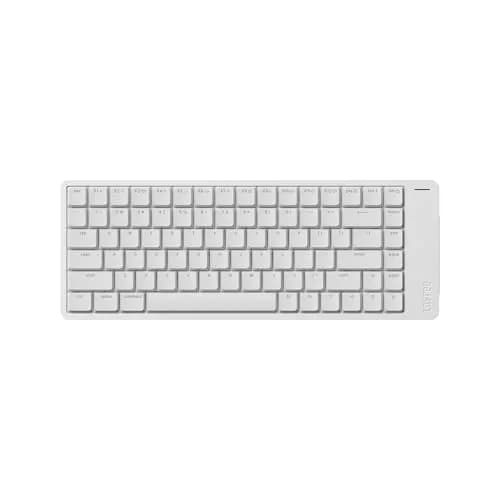
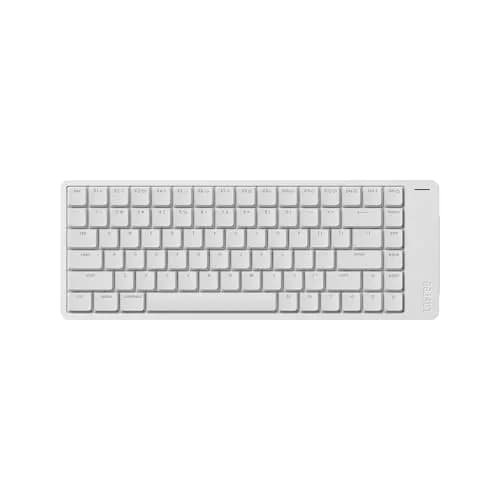
Lofree Flow 2 84 (Void silent linear)
Not scoredOnly one approved outlet (Digital Trends, 8/10) has rated the 84-key board; we need two.
(Current price, subject to change)
- 75% low-profile board, 84 keys, 341.2 x 126 x 21.5 mm at 745 g
- Void silent linear switches, described by Lofree as a silent option
- Gasket mount tuned around five layered dampening materials
- Case milled from a single block of anodized aluminum
- 2.4GHz receiver, Bluetooth 5.3 and USB-C wired
- Side touch bar for volume and screen brightness, plus four spare keycaps
This is the board to want and the board to order carefully.
Lofree publishes exactly what an acoustics-minded buyer wants to see, and says its gasket system delivers a quieter, more balanced keystroke. A gasket mount tuned around five layered dampening materials. A case milled from one block of aluminum. And a silent linear switch, Void, that Lofree itself describes as ideal for late-night writing, focused coding, or shared workspaces.
RTINGS backs the construction independently, reporting very stable factory-lubed switches and stabilizers and a gasket mount that adds a slight cushion. It also prints the warning that makes this section necessary: somewhat loud typing noise if you choose the tactile switch option.
So the model name does not tell you whether the board is quiet. The switch does. Two people can buy a Flow 2 and get opposite results.
Versus the NuPhy Air75 V3 (Gateron Nano Blush silent linear) you gain aluminum, an extra dampening layer and published pre-lubing. You pay $10.99 more on Amazon than Lofree charges directly for the Void configuration, and you take on documented Bluetooth complaints from owners.
What We Love
- Lofree describes the Void switch as ideal for late-night writing, focused coding, or shared workspaces -- the manufacturer naming the dorm case directly
- Five layered dampening materials inside a single-block aluminum case is the most acoustic engineering per dollar among the low-profile boards here
- RTINGS found very stable factory-lubed switches and stabilizers, which is the step most boards at this price skip
- The side touch bar gives you volume and brightness without spending desk width on a knob
What Could Be Better
- RTINGS calls typing somewhat loud with the tactile switch, so order Void, not Pulse
- Amazon charges $179.99, $10.99 more than Lofree's direct $169.00 for the Void; Lofree's $159.00 line is the Pulse tactile
- RTINGS notes minor quality-control concerns, and a 2026-09-10 owner review reports Bluetooth key repeat and dropouts
- Lofree does not say whether the stabilizers are screw-in
The Verdict
Want the quiet board to also be the nicest object on your desk? The Lofree Flow 2 84 (Void silent linear) is that, with a condition. Five dampening layers, an aluminum case and factory-lubed switches put it first on our build composite at 8.1. But RTINGS flags the tactile version as somewhat loud. Order the Void variant, and check the colour reads Silver with Silence.
Best Value: Keychron V1 Max (Gateron Jupiter Red)
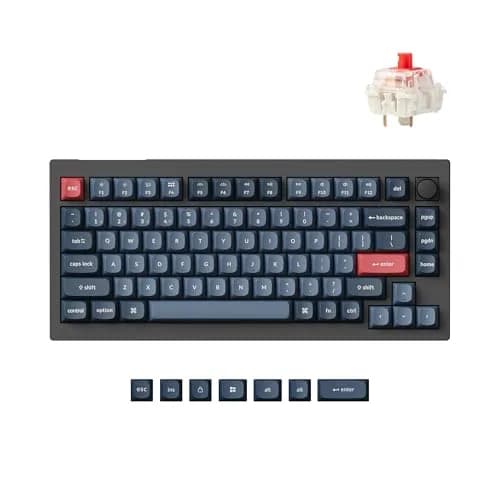
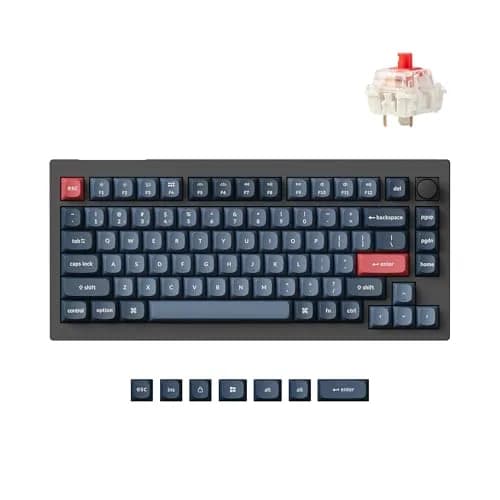
Keychron V1 Max (Gateron Jupiter Red)
Not scoredOnly one approved outlet (Trusted Reviews, 4/5) has rated this board; we need two.
(Current price, subject to change)
- 75% board with knob, 148.7 x 328.5 mm at 770 g in an ABS case
- Gasket mount with sound-absorbing foam and a PC plate
- Pre-lubed Gateron Jupiter Red linear switches, the quietest factory option
- Screw-in PCB stabilizers
- Hot-swappable sockets, QMK firmware and the browser-based Launcher
- 2.4GHz, Bluetooth 5.1 across three devices, and USB-C wired
Spend the difference versus the Q3 Max on silent switches and a mousepad.
Keychron publishes the same four noise-control features on both boards, and says the V1 Max's build delivers a softer and quieter typing experience. Gasket mount. Sound-absorbing foam. Pre-lubed Gateron Jupiter switches. Screw-in PCB stabilizers. The $130 you save costs you milled aluminum, which mostly means heft and prestige.
RTINGS reviewed the V Max family and reports that typing on these keyboards is also very quiet, with layers of sound-dampening foam inside the case. It also lists faint, occasional stabilizer rattle as a con, which is the honest ceiling on a plastic board.
Two things to go in knowing. The New offer we read ships from Amazon and is sold by Keychron Store. A cheaper Used - Like New offer from a third-party seller sits directly beneath it, so check which one your cart is holding. And reviewers on Keychron's own site report key chatter developing inside the first year, with repeated letters. That is a minority of reviews, but it is not nothing.
The board does not ship silent. Hot-swap enables a no-solder switch upgrade, so it ships ready to become silent.
What We Love
- Carries all four acoustic features the $229 Q3 Max has -- gasket mount, internal foam, pre-lubed switches, screw-in stabilizers -- for $99.99
- RTINGS says typing on the V Max family is also very quiet, with layers of sound-dampening foam inside the case
- The configuration sold is the Jupiter Red linear, the quietest of Keychron's three factory options rather than the loudest
- 328.5 mm in a 75% layout leaves real mouse room, and 770 g is light enough to move to the library
- Hot-swap plus QMK means a $25 set of silent switches later turns this into a genuinely silent board
What Could Be Better
- RTINGS says south-facing RGB and no shine-through legends make keys hard to read in dark rooms
- Owners on Keychron's page report key chatter and repeated letters within a year, and one calls it almost unusable
- RTINGS notes faint, occasional stabilizer rattle on this family
- No factory silent switch, and ABS does less acoustic work than aluminum
The Verdict
On a student budget and unwilling to give up the build? The Keychron V1 Max (Gateron Jupiter Red) carries every acoustic feature Keychron puts in its $229 aluminum board, for $99.99. Gasket mount, sound-absorbing foam, pre-lubed switches, screw-in stabilizers. Our composite reads 7.9, above the Q3 Max, because 75% fits a dorm desk better than TKL.
Best Build: Keychron Q3 Max (Gateron Jupiter Banana)
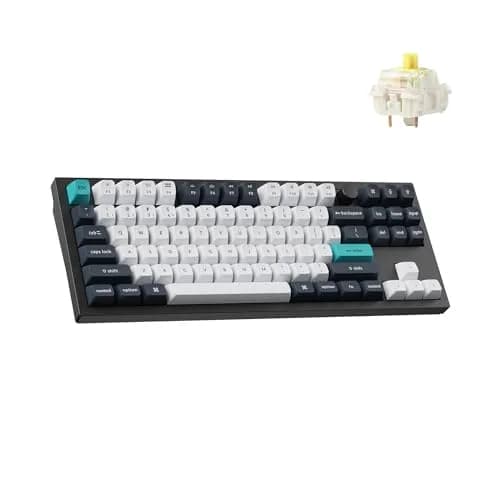
Keychron Q3 Max (Gateron Jupiter Banana)
(Current price, subject to change)
- TKL aluminum board, 137 x 365 mm at 1,770 g
- Double-gasket design with silicone pads between the top and bottom cases
- Six published internal layers: sound-absorbing foam, IXPE, PET film, latex pad, bottom case foam, bottom case PET
- Pre-lubed Gateron Jupiter switches and screw-in PCB stabilizers
- Hot-swappable PCB, QMK firmware, Launcher web configurator
- 2.4GHz, Bluetooth 5.1 across three devices, USB-C wired, Mac and Windows keycaps
This is the best-built board in the guide and the one most likely to disappoint a buyer who does not read the switch line.
Keychron publishes the whole acoustic stack, and it is a serious one. Six internal layers. A double-gasket structure that adds silicone pads between the top and bottom cases to reduce the resonance between the metals. Screw-in stabilizers. Pre-lubed switches. RTINGS confirms the result, reporting that typing on these boards is also very quiet.
Then look at the switch options: Red, Brown, Banana. None of them is silent. The configuration on the listing is Banana, a tactile switch with a bump you can hear.
So the honest sequence is board plus silent switches, which is about $25 more and twenty minutes with a puller.
Compared to the Keychron V1 Max (Gateron Jupiter Red) you gain milled aluminum, two more dampening layers and the double-gasket case. You pay $130 and give up 36 millimetres of desk. If your desk is 24 inches, that second trade is the one that decides it.
What We Love
- Six named internal acoustic layers is the deepest published dampening stack in this guide by a clear margin
- The double-gasket design adds silicone pads between the metal cases specifically to kill the resonance that makes cheap aluminum boards ring
- RTINGS reports typing on the Q Max family is also very quiet, thanks to multiple layers of sound-dampening material inside the case
- Pre-lubed switches and screw-in stabilizers mean the two loudest failure points are addressed before it ships
- 1,770 g of CNC aluminum does not slide, flex or skip, and will outlast the degree
What Could Be Better
- Only Jupiter Red, Brown and Banana are offered, so quiet takes a second purchase
- The version sold is the Banana tactile, the loudest of the three
- At 365 mm the TKL layout takes desk space a 75% board leaves for the mouse
- RTINGS notes somewhat inconsistent stabilizers on this family
The Verdict
Typing six hours a day and buying once? The Keychron Q3 Max (Gateron Jupiter Banana) is the most acoustic engineering here, undercut by the switch it ships with. Six dampening layers and a double-gasket case are best in class. But no silent switch is offered, and the version sold is the Banana tactile. It scores 7.5, below the $99.99 V1 Max, because TKL costs desk.
Best Budget: EPOMAKER x Aula F75 (LEOBOG Reaper linear)
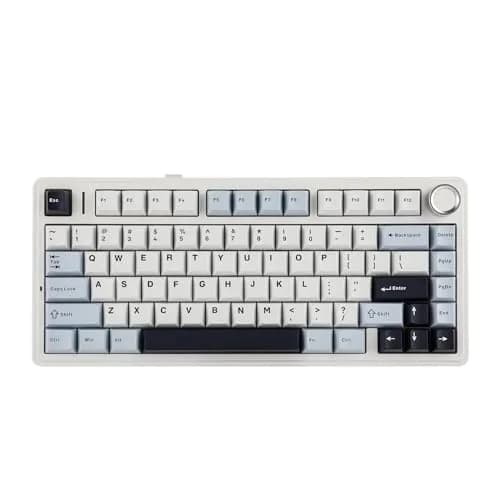
EPOMAKER x Aula F75 (LEOBOG Reaper linear)
Not scoredOnly one approved outlet (Laptop Mag, 4/5) has rated this board; we need two.
(Current price, subject to change)
- 75% board with knob, 322.7 x 143.2 x 43.1 mm at about 1,023 g
- Five damping layers: two PORON, an IXPE switch pad, a PET sound pad, a bottom silicone pad
- Gasket structure, described by EPOMAKER as reducing typing noise and resonance
- Factory-lubed LEOBOG Reaper linear switches
- Full-key hot-swap sockets on a 1.2 mm slotted PCB
- Bluetooth, 2.4GHz and USB-C wired, with a 4,000 mAh battery
If eighty dollars is the ceiling, this is the board. Read the warning first.
EPOMAKER publishes the damping stack in detail: two layers of PORON foam, an IXPE switch pad, a PET sound-enhancement pad and a bottom silicone pad. It describes the gasket structure as significantly reducing typing noise and resonance. The LEOBOG Reaper switch is listed as a factory-lubed linear.
RTINGS bought and tested the 96% AULA F99 and lists the F75 as a smaller 75% version of the same keyboard, so its findings here come from the F99. Summing up office use, it writes that the F99 and F75 are "also on the louder side despite the linear switches and layers of dampening material inside the case." It also rates build quality as only decent, and flags the line for extremely inconsistent retail documentation.
A cheap board with five dampening layers is a good deal. One the lab still calls louder, with spec sheets that disagree, is a coin flip to verify on arrival.
Compared to the Keychron V1 Max (Gateron Jupiter Red) you save twenty dollars and give up screw-in stabilizers, Linux support and a Mac configurator.
What We Love
- Five published damping layers at a list price under eighty dollars is not what this bracket usually buys
- EPOMAKER states the gasket structure is there for significantly reducing typing noise and resonance
- The LEOBOG Reaper is a factory-lubed linear, so dry scratchy stems -- the cheapest board's loudest flaw -- are handled before it ships
- Full-key hot-swap means a $25 set of silent switches makes this the cheapest genuinely silent board in the guide
- 322.7 mm in a 75% layout keeps the footprint near the NuPhy while costing about half as much
What Could Be Better
- RTINGS calls the F99 and F75 on the louder side despite linear switches and internal dampening, with no switch condition
- RTINGS rates build quality only decent, calls the software unintuitive and Windows-only, and flags extremely inconsistent retail documentation
- No factory silent switch: the Reaper is a quiet linear, not a silent one
- At about 1,023 g it is the second-heaviest board here, after the 1,770 g Q3 Max, and the case is 43.1 mm tall
The Verdict
If eighty dollars is your ceiling, the EPOMAKER x Aula F75 (LEOBOG Reaper linear) is the honest pick, with a warning attached. Five damping layers, a gasket structure and factory-lubed linears at a $79.99 list price is real engineering. But RTINGS calls the F99 and F75 on the louder side anyway, and flags the line for extremely inconsistent retail documentation. Check what arrives.
Only If You Need a Numpad: Keychron K5 Max (low-profile Gateron Red)
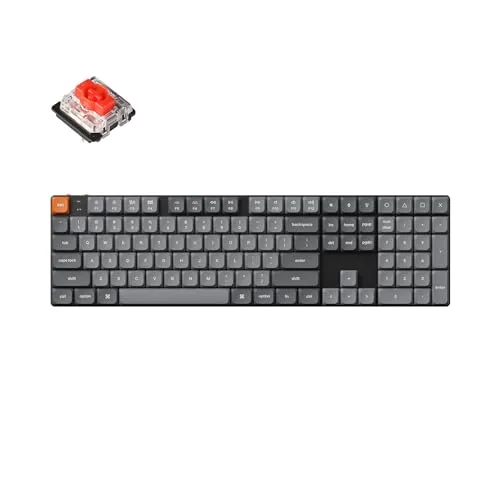
Keychron K5 Max (low-profile Gateron Red)
Not scoredNo approved outlet has published a rating for this board; we need two.
(Current price, subject to change)
- Full-size 108-key low-profile board, 424 x 119 mm at 720 g
- IXPE acoustic foam plus latex foam inside an ABS and aluminum frame
- Low-profile Gateron Red linear switches, 31% slimmer than normal profile
- Redesigned stabilizers
- 2.4GHz, Bluetooth 5.1 across three devices, USB-C wired
- Low-profile double-shot PBT keycaps for macOS and Windows
This board is in the guide because RTINGS names it, and last in the guide because of what Keychron does not claim for it. It scores 3.3 on the DGH Dorm Quiet Build Score.
The good part is real. Keychron publishes advanced IXPE acoustic foam coupled with resilient latex foam, and states it is there for silent keystrokes. RTINGS points at the K5 Max in its quiet-keyboard article as another good silent keyboard option, crediting wireless as its edge.
Now the gaps, all of them from Keychron's own page. No gasket mount is claimed. The stabilizers are described as redesigned, not screw-in. There is no factory silent switch, only Red and Brown. And hot-swap is sold as a separate backlight variant, which the listing we read does not name.
So on this board, the switch you buy is probably the switch you keep.
The footprint settles it. 424 mm against 328.5 mm for the Keychron V1 Max (Gateron Jupiter Red) is four inches of desk, and on a 24-inch dorm desk four inches is your mouse.
What We Love
- RTINGS names it in its quiet-keyboard article as another good silent keyboard option, with wireless as its advantage over the top gaming pick
- Keychron publishes IXPE acoustic foam plus resilient latex foam, described as being there for silent keystrokes
- The low-profile switch is 31% slimmer than normal profile, which shortens the travel that produces bottom-out noise
- It is the only board here with a numpad, which matters if your major lives in a spreadsheet
- Mac and Windows keycaps in the box, three-device Bluetooth, and a receiver plus wired option
What Could Be Better
- At 424 mm it is by far the largest board here, which crowds a 24-inch dorm desk
- Hot-swap is a separate variant, and the listing we read documents neither hot-swap nor a silent switch
- No published gasket mount, and the stabilizers are 'redesigned', not screw-in, unlike the V1 Max
- Only 13 units were in stock when we read the listing
The Verdict
Need a numpad every day? That is the one reason to consider the Keychron K5 Max (low-profile Gateron Red). On published noise control it finishes last at 3.3. Keychron claims no gasket mount, no factory silent switch and no screw-in stabilizers for it. The acoustic foam is real, and RTINGS does name it in its quiet article. But 424 mm on a dorm desk is a daily cost.
How We Score: DGH Dorm Quiet Build Score
DGH Dorm Quiet Build Score
Score Formula
score = 0.35 * silent_switch_path + 0.30 * acoustic_build + 0.20 * desk_footprint + 0.15 * lab_quiet_standingScore Factors
- Route to a Silent Switch (35%)10 if the maker sells a factory silent switch for the board. 6 if not, but the board is hot-swappable. 2 if neither is documented. Weighted highest because the switch moves typing noise most.
- Published Acoustic Build (30%)2.5 points each, from the maker's own spec page: gasket mount, internal dampening, factory pre-lubed switches, screw-in stabilizers. An unpublished feature scores zero, which marks a documentation gap, not proof it is missing.
- Dorm Desk Footprint (20%)From the published length: 10 at 320 mm or under, 8 at 321 to 345 mm, 6 at 346 to 380 mm, 3 above 380 mm. A 24-inch dorm desk also has to hold a mouse.
- Independent Lab Quiet Standing (15%)10 if RTINGS names it a quiet-keyboard pick. 8 if RTINGS' public text calls it quiet or names it in that article. 5 if tested with no unconditional quiet claim. 2 if RTINGS calls it on the louder side.
- What this score leaves outA decibel figure. RTINGS paywalls every per-board dBA value, so no measured loudness feeds this score.
DGH Dorm Quiet Build Score — Ranked
Lofree Flow 2 84 (Void silent linear)
8.1/10Silent path 10 (factory Void) - acoustic build 7.5 (gasket, 5 layers, factory-lubed; screw-in stabs not published) - footprint 8 (341.2 mm) - lab standing 5 (quiet claim is switch-conditional).
Keychron V1 Max (Gateron Jupiter Red)
7.9/10Silent path 6 (hot-swap only) - acoustic build 10 (all four published) - footprint 8 (328.5 mm) - lab standing 8 (RTINGS calls the V Max family very quiet).
NuPhy Air75 V3 (Gateron Nano Blush silent linear)
7.8/10Silent path 10 (factory Blush Nano) - acoustic build 2.5 (maker page publishes the gasket only) - footprint 10 (318.9 mm) - lab standing 10 (named pick).
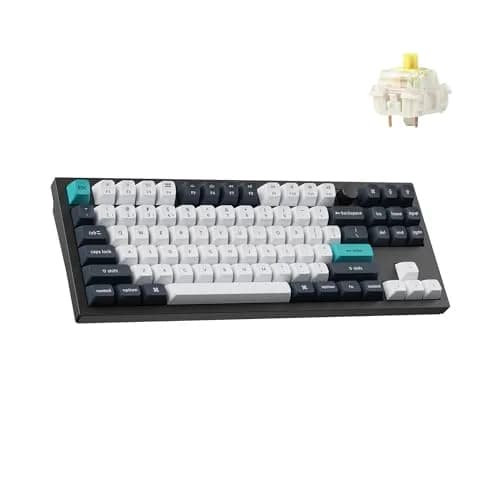
Keychron Q3 Max (Gateron Jupiter Banana)
7.5/10Silent path 6 (hot-swap only) - acoustic build 10 (six layers plus double gasket) - footprint 6 (365 mm TKL) - lab standing 8 (RTINGS calls the Q Max family very quiet).
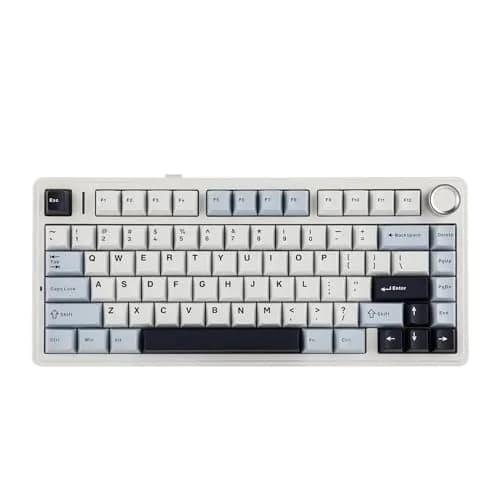
EPOMAKER x Aula F75 (LEOBOG Reaper linear)
6.3/10Silent path 6 (hot-swap) - acoustic build 7.5 (gasket, 5 layers, factory-lubed; screw-in stabs unpublished) - footprint 8 (322.7 mm) - lab standing 2 (RTINGS, testing the F99, calls the line louder).
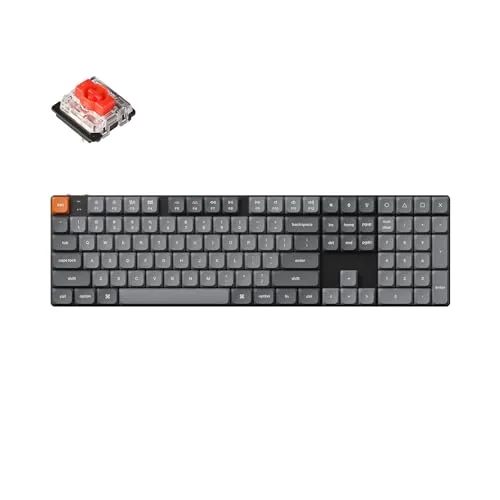
Keychron K5 Max (low-profile Gateron Red)
3.3/10Silent path 2 (no silent option, hot-swap not documented on this variant) - acoustic build 2.5 (foam only) - footprint 3 (424 mm full-size) - lab standing 8 (named in the quiet article body).
DGH Dorm Quiet Build Score
Composite of four published construction facts, 0-10. No decibel measurement feeds this chart, because RTINGS paywalls every per-board dBA figure -- see the methodology note above.
DGH analysis of published specs and RTINGS public text, accessed 2026-09-14
What each maker actually publishes
The matrix below is the raw input to the acoustic-build factor, so you can check our arithmetic. A tick means the manufacturer publishes that feature on its own product page for that board. A blank means we read the page and did not find it. A blank is a documentation gap, not proof the feature is missing, and we have not treated it as one anywhere in this guide.
Two sets of blanks are worth calling out. NuPhy's own page publishes a gasket mount and none of the other three acoustic-build features. RTINGS reports internal sound-dampening layers in the Air75 V3, but this factor counts only what the maker publishes, so that box stays blank. NuPhy also says nothing about factory lubing and specifies plate-mounted stabilizers. That is why the board RTINGS names its best quiet keyboard sits third on our composite. And Keychron publishes no gasket mount at all for the Keychron K5 Max (low-profile Gateron Red), which is unusual for the brand and is the single biggest reason that board finishes last.
| Product | Factory silent switch option | Gasket mount published | Internal dampening published | Factory pre-lubed switches published | Screw-in stabilizers published |
|---|---|---|---|---|---|
| nuphy-air75-v3-blush | ✓ | ✓ | – | – | – |
| lofree-flow-2-84-void | ✓ | ✓ | ✓ | ✓ | – |
| keychron-v1-max | – | ✓ | ✓ | ✓ | ✓ |
| keychron-q3-max | – | ✓ | ✓ | ✓ | ✓ |
| epomaker-aula-f75 | – | ✓ | ✓ | ✓ | – |
| keychron-k5-max | – | – | ✓ | – | – |
The chart's Cross-Platform Fit and Out-of-Box Readiness rows sit outside the score. Each scores 2.5 per item. Cross-Platform Fit counts macOS support, Linux support, multi-device Bluetooth and a browser-based remapping tool. Out-of-Box Readiness counts a pre-built configuration, a 2.4GHz receiver, Mac keycaps and a switch puller in the box. Items come from the maker's page, and multi-device pairing and receivers may also come from RTINGS' review text. An item neither source documents scores zero.
On the DGH Dorm Quiet Build Score the Lofree Flow 2 leads at 8.1, the Keychron V1 Max follows at 7.9 and the NuPhy Air75 V3 is third at 7.8. The Q3 Max scores 7.5, the Aula F75 6.3 and the K5 Max 3.3.
The pattern across the six is consistent enough to be useful on its own. Keychron documents the most and charges accordingly. NuPhy and Lofree document the switch story best, which is the part that decides whether your roommate wakes up. EPOMAKER documents the dampening stack in detail and almost nothing about platform support.
What these actually cost, and where
Two of the six listings show a list price above today's price. We quote the list price and name the current figure beside it, because a promotion is not a price you can count on next week.
The Keychron Q3 Max lists at $229.99 and was showing $209.99 when we read it. The EPOMAKER x Aula F75 lists at $79.99 and was showing $63.99. Four listings showed a single New-condition price with no list price above it. Those were $139.95 for the NuPhy and $179.99 for the Lofree. The two Keychrons were $114.99 and $99.99.
Lofree sells the same 84-key Void configuration directly for $169.00, which is $10.99 below the Amazon price we read. Read that page carefully, though. The $159.00 lines beside the Void are the Surfer and Pulse switches, and Lofree's own switch table lists Pulse as tactile -- the option RTINGS calls somewhat loud. Which switch you click still matters more than where you buy.
Prices, sellers and stock were read live on the same day, so treat them as a snapshot. None of it feeds the DGH Dorm Quiet Build Score, which ignores price.
When NOT to Buy
Skip all six if what you need is silence rather than quiet mechanical typing. Four of RTINGS' six quiet-keyboard picks are scissor or rubber-dome boards, and a good scissor keyboard may well be quieter than anything on this page. Skip them if the noise keeping you up is your roommate rather than your keys, because How to Study With a Loud Roommate in 2026 covers the earplugs, headphones and white noise that fix that side. And if you care more about typing feel than about the person asleep three feet away, Best Mechanical Keyboards for College 2026 ranks boards on more than noise.
The switch you order decides whether it is quiet
Three of these six boards are sold in several switch configurations at the same price. The model name does not tell you which one is quiet.
The Lofree Flow 2 is the clearest case. RTINGS lists "Somewhat loud typing noise if you choose the tactile switch option" as a con. The same board with the Void silent linear is a legitimately quiet keyboard. Same model, opposite result. The NuPhy listing sells the silent switch by default, so there is no such step to get wrong.
The Keychron Q3 Max listing we read sells the Gateron Jupiter Banana, a tactile switch. Keychron offers Red, Brown and Banana on that board. Red is the linear option and the quietest of the three. Neither is silent, because Keychron publishes no silent option for it at all.
So before you pay, read the option you selected and check the switch name. Linear is quieter than tactile. Silent versions of either are quieter still. RTINGS says as much in its Flow 2 review, noting that quieter linear and silent linear switches are available if you work in a noise-sensitive environment.
Who Should Buy What
Who Should Buy What
| If you are… | Recommended pick |
|---|---|
Sharing a room with a light sleeper Someone sleeps three feet away while you type, so the board must be quiet on arrival. | NuPhy Air75 V3 (Gateron Nano Blush silent linear) |
Studying on a silent library floor You want the case, not just the switch, dampening the sound. | Lofree Flow 2 84 (Void silent linear) |
Buying on a budget but unwilling to give up the build You want the full acoustic build now and will add silent switches later. | Keychron V1 Max (Gateron Jupiter Red) |
Buying one keyboard for all four years You want milled aluminum and the deepest published dampening, and your desk is wide enough. | Keychron Q3 Max (Gateron Jupiter Banana) |
Eighty dollars is the ceiling You still want real dampening and will check the board that arrives. | EPOMAKER x Aula F75 (LEOBOG Reaper linear) |
Needs a numpad every day Your coursework lives in spreadsheets and your desk can spare four inches. | Keychron K5 Max (low-profile Gateron Red) |
Frequently Asked Questions
How many decibels are these keyboards?
We do not know, and neither does anyone else outside a paid membership. RTINGS is the only lab we could find that measures keyboard typing noise on a standard bench. It reports Average Loudness in dBA and publishes how to read the scale: a difference of about 10 dBA will generally sound roughly twice as loud to most listeners, and it expects most people to feel that 50 dBA is too loud for a quiet keyboard, around 45 dBA is quiet, and 40 dBA or lower is very quiet. But as of our read on 2026-09-14, every per-board number renders as locked to a non-member, on review pages, roundups and the table tool alike. Rather than estimate, we scored what manufacturers publish about construction. If another guide quotes decibel figures for these boards, ask where the measurement came from.
Are silent switches actually silent?
Quieter, not silent. Silent switches add internal dampening pads that absorb the sound of the stem hitting the top and bottom of its travel. That removes the sharpest part of the noise, which is the part that carries through a room. What remains is a softer thud, plus whatever the case and stabilizers contribute. This is why the guide scores the case as well as the switch. A silent switch in a hollow plastic case with rattling stabilizers still sounds like a keyboard.
Can I bring my clicky blue-switch keyboard to a dorm?
In a single room, probably. In a shared room, no. Clicky switches are built to make noise on every press, and RTINGS notes that clicky mechanical switches can be among the loudest options available. If you already own a clicky board, keep it for home and buy a linear or silent board for the dorm. That is cheaper than replacing a friendship.
Would a scissor-switch keyboard be quieter than any of these?
Probably, and it is worth saying out loud in a mechanical keyboard guide. Four of RTINGS' six quiet-keyboard picks are membrane-based designs. Its mid-range pick is the scissor-switch Logitech MX Keys S, its budget and ergonomic picks use rubber dome switches, and its cheap pick is a scissor board. The other two are its Best Quiet Mechanical pick, the NuPhy Air75 V3 with silent switches, which is our Best Overall pick here, and its gaming pick, the NuPhy Air75 HE, which uses magnetic switches. So if absolute silence is the only thing you care about, a good scissor board probably beats every keyboard on this page. This guide is for people who want mechanical typing feel and need it to be dorm-compatible. That is a different question.
Does hot-swap matter if I care about noise?
It is your insurance policy. A hot-swappable board lets you pull every switch and drop in silent ones without soldering, usually for about $25 and twenty minutes. That matters because four of the six boards here have no factory silent option at all. On three of them -- the V1 Max, the Q3 Max and the Aula F75 -- hot-swap is the only route to a quiet keyboard, which is why it carries real weight in our score. On the fourth, the K5 Max, the listing we read documents no hot-swap either. It also matters in the other direction. If a board is not hot-swappable and does not offer a silent switch, the noise level you buy is the noise level you keep for four years.
Why do you keep warning about which variant I order?
Because on several of these boards the model name does not tell you whether it is quiet. The Lofree Flow 2 is the clearest case. RTINGS lists somewhat loud typing noise as a con if you choose the tactile switch option, while the same board with the Void silent linear is a legitimately quiet keyboard. Same model, opposite outcome. The Keychron Q3 Max listing we read sells the Banana tactile, the loudest of its three factory options. Before you pay, check that the switch name on the option you selected is the one you meant to buy. Linear switches are quieter than tactile ones, and silent versions of either are quieter still.
Bottom Line
Get the NuPhy Air75 V3 (Gateron Nano Blush silent linear) if you want it quiet the day it arrives, on the smallest footprint here.
Get the Lofree Flow 2 84 (Void silent linear) if you want aluminum and five dampening layers, and you will order the Void silent variant.
Get the Keychron V1 Max (Gateron Jupiter Red) if you want the $229 board's acoustic features for $99.99 and will add silent switches.
Get the Keychron Q3 Max (Gateron Jupiter Banana) if you want the deepest published dampening, your desk takes a TKL, and you will fit silent switches.
Get the EPOMAKER x Aula F75 (LEOBOG Reaper linear) if eighty dollars is the ceiling, and you will verify the board that arrives against the description inside the return window.
Get the Keychron K5 Max (low-profile Gateron Red) if a numpad is genuinely non-negotiable and you have the desk width to spare, because on published noise control it finishes last here.
Skip every board on this page if what you actually need is silence rather than quiet mechanical typing. Four of RTINGS' six quiet picks are scissor or rubber dome boards, and a good scissor keyboard may well be quieter than any of these six. Skip them too if your budget is under fifty dollars -- at that price nothing publishes a dampening stack, and you are buying a sound profile sight unseen.
Sources & Methodology
Methodology: DGH Dorm Quiet Build Score — Formula: score = 0.35 * silent_switch_path + 0.30 * acoustic_build + 0.20 * desk_footprint + 0.15 * lab_quiet_standing. Factors: Route to a Silent Switch (35%) · Published Acoustic Build (30%) · Dorm Desk Footprint (20%) · Independent Lab Quiet Standing (15%) · What this score leaves out. Full factor definitions appear in the How We Score section above.
Expert review sources used in this analysis:
- Every claim here traces to a page we opened on 2026-09-14 or rechecked on 2026-09-23
- Construction facts come from the NuPhy, Lofree, Keychron and EPOMAKER product pages
- Independent assessment comes from RTINGS: its typing-noise methodology, its quiet-keyboard roundup updated 2026-07-20, and its Air75 V3, Flow 2, Q Max and V Max reviews
- RTINGS locks every per-board dBA value behind its membership, so this guide prints none
- A consensus score needs ratings from two outlets on our approved list
- Only the Q3 Max has them: Tom's Guide at 4/5 and PCWorld at 4.5/5, which average 8.5 out of 10
- Prices, sellers and switch variants were read live on each Amazon listing on 2026-09-14
- DormGearHQ does not perform first-party product testing, and we did not test any keyboard in this guide.
Nicholas Miles is the founder of DormGearHQ and a longtime smart home enthusiast focused on helping everyday homeowners make better technology decisions. He researches, compares, and writes about products across security, climate, lighting, leak prevention, sensors, home energy, and automation, with an emphasis on real-world usefulness, ecosystem compatibility, reliability, privacy, and long-term value.
Affiliate disclosure: DormGearHQ earns affiliate commissions on qualifying Amazon purchases. Our scoring methodology is independent of affiliate relationships.