
Best VR Headsets for a College Dorm 2026
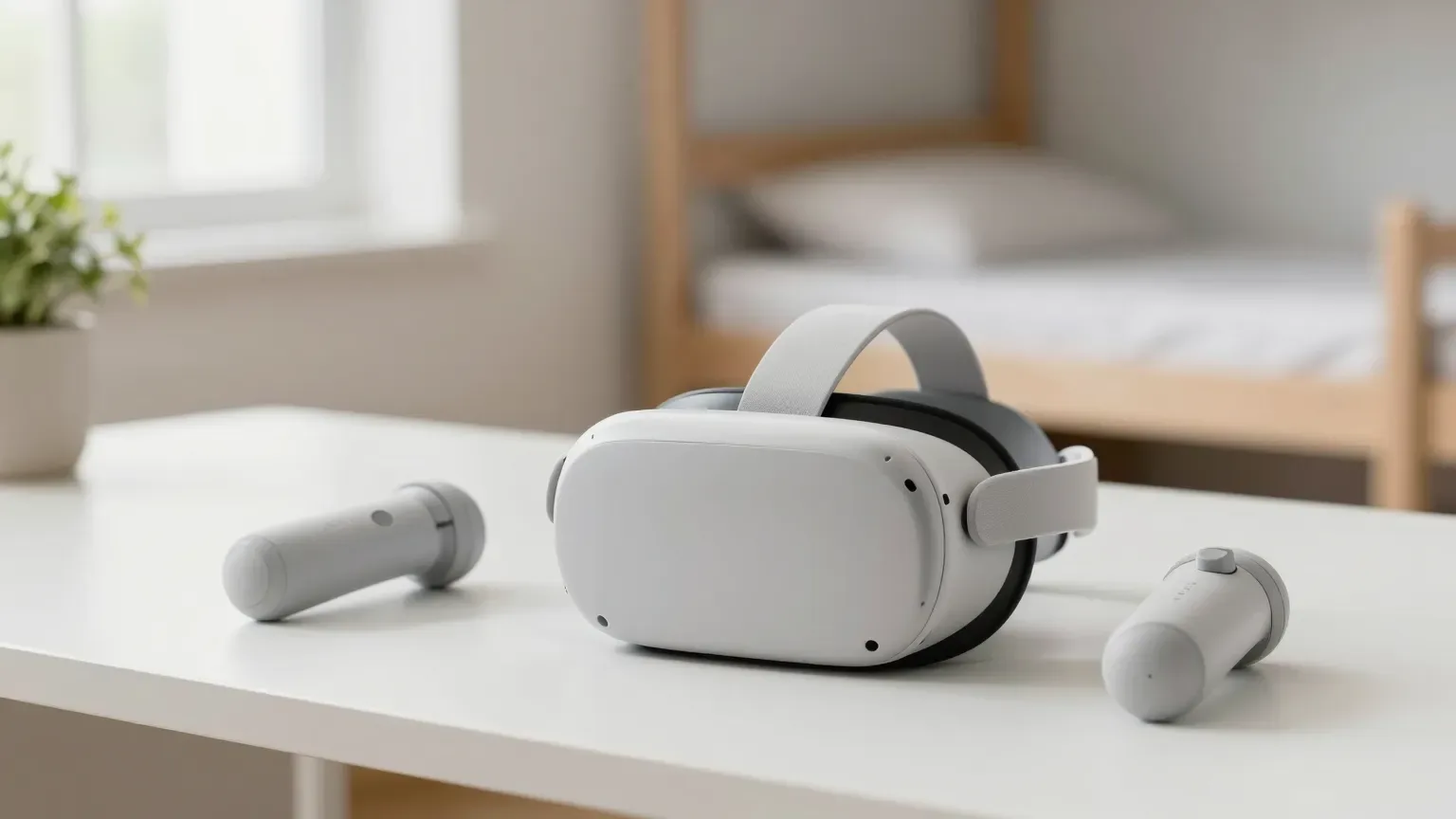
Nobody needs a VR headset to survive freshman year. But the dorm case is real: a Quest headset needs no PC, no console, no extra box. The Quest 3S 128GB ($319.99) is the sweet spot; the Quest 3 512GB ($599) is genuinely sharper if you'll use it.
This article contains affiliate links. We may earn a commission at no extra cost to you. Learn more
Featured in this Guide
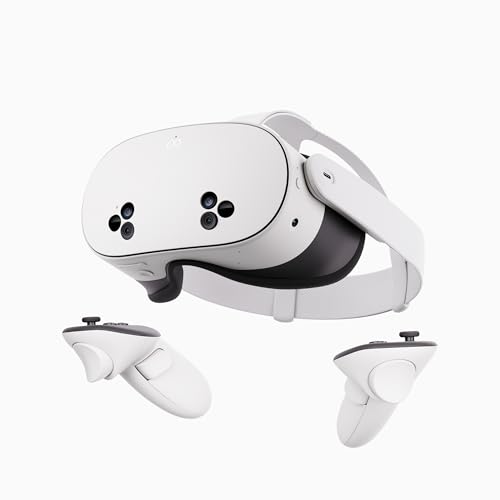
Meta
Quest 3S 128GB
- •Same Snapdragon XR2 Gen 2 chip as the Quest 3, fully standalone, at the lowest entry price, ,

Meta
Quest 3 512GB
- •Pancake lenses and higher resolution are a genuine upgrade, but at nearly 2x the 3S price, ,

Meta
Quest Elite Strap
- •Redistributes weight off the face for longer sessions — a real comfort fix, not a gimmick, ,
The Short Answer
A VR headset qualifies as discretionary entertainment, not an essential dorm necessity. If purchasing regardless, the Meta Quest 3S 128GB ($319.99) is sensible: it operates completely standalone, requiring no separate console. Reserve the pricier Quest 3 512GB for buyers noticing superior optical resolution.
Start with the honest framing: nothing here belongs on a move-in checklist next to a mattress topper or a power strip. A VR headset is entertainment spending, not a dorm necessity. The dorm-specific case for buying one anyway: a Meta Quest headset is fully standalone — no gaming PC, no console, no extra box. Trusted Reviews calls the Quest 3S a stellar headset with all the advantages of the pricier Quest 3 for roughly 40 percent less.
We will not flatten that trade-off. The Quest 3S uses Fresnel lenses at 1832x1920 pixels per eye, while the Quest 3 uses sharper pancake lenses at 2064x2208, confirmed by Wikipedia and Meta's own compare page. The DGH Dorm VR Value Score weights standalone capability, library and mixed-reality quality, small-room comfort, storage per dollar, and price value, since a headset that never leaves its charging spot outperforms one more line on a spec sheet.
Head-to-Head: Value, Optics, and Fit
Tech Charging
Chart
 DormGearHQ.com
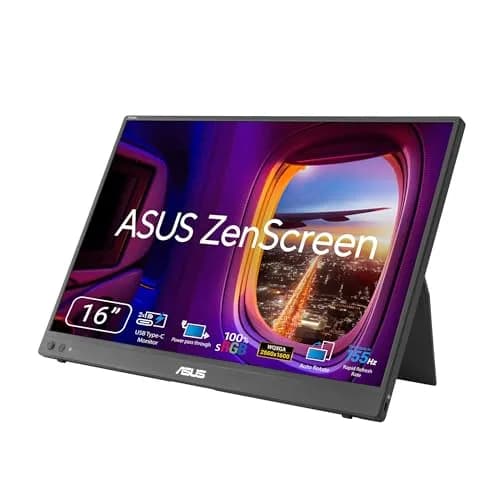
ASUS ZenScreen MB16NCG
$266.99Must BuyCheck price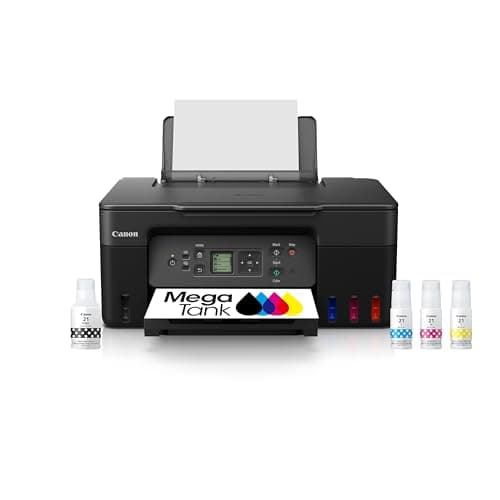
Canon MegaTank G3270 All-in-One Wireless Inkjet Printer, Home Use, Print, Scan and Copy
$159.99Must BuyCheck price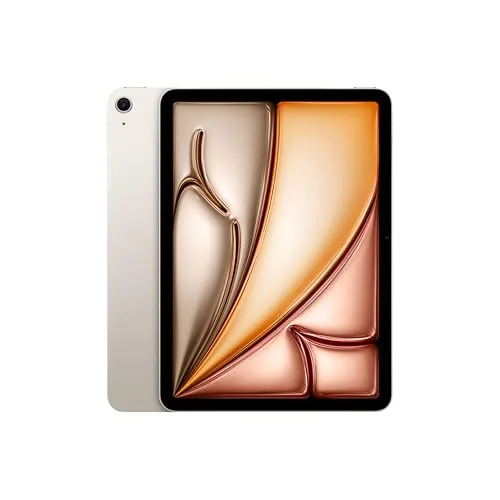
iPad Air 11-inch (M4)
$749.00Must BuyCheck price
Keychron K2 Pro
$119.00Must BuyCheck price
MacBook Air M5 13-inch
$1259.99Must BuyCheck price
Microsoft Surface Pro 11
$1249.99Must BuyCheck price
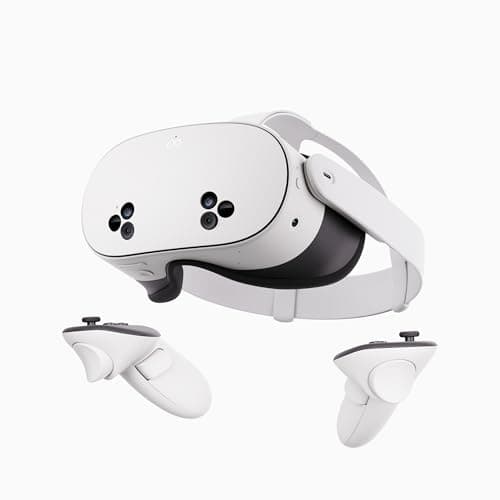
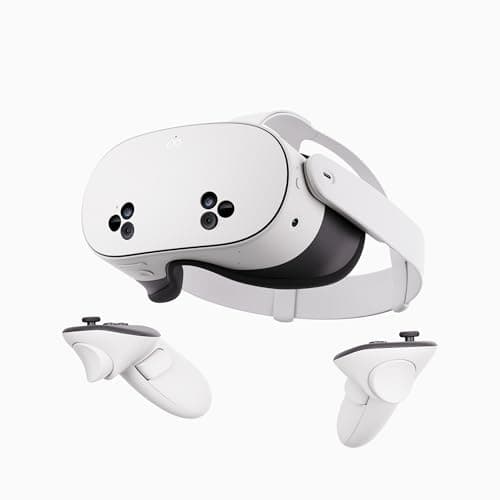
Best Overall Value: Meta Quest 3S 128GB
Meta Quest 3S 128GB
(Current price, subject to change)
- Meta Quest 3S 128GB standalone VR headset
- Snapdragon XR2 Gen 2 chip, 8GB RAM
- Fresnel lenses, 1832x1920 pixels per eye, 96-degree horizontal FOV
- Color passthrough mixed reality cameras
- Touch Plus controllers
- Requires a Meta account to set up
Trusted Reviews put the Quest 3S through a full hands-on test and rated it 4.5 out of 5 stars, writing that it is "a stellar headset" that carries "all the advantages" of Meta's pricier Quest 3 while costing roughly 40% less — concluding there "really isn't anything else this good at this price point right now." That's the headline case for a dorm buyer: the same Snapdragon XR2 Gen 2 chip, the same passthrough mixed reality, and the same full software catalog as the flagship model, at the lowest entry price in this guide.
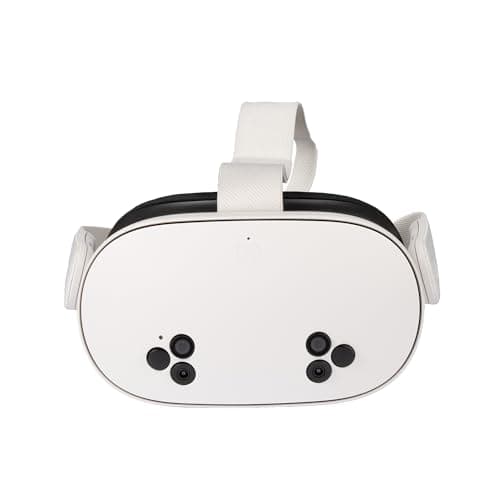
Trusted Reviews also measured battery at about 2 hours against Meta's stated 2.5, and found the Fresnel lenses show noticeable edge distortion with a smaller sweet spot than the Quest 3's pancake lenses. One more caveat: at $319.99, this listing's condition fluctuates between new and Amazon Renewed Premium (certified refurbished), so check it before you buy. The 3S and the 3 don't look the same. Still, for a first standalone headset that never leaves the dock between classes, its DGH Dorm VR Value Score of 8.5 reflects a formula weighting standalone capability and price value heavily, and it wins both outright.
What We Love
- Fully standalone at $319.99 — no gaming PC, console, or extra box needed in a dorm room
- Same Snapdragon XR2 Gen 2 chip as the pricier Quest 3, so game performance is identical
- Color passthrough mixed reality turns your actual dorm room into part of the play space
- Trusted Reviews' full hands-on review calls it a stellar headset at roughly 40% less than the Quest 3
- The complete Quest software library and app store, with no cut-down version for the cheaper model
What Could Be Better
- Fresnel lenses show more edge distortion and a smaller sweet spot than the Quest 3's pancake lenses
- 128GB fills up fast once you install two or three larger titles
- Trusted Reviews measured about 2 hours of real battery life against Meta's claimed 2.5
- This listing's condition fluctuates — it has sold as both new Amazon stock and Amazon Renewed Premium (certified refurbished), so check the condition line before buying; a Meta account is also required and small rooms limit roomscale play
The Verdict
If you're buying a VR headset for a dorm, the Meta Quest 3S 128GB is the sensible version of that purchase. Its DGH Dorm VR Value Score of 8.5 leads on standalone capability and price value, but one caveat we won't bury: this listing's condition fluctuates between new and Amazon Renewed Premium, so check it before you buy.
More Storage, Same Optics: Meta Quest 3S 256GB
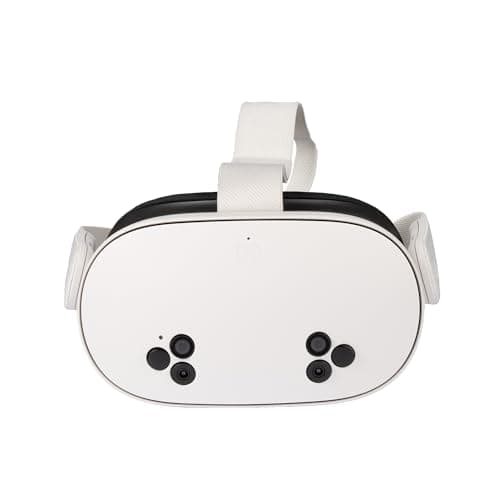
Meta Quest 3S 256GB
(Current price, subject to change)
- Meta Quest 3S 256GB standalone VR headset
- Snapdragon XR2 Gen 2 chip, 8GB RAM
- Fresnel lenses, 1832x1920 pixels per eye
- Color passthrough mixed reality cameras
- Touch Plus controllers
- Requires a Meta account to set up
There isn't a separate review cycle for the 256GB Quest 3S — it's the identical headset Trusted Reviews tested, with double the storage. Wikipedia and UploadVR both confirm the 256GB variant launched at $399.99 alongside the $299.99 128GB model, with identical Snapdragon XR2 Gen 2 and 8GB RAM across both — no other spec differences. Those are Meta's original launch MSRPs; the live Amazon listing we verified runs $448.99 for a factory-new unit, and it currently bundles Batman: Arkham Shadow at no extra cost.
The real question is whether you need the extra room. A VR title can run from a few gigabytes to well over 20GB, and a couple of larger games plus smaller apps will crowd 128GB faster than expected. If that's you, the $129 premium buys the extra storage headroom plus the bundled Batman: Arkham Shadow game. Its DGH Dorm VR Value Score of 8.4 trails the 128GB model only slightly, since our formula weights price heavily and the storage bump doesn't change the standalone capability that makes this headset worth owning. Over a 4-year run, that's a semester without uninstalling a favorite title.
What We Love
- Doubles the storage of the 128GB model with zero other hardware changes
- Still fully standalone — the same no-PC, no-console dorm appeal as the cheaper 3S
- A sensible middle ground if you already know a rotating two-title library will frustrate you
- This listing reliably ships as a new unit and bundles Batman: Arkham Shadow at no extra cost
What Could Be Better
- About $129 more than the 128GB model — that gap buys the storage jump plus the bundled Batman: Arkham Shadow game, not any added capability
- Still bound by Fresnel lenses and the lower resolution ceiling versus the Quest 3
- The same roughly 2-hour real-world battery life Trusted Reviews measured on the 128GB unit
The Verdict
The Meta Quest 3S 256GB makes sense for one specific buyer: someone who has already decided the 3S's optics are fine, wants more room, and wants the reliably-new box with the bundled Batman: Arkham Shadow game. Its DGH Dorm VR Value Score of 8.4 sits a hair below the 128GB model because you're paying $129 more for storage and the game bundle, not for any new capability.
Sharpest Picture: Meta Quest 3 512GB
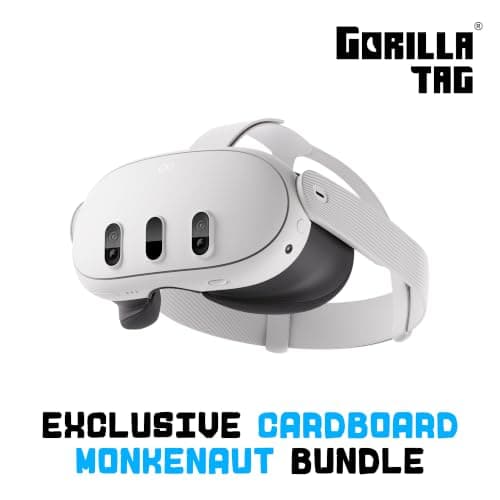
Meta Quest 3 512GB
(Current price, subject to change)
- Meta Quest 3 512GB standalone VR headset
- Snapdragon XR2 Gen 2 chip, 8GB LPDDR5 RAM
- Pancake lenses, 2064x2208 pixels per eye
- Depth sensor for improved mixed reality mapping
- Touch Plus controllers
- Requires a Meta account to set up
Meta's own compare page puts the difference in black and white: the Quest 3's pancake lenses use continuous IAD (lens-spacing) adjustment against the 3S's 3-position adjustment, and the Quest 3 delivers roughly 30% more pixels per eye at 2064x2208 versus the 3S's 1832x1920. Wikipedia's entry, sourced from official specs, adds that the pancake-lens design also enables a 40% thinner enclosure and pairs with a faster 8GB LPDDR5 memory bus, versus the 3S's LPDDR4X — the same 8GB capacity, but quicker.
This is the one headset here we won't hedge on: the optics really are better, and a buyer who spends real hours in VR will feel the difference in edge clarity and glare. The problem is who needs it. At $599 versus the 3S's $319.99, you pay nearly 2x for a sharper picture and more storage, not a different experience — the library and standalone appeal are identical either way. Its DGH Dorm VR Value Score of 8.7 tops the guide because optics and library carry real weight, but the price factor is exactly where it loses ground to the 3S for a typical dorm budget.
What We Love
- Pancake lenses deliver genuinely clearer, sharper edge-to-edge image quality than the 3S's Fresnel lenses
- 2064x2208 per-eye resolution and a wider field of view than the Quest 3S, confirmed on Meta's own compare page
- A depth sensor improves mixed-reality object mapping beyond what the 3S offers
- 512GB of storage means you rarely think about what to uninstall
- Still fully standalone — the same no-PC, no-console dorm appeal as every headset here
What Could Be Better
- Costs nearly double the 128GB Quest 3S for the same core software library
- Most casual dorm buyers won't use the extra sharpness enough to justify the premium
- Battery life still lands around 2 to 2.5 hours — more resolution doesn't mean more playtime
The Verdict
If you already spend real hours in VR and can name why sharper optics matter to you, the Meta Quest 3 512GB is worth the premium. Its DGH Dorm VR Value Score of 8.7 is the highest in the guide, driven by real optical and resolution gains Meta's own compare page confirms — but at nearly 2x the 3S price, most dorm buyers should still take the cheaper headset.
Worth Adding: Meta Quest Elite Strap
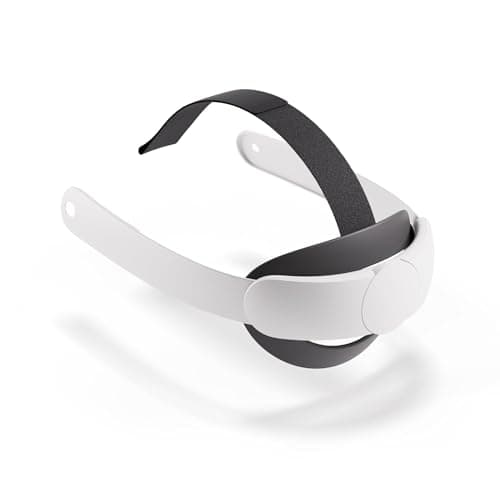
Meta Quest Elite Strap
(Current price, subject to change)
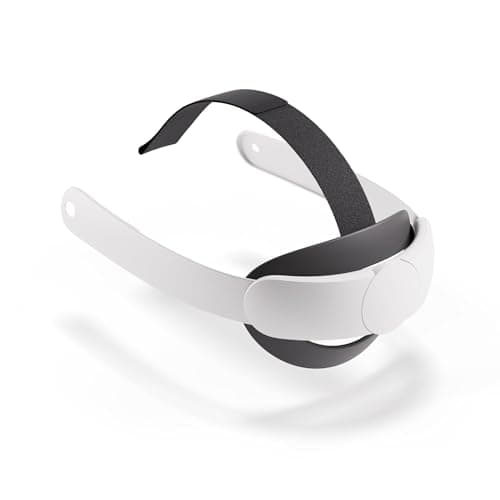
- Meta Quest Elite Strap (rigid, adjustable head strap)
- Soft silicone facial supports
- Compatible with Quest 3 and Quest 3S
- Fits official Quest 3/3S carrying cases
- No built-in battery (see Elite Strap with Battery for added runtime)
Meta's official product page describes the Elite Strap as "a flexible and adjustable head strap with soft silicone supports" designed to improve ergonomics and "reduce pressure on the face," aimed specifically at more active VR sessions — and it confirms compatibility with both the Quest 3 and Quest 3S, so this single accessory pick works across every headset in this guide.
The stock soft strap that ships with both headsets is fine for short sessions, but its all-fabric design lets weight settle onto the face, and Trusted Reviews specifically flagged that pressure during extended Quest 3S testing. The Elite Strap's rigid, adjustable frame redistributes that weight toward the back of the head instead, which is the difference between a 20-minute session and a 90-minute one being comfortable. It doesn't touch optics, resolution, or battery — this is a pure comfort play, and its DGH Dorm VR Value Score of 7.8 rewards that narrow job in our weighted formula rather than penalizing it for not doing more. Trusted Reviews flagged real facial pressure within about 2 hours of continuous Quest 3S use, and this strap delivers the direct fix for that over a 4-year dorm run.
What We Love
- Meta's own product page confirms compatibility with both the Quest 3 and Quest 3S, so it works with every headset in this guide
- A rigid, adjustable design with soft silicone supports redistributes weight off the face and front of the head
- A genuine comfort upgrade for longer play sessions versus the soft strap that ships in the box
- Still fits inside official Quest carrying cases, so it doesn't complicate travel home for break
What Could Be Better
- Adds $69 on top of an already-real headset purchase — it's an upgrade, not a requirement
- Doesn't touch optics, resolution, or battery life — comfort is the entire pitch
- The Elite Strap with Battery costs more and adds runtime; this base version does not
The Verdict
Pair the Meta Quest Elite Strap with whichever headset you buy if you plan to use it in sessions longer than 20 or 30 minutes. Its DGH Dorm VR Value Score of 7.8 reflects a narrow but real job: it doesn't change what you see, only how long you can comfortably keep seeing it.
How We Score: DGH Dorm VR Value Score
DGH Dorm VR Value Score
Score Formula
standalone_capability_no_pc (25%) + library_and_mixed_reality (20%) + comfort_and_dorm_space_fit (20%) + storage_value (15%) + price_value (20%)Score Factors
- Standalone Capability, No PC (25%)Whether the headset runs its own full library with no PC, console, or extra box — the single biggest weight, and the reason a Quest headset fits a dorm at all. Every headset here scores identically on this factor; PC play via Link stays optional.
- Library and Mixed Reality (20%)Game and app catalog plus color passthrough MR quality. The Quest 3S and Quest 3 share an identical software catalog; the Quest 3 edges ahead only via its depth sensor's more precise MR object mapping.
- Comfort and Dorm-Space Fit (20%)Headset weight and balance, strap comfort, and playability in a small room. Trusted Reviews measured real facial pressure from the stock strap on extended sessions; the Elite Strap scores highest here for solving exactly that.
- Storage Value (15%)Gigabytes per dollar for the library a student will actually keep installed. The 128GB Quest 3S delivers the most storage per dollar; the 512GB Quest 3 costs the most per GB but needs the least title-swapping.
- Price Value (20%)Cost against what a dorm buyer realistically needs. The Quest 3S 128GB at $319.99 wins this factor outright; the Quest 3 512GB at $599 wins it only for buyers who will use the extra resolution.
DGH Dorm VR Value Score — Ranked
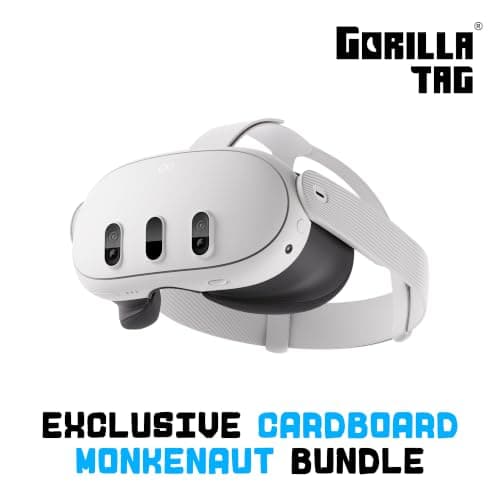
Meta Quest 3 512GB
8.7/10Genuinely sharper pancake-lens optics and more storage, but costs nearly double the 3S
Meta Quest 3S 128GB
8.5/10Fully standalone at the lowest entry price — the dorm sweet spot
Meta Quest 3S 256GB
8.4/10Identical 3S hardware with double the storage, for buyers who'll use it
Meta Quest Elite Strap
7.8/10A narrow but real comfort fix for longer sessions on any headset here
Fit, Space, and Setup in a Dorm Room
Every headset here is fully standalone, which is the entire dorm case — none needs a gaming PC, a console, or a dedicated HDMI port on a shared TV. Setup for all three headset SKUs is identical: create or sign into a Meta account, put on the headset, and draw a guardian boundary using the passthrough cameras. That boundary is the part dorm buyers should plan around. A standard dorm double runs roughly 12 ft by 14 ft split between two people, so true roomscale play — walking several steps in any direction — usually isn't realistic once a bed, desk, and roommate's furniture are accounted for. Most sessions in that footprint run under 2 hours anyway, which fits the battery ceiling every headset here shares.
The practical fix is to favor seated or standing play over roomscale titles, and to draw the guardian boundary tight around whatever clear floor space actually exists, not the room's full footprint. This isn't a flaw specific to any one headset — it's a small-room reality that applies to the Meta Quest 3S 128GB, the Meta Quest 3S 256GB, and the Meta Quest 3 512GB equally. Our composite, normalized DGH Dorm VR Value Score already accounts for these small-room limits across every headset, over a 4-year dorm run. The Meta Quest Elite Strap doesn't change space requirements, but it does make longer seated sessions more comfortable, which matters more in a dorm than in a living room since roomscale isn't usually on the table anyway.
| Product | Fully standalone, no PC/console required | Pancake lenses (sharper optics) | 256GB or more storage |
|---|---|---|---|
| meta-quest-3s-128gb | ✓ | – | – |
| meta-quest-3s-256gb | ✓ | – | ✓ |
| meta-quest-3-512gb | ✓ | ✓ | ✓ |
| meta-quest-elite-strap | ✓ | – | – |
The Complete Headset Cart, Priced Out
The headset price alone understates the real cart for most buyers, since the Meta Quest Elite Strap is already a scored pick on this page rather than an optional afterthought, and a hard case is the obvious next add for anyone who will actually move the headset between a dorm and home across a 4-year run. Every dollar figure below was independently re-verified against the Amazon Creators API on 2026-07-27, the same afternoon this bundle module was written. The complete cart pairs the Meta Quest 3 512GB at $599.00 — the pancake-lens, 512GB pick this guide ranks for its sharper optics and storage headroom — with the Meta Quest Elite Strap at $69.00 for longer seated sessions in a shared dorm room, plus the sarlar Hard Carrying Case for Meta Quest 3/3S, Elite Strap Compatible at $24.99, whose listing specifically confirms it fits the headset and controllers with the Elite Strap already attached. The full cart totals $692.99, still inside this guide's own $400-700 anchor band despite bundling all three pieces most buyers eventually own anyway.
Budget-capped students should not feel obligated to buy all three at once. The Elite Strap and the case are genuinely optional — many students go a full semester on the stock strap and a desk drawer — so treat $599.00 as the real floor and the other two as upgrades to add once a specific discomfort or a move-out trip makes the case for them. Anyone deciding between the entry 128GB tier and this 512GB pick should re-check live pricing carefully: at write time the 128GB and 256GB configurations both showed pricing gaps in the Creators API that made a direct comparison unreliable, so this cart anchors on the 512GB configuration specifically because its price and stock were the most reliably verified of the three headset tiers.
Who Should Buy What
Who Should Buy What
| If you are… | Recommended pick |
|---|---|
Budget-conscious first-timer You want to try standalone VR without overspending, and you don't own a gaming PC or console to pair it with | Meta Quest 3S 128GB |
Library-builder You already know you'll keep more than two or three larger titles installed at once and don't want to manage storage | Meta Quest 3S 256GB |
VR enthusiast You already spend real hours in VR and will actually notice sharper optics and a wider field of view | Meta Quest 3 512GB |
Long-session player You're buying any headset here and plan on sessions longer than 20 to 30 minutes at a time | Meta Quest Elite Strap |
Frequently Asked Questions
Do I need a gaming PC to use a Meta Quest headset in a dorm?
No — that's the entire dorm-specific appeal. Every headset in this guide is fully standalone: the Snapdragon XR2 Gen 2 chip runs the whole game library and mixed-reality passthrough on its own. PC games are available over Meta's optional Link cable or Air Link feature, but nothing here requires a PC, and most dorm buyers never plug one in. The overlooked detail: because it's standalone, it's also the one gaming device in a shared room that doesn't compete for an HDMI port or desk space.
What's actually different between the Quest 3S and Quest 3?
The optics, and it's a real difference — not marketing noise. The Quest 3S uses Fresnel lenses at 1832x1920 pixels per eye; the Quest 3 uses pancake lenses at 2064x2208 pixels per eye, per Meta's own compare page and Wikipedia's sourced spec entries. Pancake lenses are clearer edge-to-edge with less distortion. Both share the identical Snapdragon XR2 Gen 2 chip and full game library, so performance and available titles are the same either way — only the sharpness of the picture and the field of view change.
Is 128GB enough storage for a VR headset in a dorm?
For most casual buyers, yes, but check your habits first. A single modern VR title can range from a few gigabytes to over 20GB, so two or three larger games plus some smaller apps will noticeably crowd a 128GB drive. If you know you'll want a bigger rotating library without managing uninstalls between semesters, the 256GB Quest 3S or the 512GB Quest 3 are worth the jump. The detail most buyers miss: uninstalling and reinstalling a large title over dorm Wi-Fi during a busy week is a real inconvenience, not just a storage number.
How long does the battery actually last?
Plan for about 2 to 2.5 hours of real play per charge, not the headline number alone. Trusted Reviews measured roughly 2 hours of real-world use on the Quest 3S against Meta's own 2.5-hour average claim. The nuance worth knowing: battery life doesn't meaningfully change between the 3S and the Quest 3, so paying more for sharper optics or more storage buys neither of them extra runtime — plan on charging between sessions regardless of which headset you pick.
Can I actually play roomscale VR games in a dorm room?
Only in a limited way. A typical dorm double splits roughly 12 by 14 feet between two people's furniture, which rarely leaves enough clear floor for true roomscale walking. The workaround most guides skip: draw your guardian boundary tight around whatever clear space you actually have and favor seated or standing titles over room-scale ones. It's a small-room constraint that applies equally across every headset in this guide, not a flaw in any specific model.
Bottom Line
Get the Meta Quest 3S 128GB if you want standalone VR at the lowest sensible entry price, with no PC or console required.
Get the Meta Quest 3 512GB if you'll actually notice sharper pancake-lens optics and want the largest on-device library.
Get the Meta Quest Elite Strap if you're buying any headset here and expect sessions longer than 20 to 30 minutes.
Remember this is a want, not a need — if you're buying anyway, the Meta Quest 3S 128GB at $319.99 is the sensible dorm pick: fully standalone, the complete Quest library, and Trusted Reviews' stellar verdict backing it up. Step up to the Meta Quest 3 512GB only if sharper optics and more storage matter enough to justify nearly double the price. Skip buying at all if your budget is genuinely tight this semester — this is the first thing to cut, not the last.
Sources & Methodology
Methodology: DGH Dorm VR Value Score — Formula: standalone_capability_no_pc (25%) + library_and_mixed_reality (20%) + comfort_and_dorm_space_fit (20%) + storage_value (15%) + price_value (20%). Factors: Standalone Capability, No PC (25%) · Library and Mixed Reality (20%) · Comfort and Dorm-Space Fit (20%) · Storage Value (15%) · Price Value (20%). Full factor definitions appear in the How We Score section above.
Expert review sources used in this analysis:
- DormGearHQ aggregates expert review data, manufacturer specifications, and customer-rating sentiment to produce consensus-based buying guidance; we do not perform first-party product testing
- Trusted Reviews supplies the fetch-verified independent hands-on review of the Meta Quest 3S, rating it 4.5 of 5 stars, measuring roughly 2 hours of real battery life against Meta's stated 2.5 hours, and flagging genuine Fresnel-lens edge distortion and a smaller optical sweet spot versus the Quest 3
- We could not locate a published RTINGS review of the Quest 3S at write time, so we lean on Trusted Reviews as the primary independent test source instead, alongside UploadVR's specs coverage and Meta's own official compare page, which we fetch-verified directly rather than substituting a citation that doesn't exist
- Wikipedia's Meta Quest 3S and Meta Quest 3 entries, both sourced from official launch specifications, anchor our resolution, lens, chipset, RAM, storage, and launch-price figures, and Meta's official compare page and Elite Strap product page confirm the resolution differential and strap compatibility directly
- We do not flatten the Quest 3S and Quest 3 to equal optics: the 3S's Fresnel lenses and 1832x1920 resolution are a real step below the Quest 3's pancake lenses and 2064x2208 resolution, and our guidance says so throughout — the Quest 3 costs nearly 2x the entry Quest 3S for that sharper picture
- The DGH Dorm VR Value Score is a weighted composite: our formula weights standalone capability at 25%, library and mixed reality at 20%, comfort and dorm-space fit at 20%, storage value at 15%, and price value at 20%, each factor normalized to a 0-to-10 scale from verified specs, review sentiment, and live price
- That calculation is why the Quest 3 512GB ranks first on raw capability while the Quest 3S 128GB remains the pick most dorm buyers should actually make across a typical 4-year dorm run, in a room that usually measures about 12 ft by 14 ft
- The complete headset cart added 2026-07-27 prices the Quest 3 512GB against the already-scored Elite Strap and the sarlar hard case — all three re-verified New-condition, live-priced against the Amazon Creators API on 2026-07-27; the 128GB and 256GB configurations both showed unreliable live pricing at that same check, so the cart anchors on the 512GB configuration specifically
- The sarlar hard case is sold via a third-party Amazon marketplace seller (VR one-stop shop) rather than Amazon or the brand, New and in stock on our check date
- Amazon prices and availability verified 2026-07-27; confirm live pricing and stock before buying, and see the metrics methodology page linked from the score block above.
Nicholas Miles is the founder of DormGearHQ and a longtime smart home enthusiast focused on helping everyday homeowners make better technology decisions. He researches, compares, and writes about products across security, climate, lighting, leak prevention, sensors, home energy, and automation, with an emphasis on real-world usefulness, ecosystem compatibility, reliability, privacy, and long-term value.
Affiliate disclosure: DormGearHQ earns affiliate commissions on qualifying Amazon purchases. Our scoring methodology is independent of affiliate relationships.