
Should You Rent or Buy a Dorm Fridge in 2026?
Housing hands you a rental flyer at move-in, and many campus programs charge around $258 a year for a fridge you return empty. Buy one you keep across a 4-year degree and the cost-per-year collapses — the DGH Cost-per-Year-of-Use Score shows which fridge to own.
This article contains affiliate links. We may earn a commission at no extra cost to you. Learn more
Featured in this Guide
Midea
WHD-113FSS1 3.1 Cu. Ft. Double-Door Mini Fridge with Freezer
- •A true full-width freezer that holds food frozen, near 270 kWh a year — about $60 a year owned over a 4-year keep versus a $258 rental, ,
BLACK+DECKER
BCRK32B 3.2 Cu. Ft. Single-Door Mini Fridge with Freezer
- •A real full-width freezer with ice tray and an 85W ENERGY STAR draw — lowest cost-per-year here, but currently unavailable from Amazon-sold stock, ,
Currently Unavailable
Read Review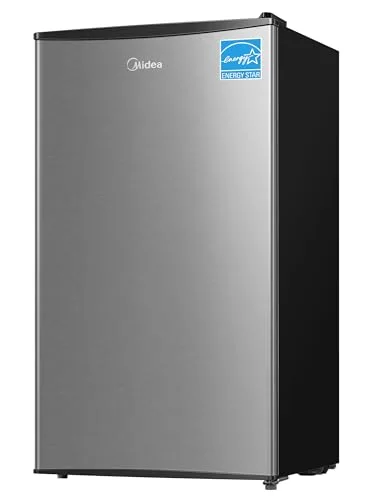
Midea
MERM33S1AST 3.3 Cu. Ft. Compact Mini Fridge
- •3.3 cu ft, under 42 dB, near 260 kWh a year — about $47 a year owned over a 4-year keep and the quietest fridge in this guide, ,
Toshiba
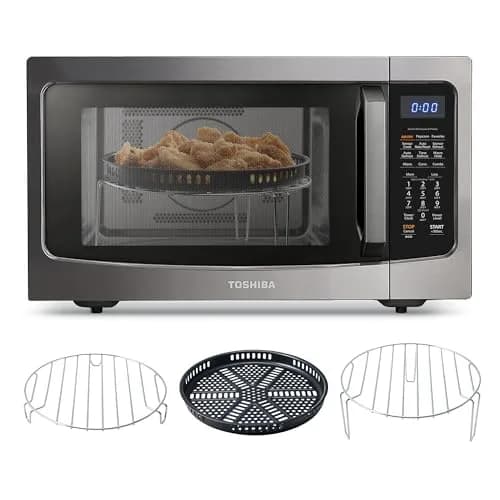
ML-EC42P 4-in-1 Air Fryer Combo Microwave with Convection
- •A 1000W microwave with convection to own instead of a rental's throwaway oven — about $52 a year over a 4-year keep, ,
The Short Answer
Renting a dorm fridge runs about $258 an academic year and leaves you owning nothing, while buying one and keeping it a 4-year degree drops the cost near $47 to $60 a year. Reviewed and Food Network rank the freezers that last, and the DGH Cost-per-Year-of-Use Score shows buying wins whenever you keep the unit.
Housing offices hand freshmen a rental flyer, and many campus programs charge around $258 for a MicroFridge-style combo per academic year — a widely reported figure you should still confirm against your own flyer, since rates vary by school. Renewed across a 4-year degree, that convenience compounds into four annual payments and no equipment you keep. The DGH Cost-per-Year-of-Use Score is the weighted composite this guide introduces, grading each buy-it-instead pick on amortization, energy cost, keep-reliability, and under-desk footprint, then normalized across the strictness tiers housing contracts fall into. Reviewed and Food Network anchor the freezer factor, while Grown and Flown frames the rent-versus-buy math. A high score means the purchase collapses your cost-per-year below the rental line.
Rent Versus Buy, Scored Head to Head
Mini Kitchen
Chart
 DormGearHQ.com
Amazon Basics Stainless Steel Electric Kettle, 1 Liter, 1500W, Auto Shut-Off
$22.67Must BuyCheck price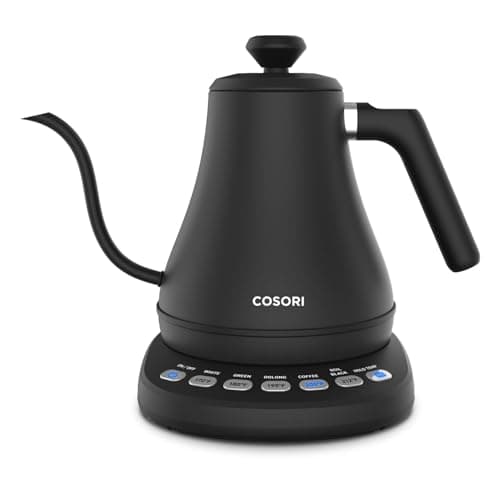
Cosori Electric Gooseneck Kettle, 5 Temperature Presets, 100% Stainless Inner Lid, 1200W, 0.8L
$69.99Must BuyCheck price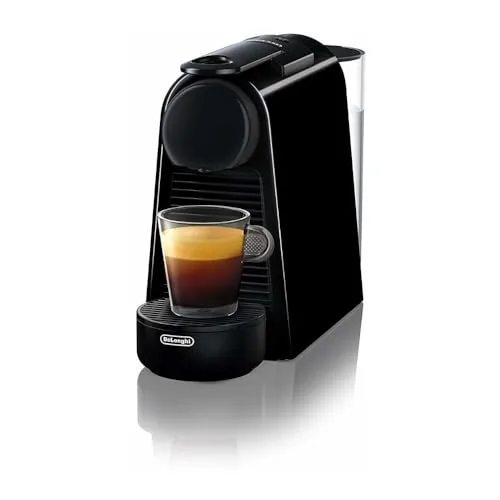
Nespresso Essenza Mini Espresso Machine by De'Longhi (1150W)
$187.52Must BuyCheck price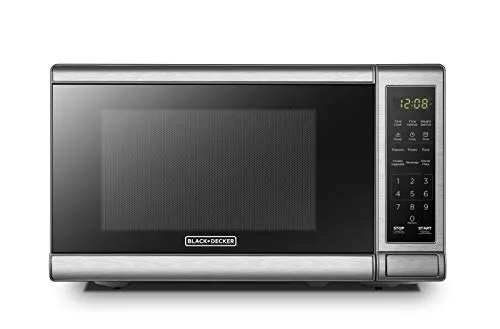
BLACK+DECKER EM720CB7 Compact Microwave (0.7 cu ft)
$79.99RecommendedCheck price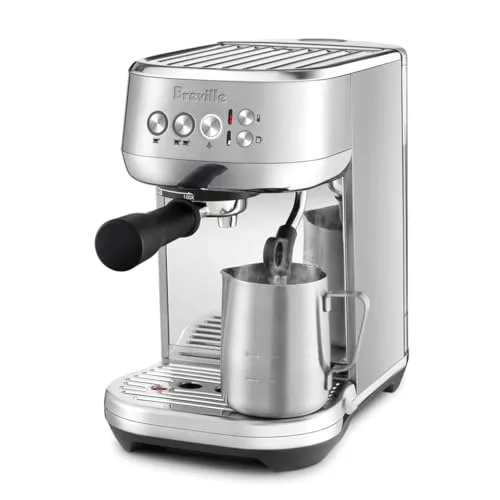
Breville Bambino Plus Espresso Machine BES500BSS (1560W)
$500RecommendedCheck price
Cosori Electric Kettle (1.5L Stainless Steel)
$39.99RecommendedCheck price
Best Freezer to Own: Midea WHD-113FSS1 3.1 Cu. Ft. Double-Door Mini Fridge with Freezer
Midea WHD-113FSS1 3.1 Cu. Ft. Double-Door Mini Fridge with Freezer
(Current price, subject to change)
- 3.1 cu ft double-door mini fridge
- 2.16 cu ft refrigerator compartment
- 0.92 cu ft full-width freezer
- Adjustable removable glass shelves
- Reversible door hardware
- R600a compressor
Food Network named the Midea the best overall mini fridge and best with a freezer for 2026, and Reviewed's lab testing confirmed the full-width freezer holds its temperature where cheaper boxes merely chill. That reliability is what the buy-it-instead case rests on, because a rented MicroFridge-style unit costs many students around $258 each academic year and yields nothing you keep, whereas this double-door box spread across a 4-year keep works out near $60 a year. The DGH Cost-per-Year-of-Use Score reaches 8.6 here, since the weighted composite rewards a freezer that still performs in year four over a rock-bottom sticker price.
At an ENERGY STAR rating near 270 kWh, about 25% under the federal standard, the running cost stays modest across the 4-year run. Compared to renting the same fridge-freezer four years running, owning delivers the identical cold storage and yields resale value at graduation. The honest caveat Reviewed flags is that it runs a touch warm at the factory setting, so a small dial bump on move-in day produces a dependable sub-40F hold.
What We Love
- A true 0.92 cu ft full-width freezer that holds food frozen where cheaper single-door boxes merely chill, per Reviewed lab testing
- Food Network names it best overall and best with a freezer, so frozen meals stay an option all 4 years you own it
- ENERGY STAR near 270 kWh a year, about 25% under the federal standard, keeps the running cost off your budget
- Spread across a 4-year keep, the purchase works out near $60 a year against a roughly $258 annual rental
- Reversible double door and adjustable shelves let the layout bend to whichever corner the room leaves open
What Could Be Better
- $239.99 is the top of the mini-fridge budget for a first-week buy
- Reviewed found it runs warm at default settings
- The 33-inch height can crowd a lofted bed
The Verdict
If you freeze leftovers and want a fridge that outlasts four rental cycles, the Midea WHD-113FSS1 3.1 Cu. Ft. Double-Door Mini Fridge with Freezer is the buy. Food Network and Reviewed rank its full-width freezer first, and at roughly $60 a year over a 4-year keep it undercuts a $258 rental while leaving an asset to resell. Its 8.6 DGH Cost-per-Year-of-Use Score reflects a freezer built to last the degree.
Lowest Cost-per-Year: BLACK+DECKER BCRK32B 3.2 Cu. Ft. Single-Door Mini Fridge with Freezer
BLACK+DECKER BCRK32B 3.2 Cu. Ft. Single-Door Mini Fridge with Freezer
(No buyable Amazon offer as of our last check)
- 3.2 cu ft single-door mini fridge
- Full-width freezer with ice tray
- Two adjustable glass shelves
- Can dispenser for six 12-oz cans
- Three door shelves
- 1-yr parts/labor, 2-yr compressor warranty
Amazon has no buyable offer for this listing right now.
The BLACK+DECKER carries the clearest math on this page: kept across a 4-year degree rather than rented, it amortizes to a fraction of the $258 a year many campus programs charge for a comparable MicroFridge-style unit. That factor is why the DGH Cost-per-Year-of-Use Score lands at 9.3, the top mark here. One honest caveat comes first: on our latest check the BCRK32B had no Amazon-sold offer at all, so we quote no price for it here and link you to nothing. A 4.5-star Amazon average and confirmed Best Buy and Lowe's listings back a full-width freezer with an ice tray, two adjustable glass shelves, and a can dispenser — real frozen storage, not a chiller.
ENERGY STAR certification at 85W with R600a refrigerant keeps the energy factor high, and the 2-year compressor warranty plus 1-yr parts coverage protect the component likeliest to fail over a 4-year hold. Reviewed and Food Network stress freezer reliability as the spec that matters most, and this pick delivers it at the lowest amortized cost. Versus the pricier double-door Midea, you give up the separate freezer door and handle about 47.7 lb, but own a dependable freezer for less.
What We Love
- Kept across a 4-year degree rather than rented, an owned fridge amortizes to a fraction of a $258 annual rental
- A full-width freezer with ice tray, not a chiller, so frozen storage is real at the lowest price in this guide
- ENERGY STAR at 85W with R600a refrigerant keeps the energy factor high without dragging your power budget
- A 2-year compressor warranty plus 1-yr parts coverage protect the part most likely to fail over a 4-year hold
- A 4.5-star Amazon average with confirmed Best Buy and Lowe's listings backs the interior and freezer for the price
What Could Be Better
- No dry-erase panel or retro styling — a plain box
- A fixed hinge, so plan placement around the door swing
- At 47.7 lb it is heavier than it looks
The Verdict
If the only question is which fridge costs the least to own, the BLACK+DECKER BCRK32B 3.2 Cu. Ft. Single-Door Mini Fridge with Freezer answers it on the merits: a full-width freezer, an 85W ENERGY STAR draw, and a 2-year compressor warranty earn the top 9.3 Cost-per-Year-of-Use Score here. One caveat outranks that — it is currently unavailable from Amazon-sold stock, so we quote no price and send you to no listing.
Quietest to Own: Midea MERM33S1AST 3.3 Cu. Ft. Compact Mini Fridge
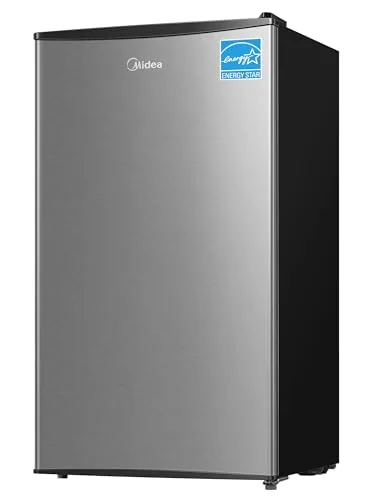
Midea MERM33S1AST 3.3 Cu. Ft. Compact Mini Fridge
(Current price, subject to change)
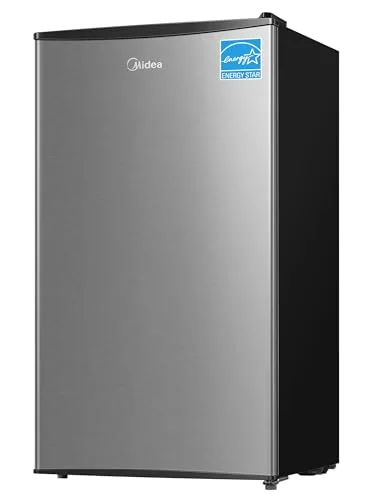
- 3.3 cu ft capacity with small freezer shelf
- ENERGY STAR certified near 260 kWh a year
- Under 42 dB operation
- Reversible door, adjustable thermostat 33.8-50F
- R600A high-efficiency compressor
- Leveling front legs
The Midea MERM33S1AST makes the ownership case on quiet running and a clean energy profile: Midea rates the 3.3 cu ft single-door under 42 dB with an ENERGY STAR draw near 260 kWh a year, so it barely registers on a shared study session or a metered outlet. Bought at $189.34 and kept across a 4-year degree, it amortizes near $47 a year, versus the roughly $258 a year a campus rental program charges for a unit you return empty-handed.
The DGH Cost-per-Year-of-Use Score sits at 8.9, held just under the BLACK+DECKER because Reviewed found this model runs warm at its factory thermostat and needs a day-one dial bump to hold sub-40F before you trust it with dairy. That single setup step aside, the reversible door fits either corner and the box lives under a desk rather than crowding the counter. Compared to renewing a rental every August, owning this fridge yields four years of cold storage plus resale value. Dorm Therapy's student panels consistently rank quiet, efficient compressors like this one as the picks that wear best over a long dorm stay.
What We Love
- Midea rates the 3.3 cu ft single-door under 42 dB, quiet enough to share a small room without droning through a study session
- An ENERGY STAR draw near 260 kWh a year keeps it off the radar of dorms that meter outlet draw
- Bought at $189.34 and kept a 4-year degree, it amortizes near $47 a year against a roughly $258 annual rental
- The reversible door swings either way, and the box lives on the floor under a desk instead of on the counter
- A high-efficiency R600A compressor runs quiet across the full 4-year keep, the trait that wears best over a long stay
What Could Be Better
- Reviewed found it runs warm at the factory setting — bump the dial on day one
- A small freezer shelf, not a true full-width freezer
- The freezer compartment frosts over without occasional manual defrosting
The Verdict
When quiet running and low energy matter more than a second freezer door, the Midea MERM33S1AST 3.3 Cu. Ft. Compact Mini Fridge is the fridge to own — under 42 dB, near 260 kWh a year, and about $47 a year across a 4-year degree against a $258 rental. Its 8.9 DGH Cost-per-Year-of-Use Score trails only because Reviewed found it runs warm until you bump the dial on day one.
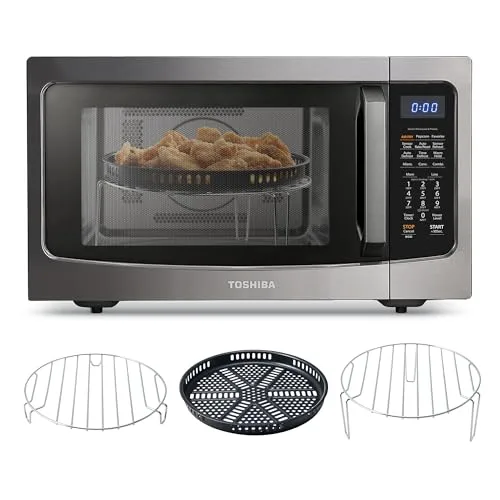
The Microwave Layer: Toshiba ML-EC42P 4-in-1 Air Fryer Combo Microwave with Convection
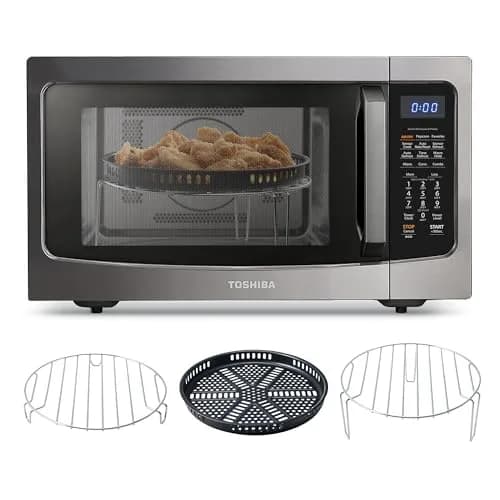
Toshiba ML-EC42P 4-in-1 Air Fryer Combo Microwave with Convection
(Current price, subject to change)
- 1000W microwave with air fry, convection, and combination modes
- 1.5 cu ft cavity with 13.6 inch turntable
- Air-fry rack
- Smart Sensor auto-cook and ECO mode
- Mute/sound-off function for quiet hours
- Convection input draws about 1750W
A rented MicroFridge-style unit bundles a small microwave into the fridge, so the honest buy-it-instead plan replaces that oven with a unit you keep — and the Toshiba ML-EC42P is the upgrade. RTINGS reviews it as a true 4-in-1 covering microwave, convection, and air-fry, and its 1000W microwave mode handles the daily reheating a rental's built-in oven does. Bought near $210 and kept across a 4-year degree, it amortizes to about $52 a year, so a self-bought fridge plus this combo still lands well under the $258 a year a rental charges for less capable gear.
The DGH Cost-per-Year-of-Use Score is 8.2, its footprint the one drag on the composite: the 21.8-inch base is larger than a fridge that hides under a desk. RTINGS and Tasting Table both note the 1.5 cu ft convection cavity bakes genuinely well, though air-fry trails a basket fryer, with frozen fries that never crisped after 30 mins. Compared to a rental's throwaway microwave, owning this combo delivers convection baking and years of use rather than going back to the depot each spring.
What We Love
- A rental bundles a throwaway microwave — this 1000W unit you keep replaces that oven and follows you to a first apartment
- RTINGS reviews it as a true 4-in-1 covering microwave, convection, and air-fry, not a gimmick mode bolted on
- Bought near $210 and kept a 4-year degree, it amortizes to about $52 a year, still well under a $258 rental
- The 13.6 inch turntable fits a 12 inch pizza or a whole chicken — the most usable cavity in the under-$250 tier
- Convection bakes genuinely well per Tasting Table, and a mute function suits a quiet-hours shared room
What Could Be Better
- The 21.8-inch base is larger than a fridge that hides under a desk
- Air-fry and convection pull about 1750W — check your wattage cap
- Air-fry results trail a basket fryer; fries never crisped after 30 mins
The Verdict
If your rental would have bundled a throwaway microwave, the Toshiba ML-EC42P 4-in-1 Air Fryer Combo Microwave with Convection is the oven worth owning instead — RTINGS rates it a true 4-in-1, and at about $52 a year over a 4-year keep it pairs with a bought fridge to beat a $258 rental. Its 8.2 DGH Cost-per-Year-of-Use Score is docked only for a 21.8-inch footprint bigger than an under-desk fridge.
How We Score: DGH Cost-per-Year-of-Use Score
DGH Cost-per-Year-of-Use Score
Score Formula
weighted composite (0-10): four_year_amortization 35% + energy_cost_per_year 20% + keep_reliability 20% + resale_handoff_value 15% + under_desk_footprint 10%, each factor scored 0-10 against the rental baseline and normalized into a single composite. four_year_amortization credits a purchase price that, spread across a 4-year keep, drops below the roughly $258 a campus program charges each academic year; energy_cost_per_year credits a low ENERGY STAR kWh draw; keep_reliability credits a freezer and compressor that still hold in year four; resale_handoff_value credits a unit worth reselling or handing down at graduation.Score Factors
- 4-Year Amortization (35%)The core cost factor, weighted highest. Purchase price spread across a 4-year keep window is measured against the roughly $258 a year many campus rental programs charge. A $240 fridge held four years amortizes near $60 a year, so the factor rewards a low price that survives the whole degree over a rental renewed every August.
- Energy Cost per Year (20%)ENERGY STAR kWh per year normalized into a running cost. The Midea double-door sits near 270 kWh and the MERM33 near 260 kWh, so each adds only a modest yearly figure on top of the amortized purchase — a cost the rental quietly bundles into its fee.
- 4-Year Keep Reliability (20%)Whether the freezer and compressor still hold food frozen in year four. Reviewed's lab testing shows this is the spec the cheaper chiller units miss, and it is what makes ownership a saving rather than a gamble across the 4-year run.
- Resale / Hand-Down Value (15%)What the unit is worth at graduation. A bought fridge can be resold to an incoming student or handed to a sibling, recovering part of the cost, whereas a rental is returned with nothing recovered — the factor a pure sticker-price comparison misses.
- Under-Desk Footprint (10%)How the footprint and height tuck under a dorm desk or lofted bed. Lowest weight, but a unit that lives on the floor off the counter, like these fridges, fits a shared 12x14 ft room where the larger combo has to claim desk space.
DGH Cost-per-Year-of-Use Score — Ranked
BLACK+DECKER BCRK32B 3.2 Cu. Ft. Single-Door Mini Fridge with Freezer
9.3/10Cheapest to own on the composite, with a real full-width freezer and a 2-year compressor warranty — currently unavailable from Amazon-sold stock
Midea MERM33S1AST 3.3 Cu. Ft. Compact Mini Fridge
8.9/10Quietest at under 42 dB and near 260 kWh a year; a day-one dial bump offsets the warm-running default
Midea WHD-113FSS1 3.1 Cu. Ft. Double-Door Mini Fridge with Freezer
8.6/10Best freezer to own — a true full-width compartment near 270 kWh, about $60 a year over a 4-year keep
Toshiba ML-EC42P 4-in-1 Air Fryer Combo Microwave with Convection
8.2/10The microwave layer to own instead of a rental's throwaway oven, docked only for a large 21.8-inch footprint
DGH Cost-per-Year-of-Use Score
How far each purchase drops your cost-per-year below a rental line across a 4-year degree
DormGearHQ analysis of Food Network, Reviewed, RTINGS, and manufacturer spec data, verified 2026
The Honest Four-Year Rent-Versus-Buy Math
The rent-versus-buy decision comes down to one calculation anyone can run. Many campus rental programs charge around $258 for a MicroFridge-style combo per academic year — a widely reported figure you should still confirm against your own program's flyer, since rates vary by school and by whether a microwave is bundled. Renewed across a 4-year degree, that rental compounds to roughly $1,032 and leaves you owning nothing at graduation. Buying instead flips the arithmetic: the double-door Midea at $239.99 spread over a 4-year keep is near $60 a year, and the MERM33 at $189.34 is near $47 a year. The BLACK+DECKER sits outside that comparison right now, because it has no Amazon-sold offer for us to price. Even pairing the MERM33 with the $210 Toshiba combo — replacing everything a rental bundles — lands close to $100 a year across the 4-year run, well under the $258 the rental charges annually. Reviewed and Food Network anchor the freezer-reliability factor that makes those owned units last, and Grown and Flown's move-in budgeting lands on the same conclusion: buying beats renting whenever you keep the unit more than a single year. The The Dorm Mini Kitchen: Premium Tier 2026 hub shows where an owned fridge sits in the full appliance stack, and What to Split With Your Roommate: Dorm 2026 covers who buys what when two people share one room.
This guide frames every pick around the DGH Cost-per-Year-of-Use Score rather than a flat price tag, because the sticker number hides three things a rental disguises. First, energy: an ENERGY STAR fridge near 260 to 270 kWh a year adds a small, predictable running cost the rental quietly bakes into its fee. Second, keep-reliability: a freezer that still holds food frozen in year four, which Reviewed's lab testing shows the cheapest chiller units miss, is what turns a purchase into a genuine saving rather than a false economy. Third, resale value: a bought fridge handed to an incoming freshman or a younger sibling recovers part of its cost, where a rental is returned empty. Weighed together and normalized across the strictness tiers housing contracts fall into, those factors explain why the BLACK+DECKER tops the composite at the lowest amortized cost while the pricier double-door still beats every rental line. The Mini Fridge Size Guide for Dorms 2026: What Actually Fits and Best Mini Fridges for Dorm Rooms in 2026 pages cover the capacity and freezer details behind the keep-reliability factor, while Best Dorm Microwave/Air-Fryer Combos 2026 breaks down the microwave layer that replaces a rental's bundled oven.
| Product | Cheaper than a 4-year rental | True full-width freezer | ENERGY STAR certified | Fits under a dorm desk |
|---|---|---|---|---|
| midea-whd-113fss1-mini-fridge | ✓ | ✓ | ✓ | ✓ |
| blackdecker-bcrk32b-mini-fridge | ✓ | ✓ | ✓ | ✓ |
| midea-merm33s1ast-mini-fridge | ✓ | – | ✓ | ✓ |
| toshiba-ml-ec42p-microwave-air-fryer | ✓ | – | – | – |
When NOT to Buy
Not every student should buy, and the honest cases for renting are real. If your housing bundles the fridge into the room at no separate charge, or your program's rental fee runs far below the widely reported $258 a year, the math narrows and renting for a single year can win — a freshman unsure about returning, or one flying in from out of state with no way to haul a box home, has a legitimate reason to rent. Renting also spares you the move-out logistics, since a bought fridge has to be stored, sold, or driven home each May. But for a standard 4-year degree with any way to keep or resell the unit, the DGH Cost-per-Year-of-Use Score comes out decisively for buying, and Grown and Flown and Dorm Therapy both reach the same read. Confirm your own program's rate first, because the $258 figure is a widely cited average, not a fixed national price, and a handful of schools rent for less.
Who Should Buy What
Who Should Buy What
| If you are… | Recommended pick |
|---|---|
Four-year keeper You are in for a standard degree and want the lowest amortized cost of any real freezer over a 4-year keep, with resale value at the end | BLACK+DECKER BCRK32B 3.2 Cu. Ft. Single-Door Mini Fridge with Freezer (currently unavailable) |
Freezer-first owner You keep frozen meals or ice cream and want the one fridge whose full-width freezer holds food frozen for all four years you own it | Midea WHD-113FSS1 3.1 Cu. Ft. Double-Door Mini Fridge with Freezer |
Quiet-room student You share a small room and want the quietest, most energy-efficient fridge to own, living on the floor under a desk off the counter | Midea MERM33S1AST 3.3 Cu. Ft. Compact Mini Fridge |
Replacing the rental microwave Your rental would have bundled a throwaway microwave and you want a 1000W combo with convection baking that you keep past graduation | Toshiba ML-EC42P 4-in-1 Air Fryer Combo Microwave with Convection |
Reselling at graduation You plan to sell or hand the unit down at the end and want the pick whose low sticker and durable freezer recover the most value | BLACK+DECKER BCRK32B 3.2 Cu. Ft. Single-Door Mini Fridge with Freezer (currently unavailable) |
Frequently Asked Questions
How much does a dorm fridge rental cost per year?
Many campus rental programs charge around $258 for a MicroFridge-style combo per academic year, a figure widely reported across move-in guides. Treat it as an average rather than a fixed price, because rates vary by school and by whether a microwave is bundled — always confirm the number on your own housing or rental flyer. Renewed across a four-year degree, a $258-a-year rental compounds to roughly $1,032, and you own nothing when you graduate.
Is it cheaper to buy or rent a mini fridge for a dorm?
For a standard four-year stay, buying almost always wins. The double-door Midea WHD-113FSS1 at $239.99 kept four years works out near $60 a year, and the MERM33 at $189.34 near $47 a year — both well under a roughly $258 annual rental. The BLACK+DECKER BCRK32B tops the cost-per-year composite but has no Amazon-sold offer at the moment, so we quote no price for it. The DGH Cost-per-Year-of-Use Score weights that amortization highest, then adds energy cost, keep-reliability, and resale value. Renting only pencils out if the fee is far below $258, the fridge is bundled free, or you truly cannot keep the unit past one year.
What is a MicroFridge, and do I need the rental version?
A MicroFridge-style unit bundles a mini fridge, a small freezer, and a microwave into one appliance, which is what most campus programs rent. You do not need the rental version to get the same function. Buying a separate fridge such as the quiet Midea MERM33S1AST and pairing it with a microwave you keep — like the Toshiba ML-EC42P combo — replaces everything the bundle does. That pairing lands near $100 a year over four years, still well under a $258 rental, and you keep both units.
Can I resell a mini fridge when I graduate?
Yes, and resale value is a real part of the buy-side math. A clean, working mini fridge sells readily to an incoming student through campus marketplaces each spring, or hands down to a younger sibling. That recovery is why the DGH Cost-per-Year-of-Use Score credits resale and hand-down value as a factor, since it lowers your true cost-per-year below the amortized purchase price. A rental, by contrast, is returned with nothing recovered. Keep the box and manual if you can, since they help resale.
What size mini fridge is allowed in a dorm?
Most single-occupancy housing contracts cap the mini fridge around 3.6 to 4.0 cubic feet. Every fridge in this guide sits between 3.1 and 3.3 cubic feet, so all three clear the typical cap. Check your specific contract, since a small minority of schools set a lower limit near 3.0 cubic feet, and confirm your lofted-bed clearance, because the 33-inch height on the Midea double-door is the spec most likely to trip you up at inspection.
Does the energy cost of running a fridge change the buy math?
Only modestly. An ENERGY STAR mini fridge in this class runs near 260 to 270 kWh a year, roughly $26 to $32 at average electricity rates. That running cost applies whether you rent or buy — a rental simply bundles it into the fee out of sight. Since the amortized purchase price of a bought fridge is already far below a $258 rental, adding around $30 a year of electricity still leaves buying the cheaper path over a four-year degree. The energy factor mostly separates the buy options from each other.
Bottom Line
Get the BLACK+DECKER BCRK32B 3.2 Cu. Ft. Single-Door Mini Fridge with Freezer if you want the lowest cost-per-year and can source it outside Amazon while it is unavailable there — a real full-width freezer you can keep and resell.
Get the Midea WHD-113FSS1 3.1 Cu. Ft. Double-Door Mini Fridge with Freezer if you freeze food and want the one full-width freezer that holds it frozen all four years, near $60 a year owned versus a $258 rental.
Get the Midea MERM33S1AST 3.3 Cu. Ft. Compact Mini Fridge if you share a small room and want the quietest, most efficient fridge to own, under 42 dB and near $47 a year over a 4-year keep.
Get the Toshiba ML-EC42P 4-in-1 Air Fryer Combo Microwave with Convection if your rental would have bundled a microwave and you want a 1000W combo with convection you keep past graduation.
The honest rule is simple: for a standard 4-year degree, buy rather than rent. Start with the BLACK+DECKER BCRK32B 3.2 Cu. Ft. Single-Door Mini Fridge with Freezer for the lowest cost-per-year, step up to the Midea WHD-113FSS1 3.1 Cu. Ft. Double-Door Mini Fridge with Freezer if frozen food matters, or take the quiet Midea MERM33S1AST 3.3 Cu. Ft. Compact Mini Fridge for a shared room, and add the Toshiba ML-EC42P 4-in-1 Air Fryer Combo Microwave with Convection to replace the microwave a rental would have bundled. Rent only if your fee runs far below $258, the fridge comes free with the room, or you genuinely cannot keep the unit past one year.
Sources & Methodology
Methodology: DGH Cost-per-Year-of-Use Score — Formula: weighted composite (0-10): four_year_amortization 35% + energy_cost_per_year 20% + keep_reliability 20% + resale_handoff_value 15% + under_desk_footprint 10%, each factor scored 0-10 against the rental baseline and normalized into a single composite. four_year_amortization credits a purchase price that, spread across a 4-year keep, drops below the roughly $258 a campus program charges each academic year; energy_cost_per_year credits a low ENERGY STAR kWh draw; keep_reliability credits a freezer and compressor that still hold in year four; resale_handoff_value credits a unit worth reselling or handing down at graduation.. Factors: 4-Year Amortization (35%) · Energy Cost per Year (20%) · 4-Year Keep Reliability (20%) · Resale / Hand-Down Value (15%) · Under-Desk Footprint (10%). Full factor definitions appear in the How We Score section above.
Expert review sources used in this analysis:
- DormGearHQ aggregates expert review data and manufacturer specifications to produce consensus-based buying guidance across a 4-year ownership window, and does not perform first-party product testing
- The rental figure of roughly $258 per academic year is a widely reported average drawn from campus MicroFridge-style rental programs; it is attributed generically and should be confirmed against each student's own program, since rates vary by school and by whether a microwave is bundled
- Freezer-reliability and best-overall assessments come from Food Network and Reviewed lab measurements, with Dorm Therapy student panels informing the long-stay durability read and Grown and Flown's move-in budgeting behind the rent-versus-buy framing
- The Toshiba ML-EC42P assessment rests on RTINGS' combo review and Tasting Table's convection-baking notes, plus the manufacturer's 1000W microwave and roughly 1750W air-fry input figures
- Product specs, including ENERGY STAR ratings near 260 to 270 kWh a year and the under-42 dB Midea rating, come from Midea, BLACK+DECKER, and Toshiba spec sheets and verified Best Buy and Lowe's listings
- Amazon prices, ratings, and availability verified July 2026
- The DGH Cost-per-Year-of-Use Score is the proprietary metric introduced in this guide, a weighted composite that normalizes 4-year amortization, energy cost, keep-reliability, resale value, and under-desk footprint against a rental baseline; its formula and factor weights are documented at the methodology page linked above.
Nicholas Miles is the founder of DormGearHQ and a longtime smart home enthusiast focused on helping everyday homeowners make better technology decisions. He researches, compares, and writes about products across security, climate, lighting, leak prevention, sensors, home energy, and automation, with an emphasis on real-world usefulness, ecosystem compatibility, reliability, privacy, and long-term value.
Affiliate disclosure: DormGearHQ earns affiliate commissions on qualifying Amazon purchases. Our scoring methodology is independent of affiliate relationships.
More Guides
Move-In Planning
What to Split With Your Roommate: Dorm 2026

Storage & Organization
Best Dorm Room Dividers and Privacy Screens 2026
Sleep & Privacy
Roommate-Proofing a Shared Dorm 2026: Sleep & Privacy
Mini Kitchen
Best Mini Fridges for Dorm Rooms in 2026
mini-kitchen