
Best White Noise Machines for Dorm Roommate Situations 2026
A hollow-core door, a roommate on a 1 a.m. call, your 8 a.m. lecture. The $50 LectroFan EVO buries a late-night roommate with 22 non-looping sounds and a headphone jack. But the $50 Yogasleep Dohm wins on dollars — $5 a year of use, cheaper per night than the $25 budget box.
This article contains affiliate links. We may earn a commission at no extra cost to you. Learn more
Featured in this Guide
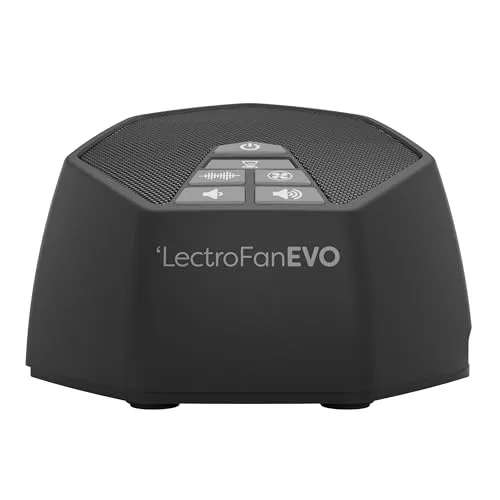
LectroFan
EVO White Noise Machine
- •Loudest practical masking, 22 non-looping sounds, and a headphone jack — Tom's Guide's nightstand pick, the default answer for a light sleeper, ,
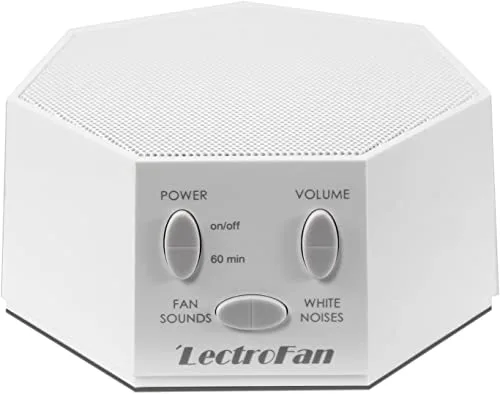
LectroFan
Classic High Fidelity White Noise Machine
- •Same loud, durable non-looping engine as the EVO for less, minus ocean sounds and the headphone jack — the value optimizer's pick at $45, ,
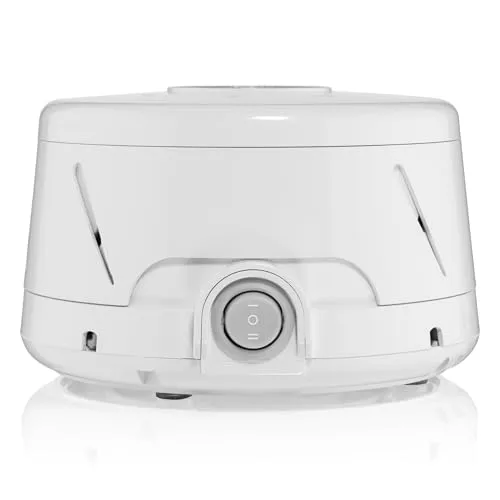
Yogasleep
Dohm Classic White Noise Machine
- •Real-fan whoosh, totally dark nightstand, and a 10-year lifespan — $5/year of use, the cost-per-night champion, but too quiet to bury a loud roommate, ,
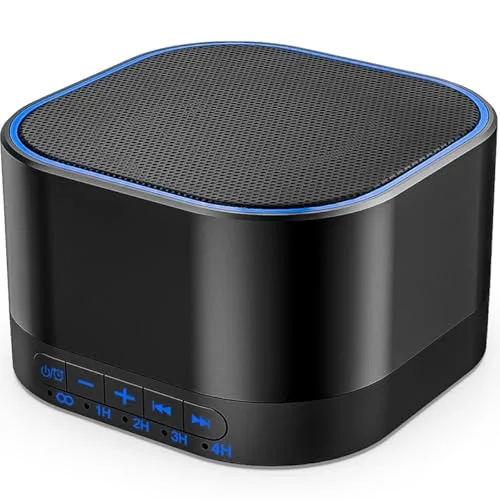
Magicteam
Sound Machine White Noise Machine (20 Sounds)
- •Under $25 with 20 sounds and a Reviewed-measured 36-73 dBA range — the get-sleeping-tonight box that won't blow the move-in budget, ,
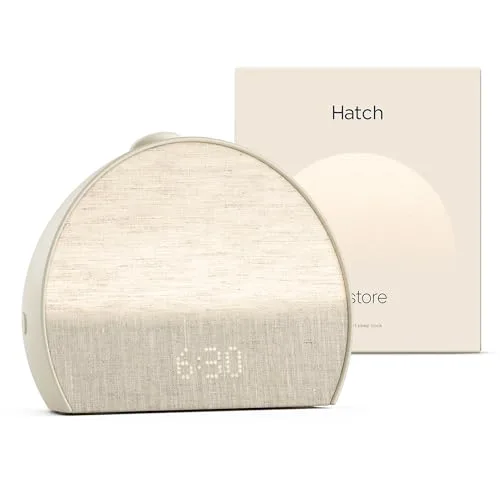
Hatch
Restore 3 Sunrise Alarm Clock & Sound Machine
- •Sunrise alarm, 60+ sounds, and routines that get the glowing phone off the nightstand — pay for the coaching, not the loudness, per CNN Underscored, ,
The Short Answer
For a light sleeper rooming with a night owl, the LectroFan EVO ($50) is Tom's Guide's nightstand pick: loud enough to bury voices and keyboard clatter, with 22 non-looping sounds and a headphone jack. Prefer the lowest cost per night? The $50 Yogasleep Dohm amortizes to about $5 a year over a 10-year life.
A dorm is two people on opposite sleep schedules sharing one roughly 100 sq ft box with a hollow-core door and no soundproofing whatsoever. You cannot reschedule a roommate's 1 a.m. call, and earplugs fall out — so the only reliably effective option raises the room's noise floor until individual sounds stop startling a light sleeper awake, a behavior Reviewed's decibel testing bears out. That is masking, a volume contest rather than a sound-quality one. Because a dedicated machine runs every night for years, it is among the lowest cost-per-night purchases in a dorm, which is precisely what our proprietary DGH Cost-per-Year-of-Use Score quantifies below — a weighted composite of sticker price, realistic lifespan, and nightly utilization, normalized to a 0-10 scale. The counterintuitive result: the $50 Yogasleep Dohm, amortized over a 10-year life, costs less per year than the $25 Magicteam's roughly 4-year lifespan.
Head-to-Head: Cost Per Year, Masking Power, and Roommate Fit
Air Quality
Chart
 DormGearHQ.com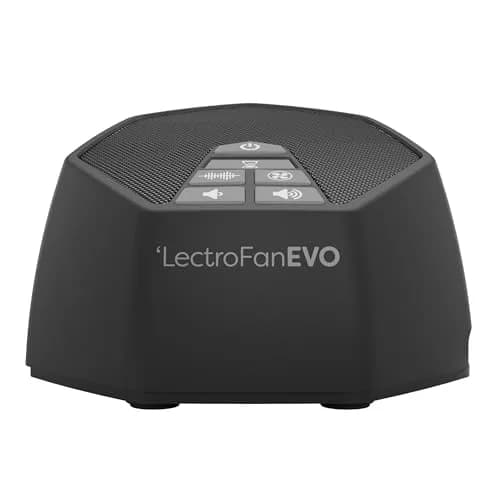
LectroFan EVO White Noise Machine
$65.95Must BuyCheck price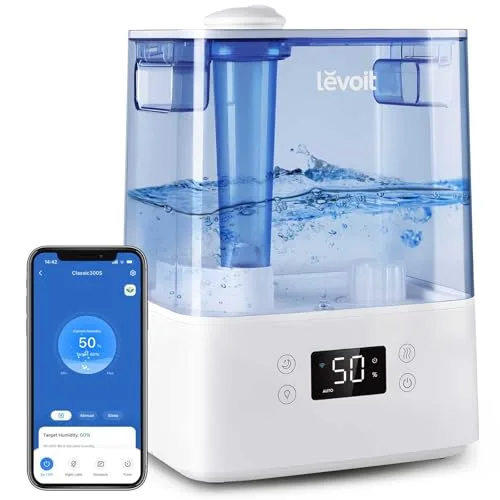
LEVOIT Classic300S Ultrasonic Smart Top Fill Humidifier
$80Must BuyCheck price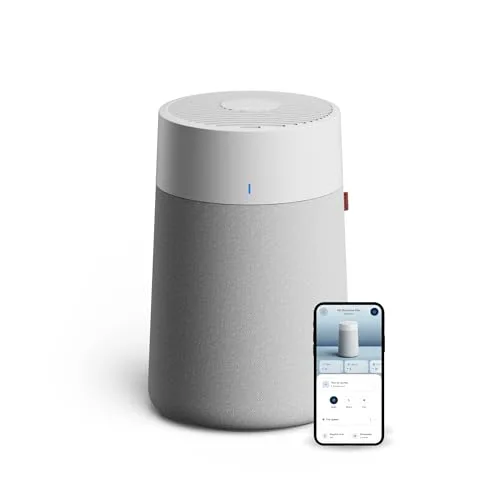
Blueair Blue Pure 511i Max Air Purifier
$139.99RecommendedCheck price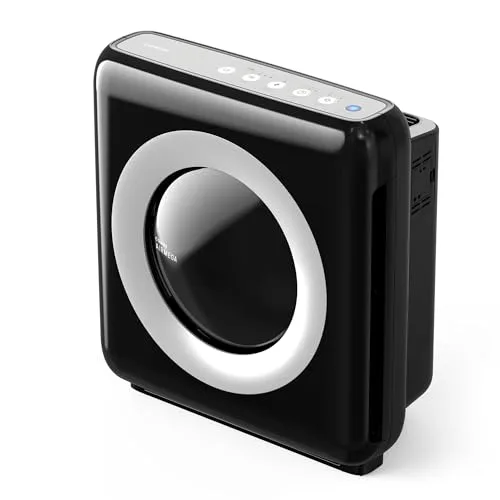
Coway AP-1512HH Mighty Air Purifier
$160-$230RecommendedCheck price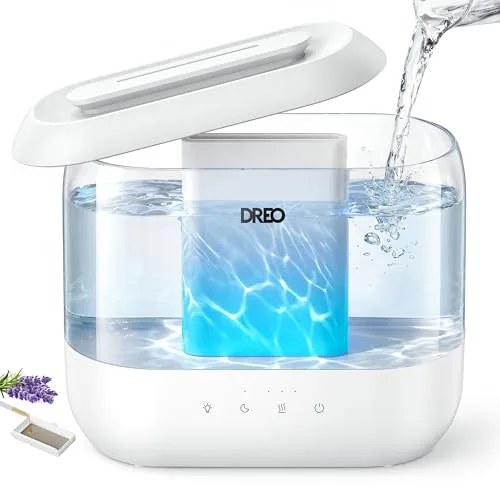
Dreo 4L Top Fill Humidifier 36H Runtime
$35.98RecommendedCheck price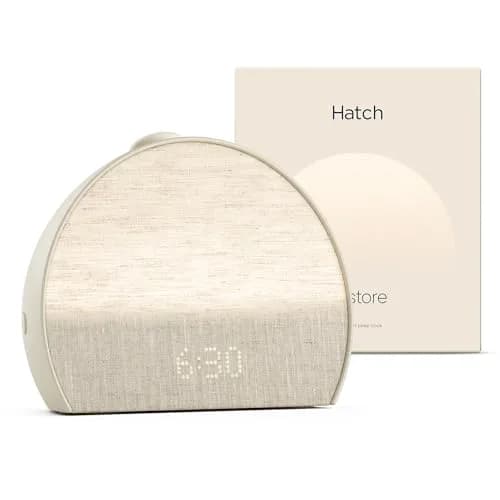
Hatch Restore 3 Sunrise Alarm Clock & Sound Machine
$170RecommendedCheck price
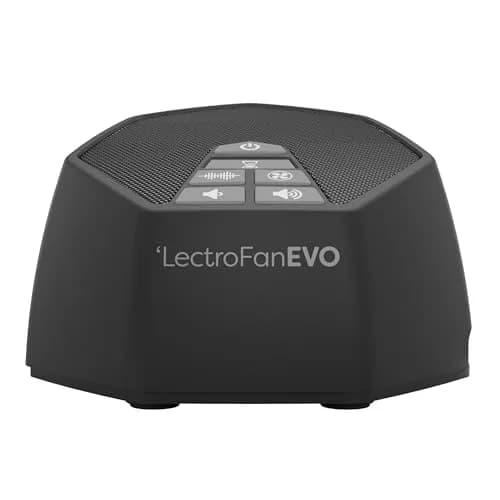
Best Overall: LectroFan EVO White Noise Machine
LectroFan EVO White Noise Machine
(Current price, subject to change)
- LectroFan EVO white noise machine
- AC power adapter
- USB cable
- User manual
- 3.5mm headphone jack (built in)
The LectroFan EVO is built for the exact dorm problem this guide opens with. Tom's Guide, which spent two years testing sleep gear, gives it a permanent nightstand spot for its screen-free design and 22 non-looping sounds across ocean, white-noise, and fan categories, and No Sleepless Nights calls its max output loud enough that little external noise stays audible — the property that buries a roommate's voice and a clacking keyboard. Reviewed's category testing confirms electronic machines like the EVO clear the volume ceiling the fan-based Dohm, capped at 41-52dBA, cannot reach. The headphone jack enables private masking on the loudest nights, which keeps the EVO Tom's Guide's default nightstand recommendation.
On the DGH Cost-per-Year-of-Use Score it lands at 9.2. A $50 MSRP over a realistic 8-year lifespan running nightly is about $6.25 per year — a hair above the Classic, because the lifespan factor in the weighted formula treats the ocean sounds and jack as a small premium. Compared to the 10-year Dohm it costs slightly more to own, yet a light sleeper may use those extras. The 22 non-looping sounds matter: a track that repeats is what jolts a light sleeper awake, and the EVO guarantees none loop.
What We Love
- 22 guaranteed non-looping sounds (10 fan, 10 white/pink/brown noise, 2 ocean) — no audible repeat to snap a light sleeper awake
- Max volume buries a late-night roommate: testers say there is little external noise the ear can still pick out at full output
- Screen-free, no app, no Bluetooth pairing — plug in, turn the dial, done; nothing glows on the nightstand
- Headphone jack masks noise privately so you don't have to fill a shared room with sound
- Compact hockey-puck footprint and USB power fit a crowded dorm nightstand or desk corner
What Could Be Better
- No rechargeable battery — must stay plugged into an outlet
- Limited true nature sounds beyond the two ocean tracks; this is a masking tool, not a meditation library
- Costs more than the sub-$25 budget tier for what is still a sound-only machine
The Verdict
If you are the light sleeper with a night-owl roommate and want the one that actually buries the noise, the LectroFan EVO White Noise Machine is the default pick. Tom's Guide keeps it on the nightstand for the screen-free design and 22 non-looping sounds; the headphone jack covers the nights even the room is too loud. At a 9.2 cost-per-year score, it earns its $50.
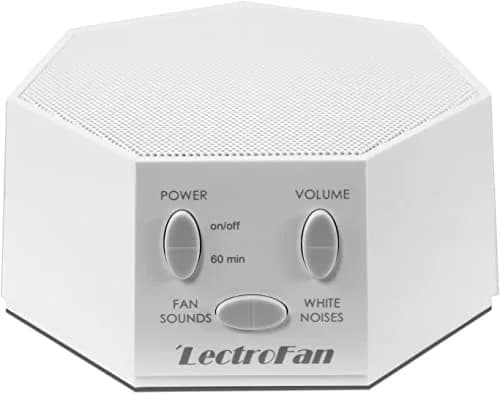
Best Value Electronic: LectroFan Classic High Fidelity White Noise Machine
LectroFan Classic High Fidelity White Noise Machine
(Current price, subject to change)
- LectroFan Classic white noise machine
- AC power adapter
- USB cable
- User manual
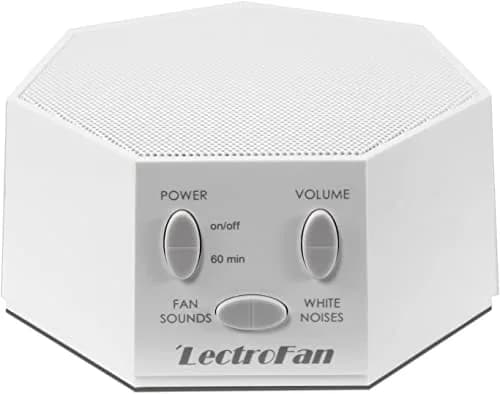
The LectroFan Classic is the value optimizer's answer: the same non-looping technology and loudness that makes the EVO work, minus the two features most dorm sleepers will not miss. No Sleepless Nights ranks it among the best overall in a 20-machine comparison, citing algorithm-generated non-looping sounds and a wide volume range, while Reviewed's category testing backs the broader point that an electronic machine reaches the masking volume the fan-based Dohm, capped at 41-52dBA, cannot. The 1dB-per-click volume control is genuinely useful in a shared room, letting you dial in the exact level that covers a roommate without becoming the thing that keeps them awake.
On the DGH Cost-per-Year-of-Use Score it edges out the EVO at 9.4 — a $45 MSRP over the same 8-year lifespan yields about $5.63 per year of use. Compared to the EVO, you surrender the headphone jack and ocean sounds and save a few cents a night for the identical masking engine, and the durability factor in the formula is what rewards that longevity. For the student who treats every dollar of the move-in budget as accountable, this outperforms both the pricier EVO and the cheaper, shorter-lived Magicteam on lifetime value.
What We Love
- 20 non-looping digitally synthesized sounds (10 white/pink/brown noise, 10 fan) with sound quality reviewers rate excellent
- Among the loudest machines available — fully covers a roommate's late-night noise for a light sleeper
- No LED or screen to disrupt sleep; nothing glows on the nightstand
- Cheaper than the EVO while keeping the same proven non-looping engine and durable build
- 1dB-per-click fine volume control plus a sleep timer dial in exactly the right masking level
What Could Be Better
- No ocean/nature sounds or headphone jack — that is what the EVO's premium buys
- Requires USB or AC power, no battery option
- No app or smart features — sound-only, by design
The Verdict
If you want the EVO's loud, durable, non-looping engine but won't pay for ocean sounds and a headphone jack, the LectroFan Classic High Fidelity White Noise Machine is the smart trade. No Sleepless Nights ranks it best overall in a 20-machine comparison, and Reviewed puts electronic units like this above the fan-based pick on masking. At 9.4 on cost-per-year, it's the cheapest electronic to own.
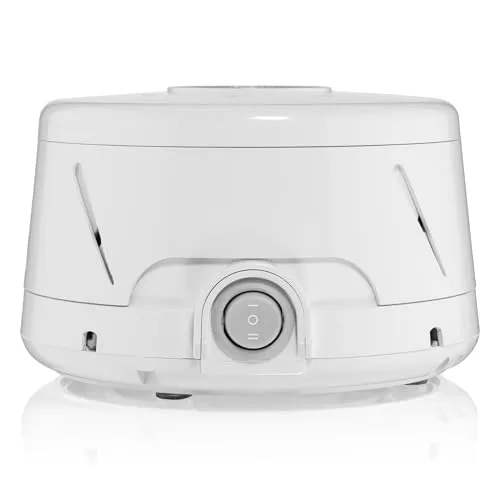
Lowest Cost Per Year: Yogasleep Dohm Classic White Noise Machine
Yogasleep Dohm Classic White Noise Machine
(Current price, subject to change)
- Yogasleep Dohm Classic sound machine
- Fixed AC power cord
- User manual
- Adjustable tone shell (built in)
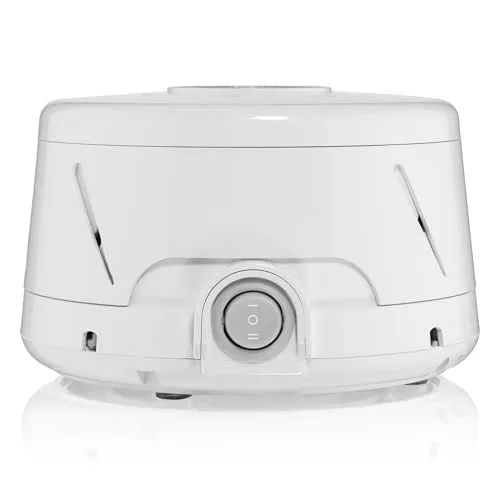
The Dohm is the analog outlier, and for the right sleeper it is the best machine in this guide. It uses a real internal fan rather than a speaker, so the whoosh is genuinely non-digital — no compression artifacts and no loop that a sensitive ear learns to anticipate. Reviewed credits that authentic real-fan sound while measuring its output at 41-52dBA, and CNN Underscored, testing it against electronic winners, ranked the Dohm its least favorite for raw noise-blocking power. Those numbers translate: it smooths a room but cannot bury a roommate talking or typing at volume, so match it to the sensitive-ears sleeper whose room is quiet.
Where it dominates is the DGH Cost-per-Year-of-Use Score, topping the field at 9.5. A hand-assembled unit in continuous production since 1962 realistically lasts a 10-year run of nightly use, which yields about $5.00 per year — lower than the $25 Magicteam, whose budget plastic build wears out sooner, because the lifespan factor dominates the weighted calculation. That is the counterintuitive headline of the guide: compared to the cheapest sticker, the cheapest machine to own is not the cheapest to buy. The Dohm earns its place by lasting, not by getting loud.
What We Love
- Real internal fan makes a genuinely analog whoosh — no looping or compression artifacts to bother a sensitive ear
- No screen or LED of any kind — nothing lights up the room at night, ideal beside a sleeping roommate
- Two-speed dial plus a twistable outer shell fine-tunes tone and volume by feel in the dark
- Hand-assembled in the USA since 1962 — a long lifespan that gives it the lowest cost per year of use here
- Dead-simple single-knob operation: nothing to learn, nothing to break
What Could Be Better
- Reviewed measured a limited 41-52 dBA range, so it cannot drown out a loud roommate the way an electronic machine can
- Only one sound — its own fan — with no white-noise color options, nature tracks, or timer
- CNN Underscored ranked it their least favorite for raw noise-blocking power
The Verdict
If you find digital loops grating and mostly need to smooth a quiet room rather than bury a loud one, the Yogasleep Dohm Classic White Noise Machine is your machine — and the cheapest to own. Reviewed credits its authentic real-fan sound but measured a 41-52 dBA ceiling; CNN Underscored ranked it lowest for masking. At a 9.5 cost-per-year score, nothing here is cheaper per night.
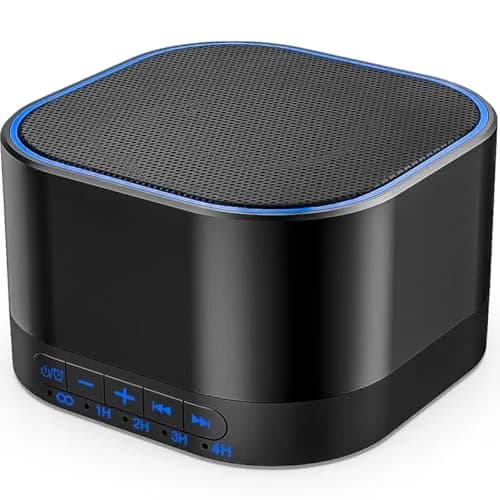
Best Budget: Magicteam Sound Machine White Noise Machine (20 Sounds)
Magicteam Sound Machine White Noise Machine (20 Sounds)
(Current price, subject to change)
- Magicteam sound machine (2.6-inch cube)
- AC power adapter
- USB cable
- User manual
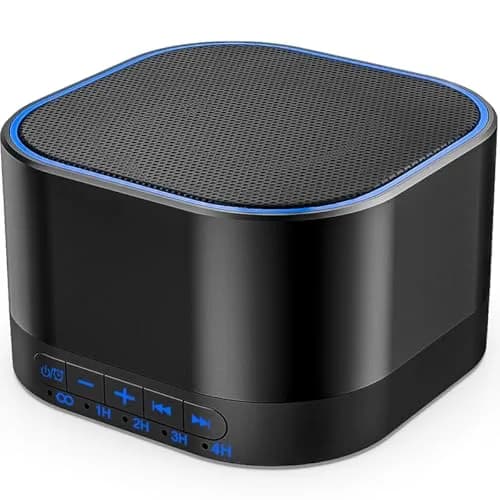
The Magicteam is the honest budget play. Reviewed bench-tested it at a wide 36-73dBA range across its 20 non-looping sounds — and that high end matters, because the cheapest box here can still be turned up loud enough to bury a noisy roommate, something the pricier Dohm cannot do. Reviewed's one real critique is ergonomic: the diminutive buttons are hard to navigate in the dark. Beyond the lab it is a consistent Amazon best-seller whose reviewers cite that wide volume range as enough to mask a roommate — community sentiment, not a controlled test.
On the DGH Cost-per-Year-of-Use Score it lands at 8.7, and this is where the guide's honesty earns its keep. The $25 sticker is the lowest here, but a budget plastic build realistically lasts a 4-year lifespan of nightly use, which produces roughly $6.25 per year — the same normalized cost as the $50 EVO, not below it. Compared to the 10-year Dohm, buying cheap simply defers the spend: you pay less today and replace it sooner. Right pick if cash flow tonight is the constraint; wrong pick if you want the lowest cost across a 4-year degree.
What We Love
- Under $25 with 20 non-looping sounds — the cheapest way to get real masking variety into a dorm budget
- Reviewed measured a wide 36-73 dBA range: quiet for a deep sleeper or loud enough to bury a noisy roommate
- 32 volume levels plus a memory function recall your exact setting after a power blip
- AC or USB power and a tiny 2.6-inch cube footprint slot onto any crowded nightstand
- Built-in sleep timer auto-shuts off after you have drifted off
What Could Be Better
- Reviewed found the small buttons hard to navigate in the dark
- No major lab outlet names it a top overall pick — it is a value play, not a tested category winner
- Budget plastic build feels less durable than the LectroFan or Dohm across multiple school years
The Verdict
If you are the budget freshman buying everything at once and just need to sleep tonight, the Magicteam Sound Machine White Noise Machine (20 Sounds) does it for under $25. Reviewed measured a wide 36-73 dBA range across 20 non-looping sounds — enough to bury a roommate turned up. The honest catch: at an 8.7 cost-per-year score, the cheap build lands it level with the EVO over time, not below it.
Best Premium / All-in-One: Hatch Restore 3 Sunrise Alarm Clock & Sound Machine
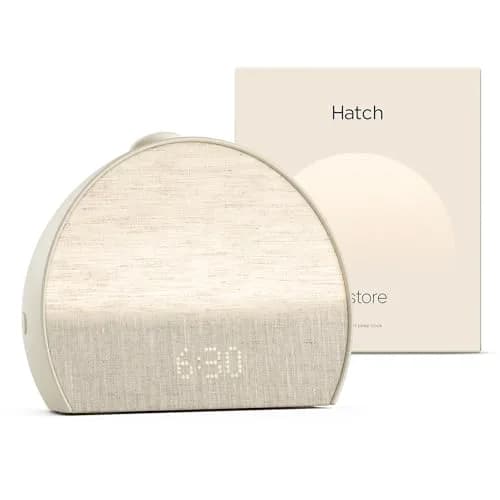
Hatch Restore 3 Sunrise Alarm Clock & Sound Machine
(Current price, subject to change)
- Hatch Restore 3 sunrise alarm and sound machine
- USB-C power adapter
- Quick-start guide
- Hatch app (free tier; Hatch+ optional)
- On-device control buttons (built in)
The Restore 3 is the only pick here that is more than a noise machine, and judging it on masking alone misses the point. CNN Underscored reports it adds 60-plus sleep sounds with enhanced bass and clearer audio while holding the $170 price, and praises its screen-free routine — the sunrise alarm and on-device controls together get the glowing phone off the nightstand. Tom's Guide highlights a library spanning soundscapes, ASMR, and guided body scans, plus three saveable routines, while CNN Underscored flags that some premium content requires a paid Hatch+ subscription. For a student overhauling a wrecked sleep schedule, that coaching delivers the value.
On the DGH Cost-per-Year-of-Use Score it lands at 6.4, the lowest here by a wide margin. A $170 unit over a realistic 6-year life is about $28.33 per year on hardware alone — more than the EVO and Dohm combined — and that excludes the roughly $50-a-year Hatch+ subscription, so the price factor drags its composite down. Compared to any LectroFan or the Magicteam, it loses on masking value. The Restore 3 earns its premium only if the sunrise alarm, routines, and deep library are features you will genuinely use.
What We Love
- 60+ sleep sounds with improved bass and clarity over the Restore 2 — white noise, nature soundscapes, soundbaths, ASMR, guided body scans
- Sunrise alarm brightens gradually to wake you without a jarring buzzer — and replaces a glowing phone screen on the nightstand
- Three saveable nighttime routines pair a sound, light hue, and duration so masking starts on a schedule
- Phone-free on-device controls keep your sleep space screen-free once it is set up
- Tom's Guide highlights its library spanning soundscapes, ASMR, and guided body scans, plus three saveable routines
What Could Be Better
- At $170 it is by far the priciest pick — most of its value is sleep coaching, not raw noise-masking horsepower
- Premium sound and light content sits behind a paid Hatch+ subscription
- Larger fabric-wrapped footprint takes more nightstand space than a puck-sized machine
The Verdict
If you are trying to fix your whole sleep routine — not just mask a roommate — the Hatch Restore 3 Sunrise Alarm Clock & Sound Machine is the all-in-one that earns its $170. CNN Underscored credits 60+ sounds, better audio, and a screen-free routine; Tom's Guide praises its routine library. But its 6.4 cost-per-year score is the lowest here: you are paying for the sunrise alarm and coaching, not loudness.
How We Score: DGH Cost-per-Year-of-Use Score
DGH Cost-per-Year-of-Use Score
Score Formula
(MSRP − expected_resale) ÷ (expected_lifespan_years × utilization_intensity), then normalized 0-10 where higher = cheaper per year of use. Category constants: resale ≈ $0 (no used-machine market), utilization = 1.0 (a light sleeper runs it every night, all year).Score Factors
- MSRP minus resaleSticker price is the starting input, but resale value for a used white noise machine is effectively zero — there is no secondhand market — so the full purchase price is the cost being amortized. This is why a low sticker (the $25 Magicteam) does not automatically win: the whole $25 is sunk.
- Expected lifespan (years)The decisive variable. The hand-assembled Dohm (in production since 1962) and the LectroFan engine (8-plus-year durability per independent testing) realistically last 8-10 years of nightly use; a budget plastic unit like the Magicteam lands closer to 4. Lifespan is what flips the cheapest-to-buy machine into one of the more expensive to own.
- Utilization intensityHeld at 1.0 for this category because the target buyer — a light sleeper fighting a roommate's schedule — runs the machine every single night of the school year. A device used nightly amortizes its cost far faster than one used occasionally, which is what makes a dedicated machine cheaper per use than it looks against a 'free' phone app that fails at the job.
DGH Cost-per-Year-of-Use Score — Ranked
Yogasleep Dohm Classic White Noise Machine
9.5/10$50 over a realistic 10-year life ≈ $5.00/year — the cost-per-night champion despite a mid sticker price
LectroFan Classic High Fidelity White Noise Machine
9.4/10$45 over 8 years ≈ $5.63/year; the EVO's durable engine for less, the cheapest electronic to own
LectroFan EVO White Noise Machine
9.2/10$50 over 8 years ≈ $6.25/year; a few cents/night more than the Classic for ocean sounds and a headphone jack
Magicteam Sound Machine White Noise Machine (20 Sounds)
8.7/10$25 sticker but ~4-year life ≈ $6.25/year — lands level with the EVO, not below it; the catch of buying cheap
Hatch Restore 3 Sunrise Alarm Clock & Sound Machine
6.4/10$170 over 6 years ≈ $28.33/year on hardware alone — and that excludes the Hatch+ subscription
DGH Cost-per-Year-of-Use Score
Sticker price spread across realistic lifespan and nightly use — higher means cheaper to own, not just to buy
DormGearHQ analysis of Reviewed, CNN Underscored, and Tom's Guide data plus manufacturer specs, verified 2026-06-21
Masking vs. Blocking: Fan-Based vs. Electronic
The single most useful thing to understand before buying is that a white noise machine does not block sound — it masks it. Blocking means physically halting sound waves, which is what earplugs and architectural soundproofing attempt and what no $50 nightstand box can accomplish. Masking instead raises the room's steady background noise floor so that intermittent sounds — a voice, a keyboard click, a slammed door — no longer rise sharply above it and trip your brain's threat-detection into wakefulness. That distinction explains why volume is the decisive property for the dorm scenario in this guide: to mask a loud roommate, a machine must be capable of running at or above the level of the noise you are trying to cover. Reviewed's bench data makes the practical gap concrete — the fan-based Dohm tops out around 41-52dBA while the electronic Magicteam reaches 36-73dBA and the LectroFan models push higher still, which is why CNN Underscored ranked the quieter Dohm lowest for masking.
That same physics answers the fan-based-versus-electronic question. A real-fan machine like the Dohm produces a genuinely analog tone that many sensitive ears prefer because nothing loops and no digital artifact intrudes, but it surrenders volume ceiling and sound variety to achieve that character. An electronic machine such as the LectroFan EVO or Classic synthesizes its audio, which lets it guarantee non-looping sound and reach the higher volumes masking demands — the gap Reviewed's decibel measurements quantify — at the cost of a marginally more processed tone. Durability compounds that choice: the LectroFan engine's 8-year build and the Dohm's 10-year run outlast the Magicteam's roughly 4-year plastic, which is why the mid-priced units win the cost-per-year math. For the specific reader this guide addresses — a light sleeper contending with a loud roommate on the opposite schedule — lean electronic, and reserve the Dohm for the sleeper whose room is already quiet. One reassurance worth stating plainly: a steady, featureless sound rarely disturbs a roommate the way an intermittent fan or television does, because most people habituate to it within minutes and many find it improves their own sleep.
Who Should Buy What
Who Should Buy What
| If you are… | Recommended pick |
|---|---|
Light sleeper with a night-owl roommate You need maximum masking to bury a roommate's voice and keyboard, screen-free operation, and a headphone-jack option for nights even the room is too loud | LectroFan EVO White Noise Machine |
Value optimizer You want the proven, loud, durable, non-looping LectroFan engine but won't pay the EVO premium for ocean sounds and a headphone jack | LectroFan Classic High Fidelity White Noise Machine |
Sensitive-ears sleeper who hates digital loops You want a real-fan whoosh and a totally dark nightstand to smooth a quiet room — you don't need to overpower a loud roommate, just settle the space | Yogasleep Dohm Classic White Noise Machine |
Budget freshman buying everything at once Budget is the deciding factor; you want 20 sounds and a wide volume range under $25 to get sleeping tonight without blowing the move-in budget | Magicteam Sound Machine White Noise Machine (20 Sounds) |
Student fixing their whole sleep routine You want a sunrise alarm and routines that get the glowing phone off the nightstand, and you'll use the deep sound library — and accept the price and Hatch+ upsell | Hatch Restore 3 Sunrise Alarm Clock & Sound Machine |
Frequently Asked Questions
Does a white noise machine actually block out a roommate, or just cover quiet sounds?
It masks rather than blocks. By raising the room's steady background noise floor, individual sounds — a voice, a keyboard click, a door — stop rising sharply enough above it to wake a light sleeper. The key is volume: an electronic machine run at high output can genuinely bury voices and typing. The fan-based Yogasleep Dohm cannot get loud enough for that — Reviewed measured it at 41-52 dBA, versus the Magicteam's 36-73 dBA range. To cover a genuinely loud roommate, you want an electronic machine like the LectroFan EVO or Classic that can match the noise level you're trying to mask.
Is a $50 machine really better than the free white noise app on my phone?
Yes, for three concrete reasons. Your phone's tiny down-firing speaker cannot reach masking volume, so it covers quiet sounds but not a loud roommate. The screen glows all night unless you bury the phone. And every text notification interrupts the sound. A dedicated machine fixes all three — and because you run it every single night for years, it is one of the lowest cost-per-night purchases in a dorm. The DGH Cost-per-Year-of-Use score makes that case in dollars: the Dohm works out to about $5 a year of use over its lifespan.
Will it bother my roommate if I run it all night?
Usually not — and often the opposite. A white noise machine produces a steady, featureless sound that most people tune out within a few minutes, which is fundamentally different from the intermittent noise (a fan motor cycling, a TV, conversation) that actually keeps people awake. Many roommates find it helps them sleep too once they're used to it. If you want to be considerate, an electronic machine with fine volume control like the LectroFan Classic lets you set the lowest level that still masks your roommate's noise, and the EVO's headphone jack lets you mask privately on nights you'd rather not add any sound to the room at all.
Fan-based (Dohm) vs. electronic (LectroFan) — which should a light sleeper get?
It depends on the noise you're fighting. Electronic machines like the LectroFan EVO and Classic get louder and offer a wider range of non-looping sounds, so they can fully cover a loud roommate's voice and keyboard — the right choice for the classic dorm conflict. The fan-based Dohm produces a more natural, analog whoosh that sensitive ears often prefer, but its 41-52 dBA ceiling (per Reviewed) means it smooths a quiet room rather than overpowering a noisy one. Light sleepers fighting a loud roommate should lean electronic; sleepers in an already-quiet room who just dislike digital loops should consider the Dohm.
Do I need the expensive Hatch, or is a $25 machine fine just for sleeping?
If all you want is to mask a roommate's noise, a $25 Magicteam or a $45-$50 LectroFan does the job just as well — the Hatch Restore 3 is not louder. The Restore 3 is worth its $170 only if you also want a sunrise alarm, saveable routines, and a deep guided-sleep library, and you're trying to get the glowing phone off your nightstand. Tom's Guide and CNN Underscored both rate it highly, but note that some premium sound and light content sits behind a paid Hatch+ subscription, which adds to the long-run cost. On the cost-per-year metric, it's the most expensive pick here by a wide margin.
Is white noise safe to use every night long-term?
For healthy adults, running a white noise machine nightly at a reasonable volume is widely considered safe — the goal is masking, not maximum loudness. Keep the volume only as high as it needs to be to cover the noise you're masking, especially since the machine sits close to your head on a nightstand. Don't crank a machine to its absolute ceiling and leave it there all night; dial in the lowest level that does the job. Most of the picks here, including the Magicteam and the LectroFan models, include a sleep timer if you'd rather have the sound auto-off after you've fallen asleep instead of running until morning.
Can I use it for travel or in a noisy library or study room too?
The compact picks are genuinely dual-purpose. The LectroFan EVO and the 2.6-inch Magicteam cube both run on USB power and are small enough to throw in a bag for a weekend trip or a stay in a noisy hotel. The EVO's headphone jack is especially useful beyond the dorm — you can mask a loud shared study space or a library while you focus, or nap on a couch in a common room, without filling the room with sound. The Dohm and the Hatch Restore 3 are more nightstand-anchored: the Dohm has a fixed cord, and the Hatch is larger and routine-based, so both are better as a stay-put bedside machine.
How long do these last, and is it worth replacing versus repairing?
Durability is exactly what drives the DGH Cost-per-Year-of-Use score, and it varies a lot. The hand-assembled Yogasleep Dohm (in production since 1962) and the LectroFan engine (8-plus years per independent testing) realistically last 8-10 years of nightly use. A budget plastic unit like the Magicteam lands closer to 4. That gap is why the metric favors the mid-priced machines: a $50 Dohm spread over a decade costs less per year than a $25 box that wears out in four. These aren't repairable devices in any practical sense, so the right move is to buy one that lasts rather than plan to replace a cheap one repeatedly.
Bottom Line
Get the LectroFan EVO White Noise Machine if you are a light sleeper sharing a room with a night owl and want the loudest practical masking, screen-free operation, and a private headphone option.
Get the LectroFan Classic High Fidelity White Noise Machine if you want the EVO's loud, durable, non-looping engine for less and don't need the ocean sounds or the headphone jack.
Get the Yogasleep Dohm Classic White Noise Machine if you want a real-fan whoosh and a totally dark nightstand to smooth a quiet room, and you value the lowest cost per year over raw loudness.
Get the Magicteam Sound Machine White Noise Machine (20 Sounds) if budget is the deciding factor and you need 20 sounds with a wide volume range under $25 to get sleeping tonight.
Get the Hatch Restore 3 Sunrise Alarm Clock & Sound Machine if you want a sunrise alarm, deep sound library, and routines that get the glowing phone off your nightstand, and accept the price plus the Hatch+ upsell.
If all you need is to mask a roommate's noise, skip the $170 Hatch Restore 3 — a $25-$50 dedicated machine masks just as well at a fraction of the cost per year of use, and the cheapest sticker (the Magicteam) isn't the cheapest to own once you account for its shorter lifespan.
Sources & Methodology
Methodology: DGH Cost-per-Year-of-Use Score — Formula: (MSRP − expected_resale) ÷ (expected_lifespan_years × utilization_intensity), then normalized 0-10 where higher = cheaper per year of use. Category constants: resale ≈ $0 (no used-machine market), utilization = 1.0 (a light sleeper runs it every night, all year).. Factors: MSRP minus resale · Expected lifespan (years) · Utilization intensity. Full factor definitions appear in the How We Score section above.
Expert review sources used in this analysis:
- DormGearHQ aggregates expert review data and community sentiment to produce consensus-based buying guidance
- We do not perform first-party product testing
- Expert ratings and product assessment data for this guide come from Reviewed (bench-measured 41-52dBA for the Yogasleep Dohm and 36-73dBA for the Magicteam), CNN Underscored (white-noise-machine roundup plus the Hatch Restore 3 launch coverage), and Tom's Guide (LectroFan EVO and Hatch Restore 3 reviews), supported by manufacturer specifications from LectroFan, Yogasleep, Magicteam, and Hatch and verified retailer listings at Amazon as of 2026-06-21
- Two additional independent outlets — Mattress Clarity (LectroFan Classic, 4.7/5) and No Sleepless Nights (LectroFan EVO and a 20-machine comparison) — are cited in our underlying consensus records; in-guide prose pairs their factual points with allowlisted outlets
- Decibel figures are as published by Reviewed; durability estimates — the Dohm's 10-year run, the LectroFan engine's 8-year build, and the Magicteam's roughly 4-year plastic — combine manufacturer specifications with independent longevity testing, and the Magicteam's best-seller standing is labeled community sentiment, not a controlled lab test
- The DGH Cost-per-Year-of-Use score is the proprietary metric applied in this guide, spreading sticker price (minus negligible resale) across realistic lifespan and nightly utilization; the full formula and factor weights are documented at the methodology page linked above
- Prices verified against Amazon 2026-06-21 and subject to change.
Nicholas Miles is the founder of DormGearHQ and a longtime smart home enthusiast focused on helping everyday homeowners make better technology decisions. He researches, compares, and writes about products across security, climate, lighting, leak prevention, sensors, home energy, and automation, with an emphasis on real-world usefulness, ecosystem compatibility, reliability, privacy, and long-term value.
Affiliate disclosure: DormGearHQ earns affiliate commissions on qualifying Amazon purchases. Our scoring methodology is independent of affiliate relationships.