
Best Dorm Microwave/Air-Fryer Combos 2026
A combo is the only dorm-legal air fryer: one enclosed-element, UL-listed box, not the exposed coil an RA confiscates. The catch nobody lists — every combo pulls 1,400-1,800W in air-fry mode, over the 700-1,000W dorm cap. The Panasonic NN-CV87QS scores best on compliance.
This article contains affiliate links. We may earn a commission at no extra cost to you. Learn more
Featured in this Guide
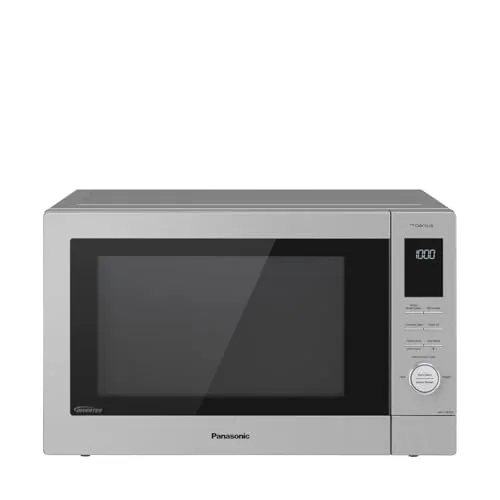
Panasonic
HomeChef Connect NN-CV87QS 4-in-1 Microwave Air Fryer Combo
- •1000W inverter microwave under most Standard caps plus the shallowest depth here;
- •Wirecutter says it microwaves as well as their top standalone pick, ,
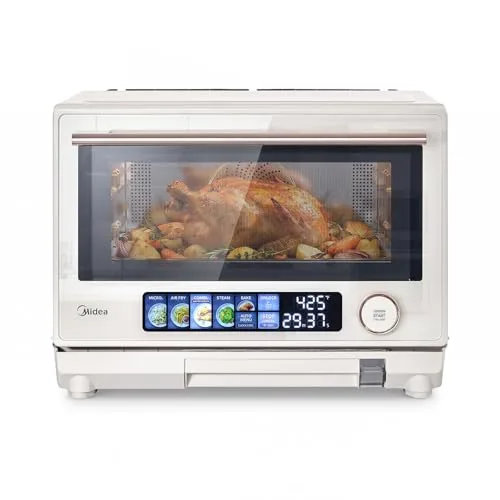
Midea
4-in-1 Inverter Microwave Oven, 0.9 Cu Ft Countertop Microwave with Air Fryer, Steamer & Convection Oven
- •Smallest body in the guide at 0.9 cu ft and the lowest microwave-mode draw at 900W output — the realistic fit for a tight shared counter, ,
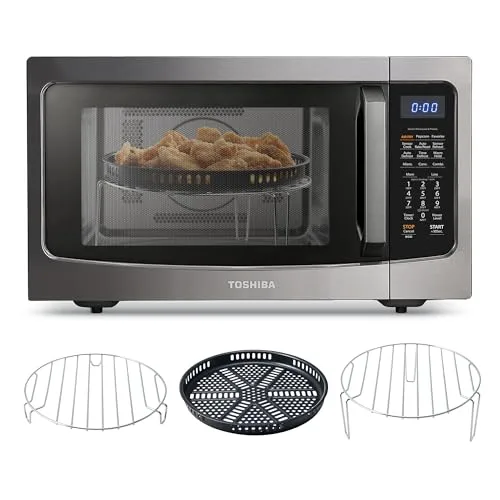
Toshiba
ML-EC42P 4-in-1 Air Fryer Combo Microwave with Convection
- •1000W microwave with a 1.5 cu ft convection cavity;
- •Tasting Table called its baking 'absolute perfection' — the best all-rounder if counter space allows, ,
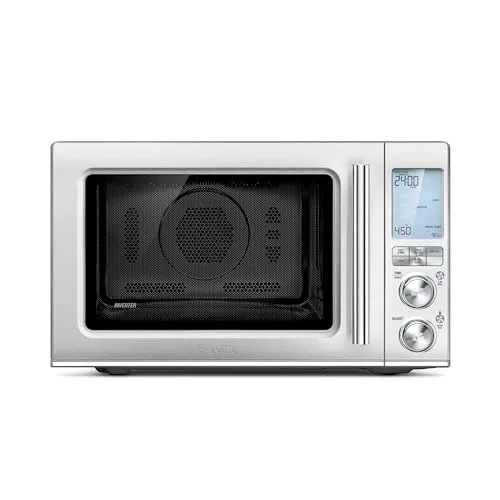
Breville
BMO870 Combi Wave 3-in-1 Microwave, Air Fryer & Convection Oven
- •Best build and crisping of the group, but 1200W microwave plus 1400W convection puts it over most dorm caps — an apartment oven, not a dorm one, ,
The Short Answer
A microwave/air-fryer combo is the only dorm-legal air fryer — its enclosed element passes the inspection a basket fryer fails. The Panasonic NN-CV87QS scores highest on compliance (1000W microwave); the Midea 0.9 cu ft is smallest. But every combo's air-fry mode draws 1,400-1,800W, over caps — check your contract.
"Can I have an air fryer in my dorm?" is the wrong question — for most students a combo is the only legal path. A standalone basket fryer's exposed heating element is the first thing an RA confiscates, and a second appliance trips the one-per-outlet rule in most housing contracts. A microwave/air-fryer combo solves both: one enclosed-element, UL- or ETL-listed box that reheats and crisps.
The catch no listing tells you: air-fry and convection modes draw 1,400-1,800W (1.8 kW), while dorms cap microwave wattage at 700-1,000W — compliant when you microwave, not when you press Air Fry. We aggregated Wirecutter, RTINGS, and Consumer Reports reviews plus manufacturer specs into the DGH Dorm-Policy Compliance Score — a weighted composite of enclosed-element design, UL/ETL listing, microwave wattage versus the cap, safety features, and footprint. The Panasonic tops it at 6.8, its primary mode most likely legal everywhere; the Breville trails at 4.8.
Head-to-Head: Compliance, Wattage, Crisping, Footprint, and Value
Mini Kitchen
Chart
 DormGearHQ.com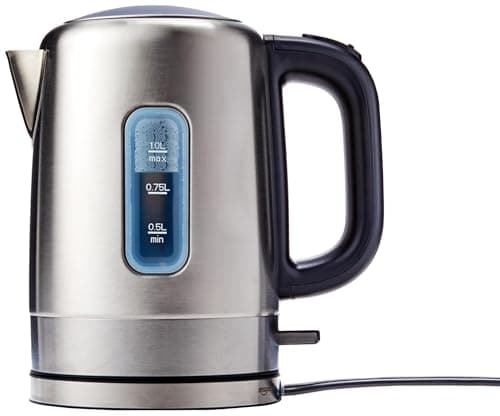
Amazon Basics Stainless Steel Electric Kettle, 1 Liter, 1500W, Auto Shut-Off
$22.67Must BuyCheck price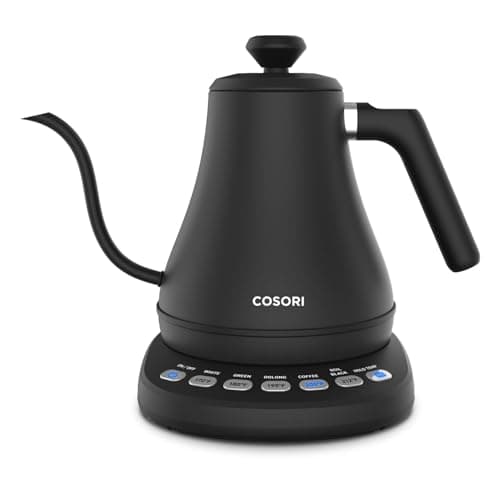
Cosori Electric Gooseneck Kettle, 5 Temperature Presets, 100% Stainless Inner Lid, 1200W, 0.8L
$69.99Must BuyCheck price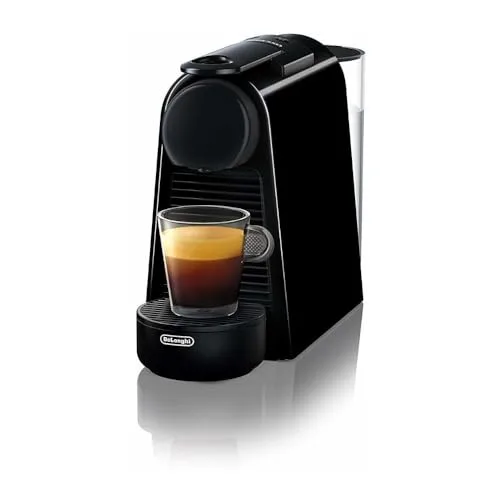
Nespresso Essenza Mini Espresso Machine by De'Longhi (1150W)
$187.52Must BuyCheck price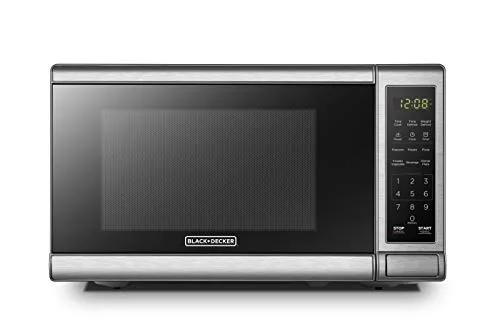
BLACK+DECKER EM720CB7 Compact Microwave (0.7 cu ft)
$79.99RecommendedCheck price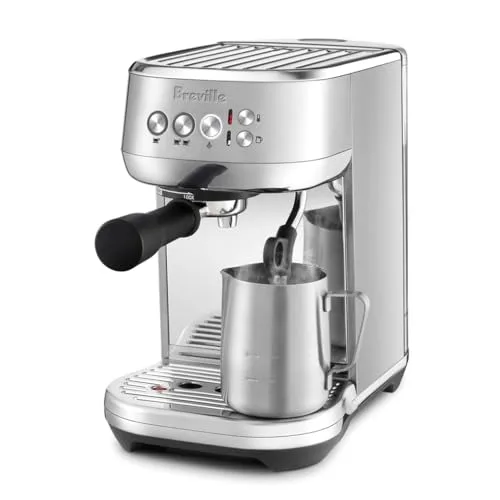
Breville Bambino Plus Espresso Machine BES500BSS (1560W)
$500RecommendedCheck price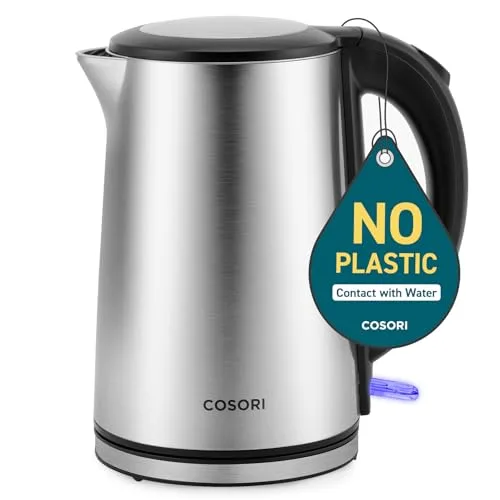
Cosori Electric Kettle (1.5L Stainless Steel)
$39.99RecommendedCheck price
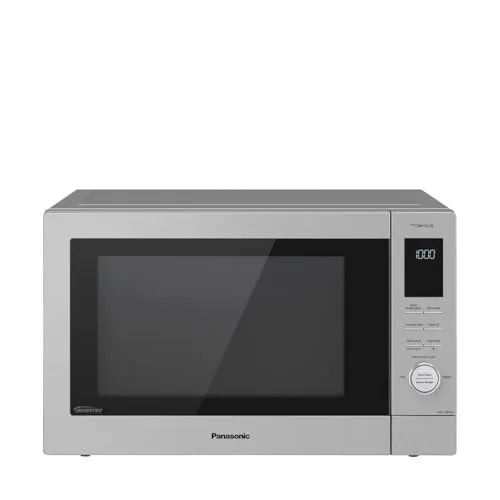
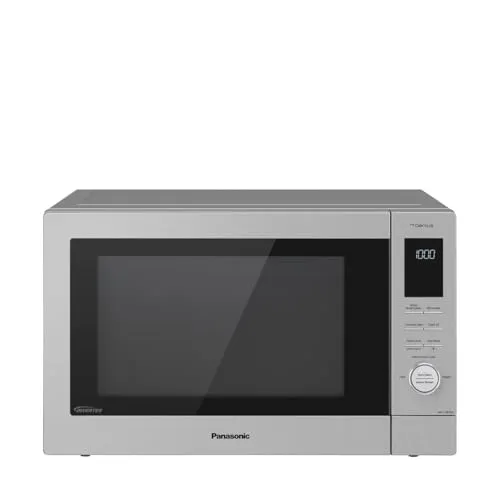
Best Compliance: Panasonic HomeChef Connect NN-CV87QS 4-in-1 Microwave Air Fryer Combo
Panasonic HomeChef Connect NN-CV87QS 4-in-1 Microwave Air Fryer Combo
(Current price, subject to change)
- 1000W inverter microwave with air fry, convection bake, and broil
- Cooking plate, air-fry basket, and platform
- Genius Sensor auto-cook
- Panasonic Kitchen+ app access
- User manual
Wirecutter found the HomeChef Connect "microwaved as well as our top pick in our tests," the strongest pure-microwave performer in this group — and microwaving is the mode that stays dorm-legal. Its 1000W (1 kW) inverter delivers even reheating without cold centers, and at roughly 17.7 inches deep it is the shallowest unit here, tucking under a shelf the Toshiba and Breville block. Genius Sensor auto-cook and the Kitchen+ app cover guided recipes, and Wirecutter rates the microwave performance best in this combo group.
The DGH Dorm-Policy Compliance Score reaches 6.8, the highest here, because the Panasonic's primary mode is most likely legal everywhere: the enclosed cavity passes the fire-safety gate, the UL listing clears strict-tier checks, and the 1000W (1 kW) microwave draw lifts the wattage factor under most Standard caps. Honest caveat — air-fry and convection pull about 1,700W (1.7 kW), over typical 700-1,000W caps, so crisping is an only-when-permitted bonus. Wirecutter also flags it cannot brown or crisp as fast as a real oven, a fair trade versus a basket fryer. At $300+ you pay for microwave performance and footprint, not the air-fryer mode.
What We Love
- Wirecutter found it microwaved as well as their top standalone pick — the best pure-microwave performance in this combo group
- 1000W inverter delivers even reheating without the cold centers cheaper microwaves leave
- ~17.7 inch depth is the shallowest footprint here, so it tucks under a dorm shelf the bulkier picks block
- Genius Sensor auto-cook plus a companion app take the guesswork out of presets
What Could Be Better
- Wirecutter notes it can't brown or crisp as fast or as well as a real oven or air-fry toaster oven
- Convection and air-fry modes pull well over the 1000W rating — above many dorm caps in those modes
- $300+ is a steep ask versus a basic microwave plus a $60 basket air fryer
The Verdict
If your dorm enforces a hard wattage cap and reheating is most of what you do, the Panasonic HomeChef Connect NN-CV87QS 4-in-1 Microwave Air Fryer Combo is the safest pick. Its 1000W microwave mode clears most Standard caps and the shallow depth fits a narrow counter. Wirecutter rates the microwave performance best in this group. Treat air-fry as an only-when-allowed bonus — that mode draws ~1700W, over the cap.
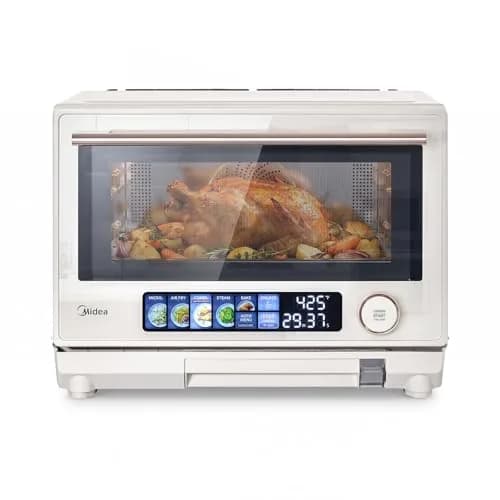
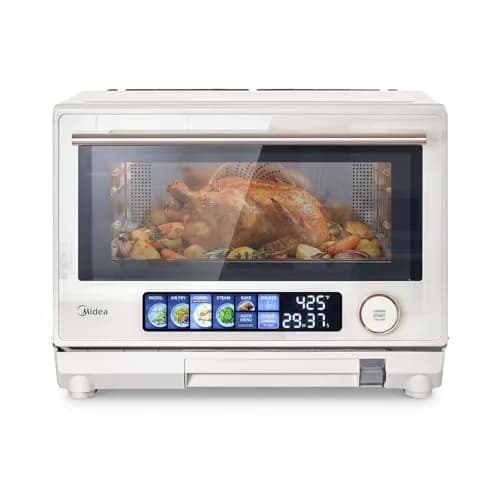
Best Compact: Midea 4-in-1 Inverter Microwave Oven, 0.9 Cu Ft Countertop Microwave with Air Fryer, Steamer & Convection Oven
Midea 4-in-1 Inverter Microwave Oven, 0.9 Cu Ft Countertop Microwave with Air Fryer, Steamer & Convection Oven
(Current price, subject to change)
- 900W inverter microwave with air fry, steam, and convection bake
- Air-fry rack
- Color touchscreen control panel
- 32 auto-cook menus
- User manual
The Midea 4-in-1 is the compact, affordable answer, and refreshingly candid about its limitations. Midea rates it at 900W (0.9 kW) inverter output with air-fry, steam, and bake modes drawing up to ~1,500W (1.5 kW), inside an 18.6 x 19.7 x 13.5 inch body that is the smallest here and the only one that tucks into the corner of a shared 12 ft by 14 ft room. That 900W (0.9 kW) output is the lowest everyday draw of the four versus the 1000W picks, clearing most Standard-tier caps, while the UL/cUL listing satisfies the safety mark strict halls check for.
The DGH Dorm-Policy Compliance Score lands at 6.7, second only to the Panasonic, because the enclosed cavity and UL/cUL listing clear the structural gates while the footprint factor scores best here. It trails the Panasonic by a tenth only because that pick carries Wirecutter testing, whereas the Midea's evidence base is spec plus verified-owner sentiment. Owners praise the size and versatility but flag a touchscreen learning curve and air-fry crisping that trails a dedicated basket fryer. The air-fry/steam/bake modes pull up to ~1,500W (1.5 kW), over many caps, so treat crisping as an only-when-allowed bonus that enables a one-box kitchen.
What We Love
- Smallest footprint in this guide at 18.6 x 19.7 x 13.5 inches and 0.9 cu ft — the most realistic fit for a tight shared dorm counter
- 900W inverter microwave output is the lowest everyday draw here, keeping base mode under most Standard-tier caps
- UL/cUL listed enclosed cavity clears the listing-mark requirement strict-tier housing checks for
- Genuine 4-in-1: microwave, air fry, steam, and convection bake with a 225-450F range
- Lowest sticker price of any true combo here — the cheapest path to a one-box dorm kitchen
What Could Be Better
- Air-fry, steam, and bake modes draw up to ~1500W input — over many 700-1,000W caps, so crisping is an only-when-allowed feature
- Owner reviews describe a learning curve on the touchscreen menus
- No major test lab has reviewed this exact model, so the evidence base is manufacturer spec plus owner sentiment
The Verdict
If you are fighting for desk space in a tight double, the Midea 4-in-1 Inverter Microwave Oven, 0.9 Cu Ft Countertop Microwave with Air Fryer, Steamer & Convection Oven is the smart compact pick. At 0.9 cu ft it is the smallest combo here, and its 900W microwave output is under the 1000W picks in everyday mode. Verify your contract before relying on air-fry — that mode draws ~1500W, over caps — but the everyday microwave half is the most cap-friendly here.
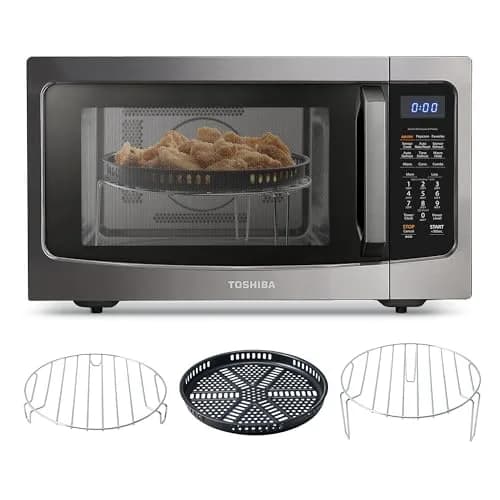
Best Overall: Toshiba ML-EC42P 4-in-1 Air Fryer Combo Microwave with Convection
Toshiba ML-EC42P 4-in-1 Air Fryer Combo Microwave with Convection
(Current price, subject to change)
- 1000W microwave with air fry, convection, and combination modes
- 1.5 cu ft cavity with 13.6 inch turntable
- Air-fry rack
- Smart Sensor auto-cook and ECO mode
- User manual
The Toshiba ML-EC42P is the best all-rounder when counter space allows, and RTINGS reviews it as a mid-range 4-in-1, treating microwave, convection, and air-fry as real modes. The 1000W (1 kW) microwave output stays under most Standard-tier caps, and the 1.5 cu ft cavity with a 13.6 inch turntable is the most usable under $250 — it swallows a 12 inch pizza or a whole chicken. Convection is the standout: Tasting Table called its baked cakes "absolute perfection," though the same review is honest about air-fry, where frozen fries "never crisped up" after 30 mins — the combo caveat versus a basket fryer.
The DGH Dorm-Policy Compliance Score is 6.5. It matches the Panasonic's 1000W (1 kW) microwave compliance and clears the enclosed-element and UL gates, but the 21.8 x 21.4 inch base costs it the footprint factor — a large unit that ranks behind the shallower Panasonic. RTINGS' review backs the convection modes, while the Smart Sensor auto-cook and mute are shared-room features. The wattage caveat applies: convection and air-fry draw about 1,750W (1.75 kW), over many caps, so crisping is a check-your-contract mode. Buy it for the cavity and baking, and treat convection as the occasional upgrade.
What We Love
- 1000W microwave output stays under most Standard-tier caps in plain microwave mode
- Convection bakes genuinely well — Tasting Table called its cakes 'absolute perfection,' fluffy and moist
- Smart Sensor auto-cook plus a mute function suit a quiet-hours shared room
- 13.6 inch turntable fits a 12 inch pizza or whole chicken — the most usable cavity under $250
What Could Be Better
- Air-fry/convection mode draws ~1750W input — over many dorm caps; check your housing contract first
- 21.8 x 21.4 inch base is a large countertop footprint for a shared dorm desk
- Air-fry results lag a dedicated fryer — Tasting Table's fries 'never really crisped up' after 30 minutes
The Verdict
If counter space isn't your constraint and you want the most usable cavity, the Toshiba ML-EC42P 4-in-1 Air Fryer Combo Microwave with Convection is the best all-rounder. RTINGS treats it as a true 4-in-1, its 1000W microwave clears most Standard caps, and the 1.5 cu ft convection cavity bakes well. The trades: a large 21.8 inch base, and a ~1750W convection draw that pushes over the cap when you crisp.
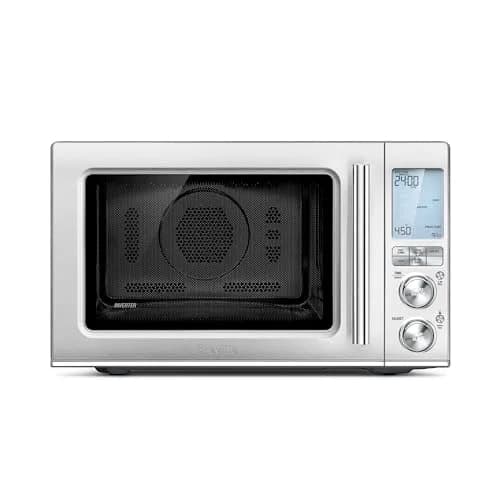
Best Appliance (Mixed): Breville BMO870 Combi Wave 3-in-1 Microwave, Air Fryer & Convection Oven
Breville BMO870 Combi Wave 3-in-1 Microwave, Air Fryer & Convection Oven
(Current price, subject to change)
- 1200W microwave / 1000W output, 3-in-1 with air fry and convection
- 1.1 cu ft cavity
- Element iQ heat-steering system
- Air-fry basket and rack
- User manual
The Breville Combi Wave is the best appliance on nearly every axis except the two that decide dorm policy. Top Ten Reviews scored its heating efficiency 9/10, and Consumer Reports maintains a lab review of the BMO870. The Element iQ system steers heat per mode, the chicken preset crisped skin, and The Kitchn used one daily for a 2-year stretch and judged it "delivers on all fronts." The auto-off shutoff is a genuine fire-safety feature, the strongest here, so if you are cooking rather than reheating, nothing else competes.
But the DGH Dorm-Policy Compliance Score is 4.8, the lowest, and the reason is honest arithmetic. The microwave draws 1200W (1.2 kW) and convection pulls 1400W (1.4 kW) — both well over the 700-1,000W cap, likely non-compliant at strict-tier schools. Top Ten Reviews scored size/space just 7/10, so it loses on the footprint factor too. The enclosed element, UL listing, and auto-off shutoff all pass; wattage and size sink the compliance result versus the Panasonic. A superb apartment oven most dorms will not permit, we scored it on compliance, not cooking. At $350-$400 it is the most expensive pick — the right appliance for the wrong room for most freshmen.
What We Love
- Element iQ steers heat per mode — Top Ten Reviews scored heating efficiency and time consistency 9/10
- The Kitchn used it daily for two-plus years and said it 'delivers on all fronts' as a 3-in-1
- Auto-off safety shutoff prevents accidental overuse — a genuine fire-safety plus
- Best build and crisping of any combo here; the chicken preset produced 'crispy skin'
What Could Be Better
- 1200W microwave and 1400W convection draw — well over typical 700-1,000W caps; likely non-compliant at strict and many Standard schools
- Top Ten Reviews scored size/space just 7/10 and called the unit 'quite large' for a counter
- At ~$350-$400 it is the most expensive pick — a splurge a returning student may not recoup
The Verdict
If you live off-campus with no wattage cap, the Breville BMO870 Combi Wave 3-in-1 Microwave, Air Fryer & Convection Oven is the best appliance here — the only pick where its wattage downside disappears. Consumer Reports keeps a dedicated lab review, and it crisps best. But at 1200W microwave plus 1400W convection it is likely non-compliant in traditional dorms, scoring lowest on policy. Buy it for an apartment, not a dorm.
How We Score: DGH Dorm-Policy Compliance
DGH Dorm-Policy Compliance
Score Formula
weighted composite (0-10): enclosed_element 35% + ul_etl_listing 20% + wattage_under_cap 20% + safety_features 15% + countertop_footprint 10%, each factor normalized to 0-10Score Factors
- Enclosed Element / No Open Flame (35%)The core fire-safety gate and the structural reason a combo is dorm-legal where a basket air fryer is not. All four picks pass — each is a fully enclosed microwave cavity with no exposed coil or open flame. Highest weight because this is the single factor that separates a confiscated appliance from an allowed one.
- UL/ETL Listing (20%)Independent safety-lab listing, required at strict-tier schools that inspect for the mark. All four picks carry UL or UL/cUL listing and pass. This is the documentation a housing officer looks for during a room check.
- Wattage Under Cap (20%)Microwave-mode draw versus dorm caps (roughly 700-1,000W Standard, up to ~1,500W on strict-circuit tolerance), plus the honest air-fry/convection draw that exceeds caps. This is where scores separate: the Midea (900W output) and the 1000W Panasonic/Toshiba clear base mode; the Breville's 1200W microwave and 1400W convection do not. Every combo's air-fry mode draws over typical caps.
- Auto-Shutoff / Safety Features (15%)Auto-off, child-lock, position memory, and mute. The Breville's auto-off shutoff and the Toshiba's child-lock/mute score high. This factor replaces the power-strip surge-protection factor in the registry metric — a single plugged appliance has no surge-strip exposure.
- Countertop Footprint (10%)Base area against a shared dorm desk. The Midea (0.9 cu ft) and shallow-depth Panasonic fit best; the large-bodied Toshiba and Breville lose points. This factor replaces the wall-damage-free factor — countertop units do no wall damage, so footprint is the relevant physical-fit measure.
DGH Dorm-Policy Compliance — Ranked
Panasonic HomeChef Connect NN-CV87QS 4-in-1 Microwave Air Fryer Combo
6.8/101000W microwave under most Standard caps plus the shallowest depth — the combo whose primary mode is most likely legal everywhere
Midea 4-in-1 Inverter Microwave Oven, 0.9 Cu Ft Countertop Microwave with Air Fryer, Steamer & Convection Oven
6.7/10Best footprint in the guide and the lowest microwave draw at 900W output; trails only on lacking a dedicated lab review
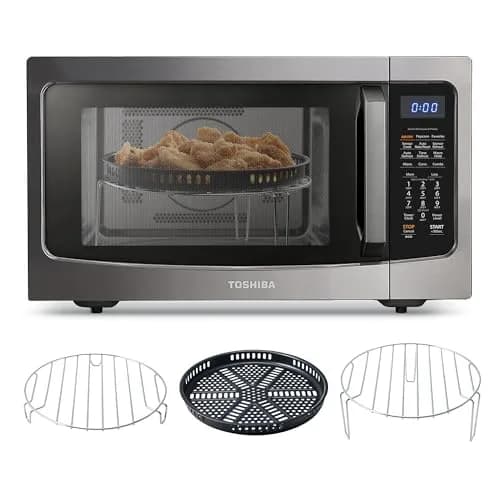
Toshiba ML-EC42P 4-in-1 Air Fryer Combo Microwave with Convection
6.5/10Same 1000W microwave compliance as the Panasonic, but the bigger 1.5 cu ft body costs it footprint points
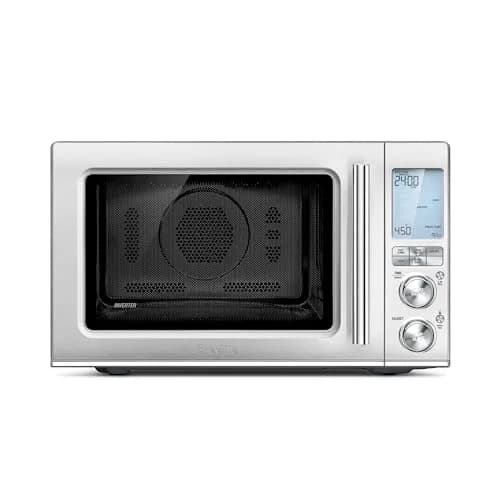
Breville BMO870 Combi Wave 3-in-1 Microwave, Air Fryer & Convection Oven
4.8/10Best appliance and safety shutoff, but 1200W microwave plus 1400W convection and a large body sink the compliance result
DGH Dorm-Policy Compliance
Composite of enclosed element, UL/ETL listing, microwave wattage vs. cap, safety features, and countertop footprint
DormGearHQ analysis of Wirecutter, RTINGS, Consumer Reports, and manufacturer spec data, verified 2026-06-21
Dorm Policy, Wattage Caps, and the Air-Fry Catch
The reason a microwave/air-fryer combo clears a dorm where a standalone air fryer does not comes down to one structural fact: the combo is a fully enclosed cavity with no exposed heating element. Housing contracts almost universally prohibit appliances with exposed coils or open flames — the same provision that bans hot plates, toaster ovens with open elements, and candles. A basket air fryer has an exposed element, so it fails that test even though it draws less power than a microwave. The combo passes the element test and adds UL or ETL listing, which is the second thing a strict-tier housing officer checks for during a room inspection. All four picks in this guide pass both gates.
The wattage catch is where students get caught off guard, and it is the single most important thing this guide can tell you. Most residence halls cap microwave wattage somewhere between 700 and 1,000 watts, with stricter-circuit buildings sometimes tolerating up to ~1,500W. Every combo here uses far more power in air-fry or convection mode than in microwave mode — the Toshiba and Panasonic pull around 1,700-1,750W convection, the Midea up to ~1,500W, and the Breville 1,400W. That means a unit can be fully compliant the moment you microwave and over the cap the second you press "Air Fry." The Breville is the clearest case: its 1,200W microwave draw is already over most caps before you even reach the convection mode. The practical rule is to read your specific housing contract, confirm the microwave-mode wattage limit, and treat the crisping modes as an only-when-permitted feature unless your building's circuits are rated for the higher load. Running a 1,700W mode on a shared dorm circuit that also feeds a mini-fridge and a roommate's kettle is the realistic way to trip a breaker — or draw an inspection.
Wirecutter's Panasonic testing and RTINGS' Toshiba review both confirm the microwave halves clear most caps, while the air-fry draw — around 1,700W (1.7 kW) on the Toshiba and Panasonic, 1,500W (1.5 kW) on the Midea, and 1,400W (1.4 kW) on the Breville — is what enables a breaker trip on a shared circuit. The DGH Dorm-Policy Compliance Score is a weighted composite of five factors, each normalized to a 0-10 scale, so a single high-draw mode does not zero a pick versus its rivals; it lowers the wattage factor while the enclosed-element and listing factors still count. That is why the Breville, superb on cooking, still delivers the lowest compliance number here compared to the Panasonic. Wirecutter tested the Panasonic and RTINGS reviewed the Toshiba, but neither Wirecutter nor RTINGS put the Midea or the Breville's air-fry mode up against a dorm wattage cap — the coverage gap this guide's scoring is built to fill.
Who Should Buy What
Who Should Buy What
| If you are… | Recommended pick |
|---|---|
Rule-follower in a strict dorm Your housing has a hard wattage cap and inspects for the UL mark — buy a combo whose microwave mode is most likely legal everywhere and treat air-fry as occasional | Panasonic HomeChef Connect NN-CV87QS 4-in-1 Microwave Air Fryer Combo |
Tight-double roommate You share a 12x14 ft room and are fighting for desk space — you need the smallest footprint and lowest everyday microwave draw in the guide | Midea 4-in-1 Inverter Microwave Oven, 0.9 Cu Ft Countertop Microwave with Air Fryer, Steamer & Convection Oven |
Off-campus upperclassman No wattage cap and real counter space — you want the best crisping and build, the one pick where the wattage downside disappears | Breville BMO870 Combi Wave 3-in-1 Microwave, Air Fryer & Convection Oven |
Value-first freshman You want one box to replace a microwave and an air fryer for the least money, with the smallest footprint to match a tiny counter | Midea 4-in-1 Inverter Microwave Oven, 0.9 Cu Ft Countertop Microwave with Air Fryer, Steamer & Convection Oven |
Reheat-everything student You barely cook and mostly nuke leftovers and coffee — you want the best pure-microwave performance, with air-fry as a bonus, not the point | Toshiba ML-EC42P 4-in-1 Air Fryer Combo Microwave with Convection |
Frequently Asked Questions
Can I have an air fryer in my dorm?
Not a standalone basket air fryer in most dorms — it has an exposed heating element, which housing contracts almost universally prohibit alongside hot plates and open flames, and it counts as a second appliance under the one-appliance-per-outlet rule. A microwave/air-fryer combo is the legal workaround: it is a single enclosed-cavity, UL- or ETL-listed box that reheats and crisps in one unit. The enclosed element is exactly why a combo clears inspection where a basket fryer gets confiscated. All four picks in this guide are enclosed-element combos.
What wattage microwave is allowed in dorms, and does air-fry mode break the rule?
Most residence halls cap microwave wattage between 700 and 1,000 watts, with some stricter-circuit buildings tolerating up to ~1,500W. The catch is that air-fry and convection modes draw far more than microwave mode — the Toshiba and Panasonic pull around 1,700-1,750W in convection, the Midea up to ~1,500W, and the Breville 1,400W. So a combo can be fully compliant when you microwave and over the cap the moment you press Air Fry. Read your specific contract for the microwave-mode limit, and treat the crisping modes as an only-when-permitted feature.
Are microwave/air-fryer combos UL/ETL listed and dorm-safe?
Yes — all four picks here carry UL or UL/cUL listing, which is the independent safety-lab mark strict-tier housing officers check for during inspections. Combined with the enclosed cavity (no exposed coil or open flame), the listing is what makes a combo pass where a basket fryer fails. Dorm-safe is conditional on wattage, though: the appliance is listed and enclosed, but running its 1,400-1,800W air-fry mode on a shared circuit can still trip a breaker or break a wattage-cap policy. Listing handles fire safety; the wattage rule is separate.
Which combo has the smallest footprint for a tiny dorm counter?
The Midea 4-in-1 at 0.9 cu ft and 18.6 x 19.7 x 13.5 inches is the smallest body in this guide — the only pick that genuinely fits the corner of a shared 12x14 ft room without swallowing the desk. If depth matters more than width because your counter sits under a shelf, the Panasonic NN-CV87QS is the shallowest at roughly 17.7 inches. The Toshiba (21.8 x 21.4 inches) and the Breville are both large; Top Ten Reviews scored the Breville's size/space just 7/10. For a tight counter, the Midea is the clear answer.
Does the air-fryer mode actually crisp food, or is it just convection?
It crisps, but it trails a dedicated basket air fryer — that is true of every combo, not a flaw of one model. Tasting Table loved the Toshiba's convection baking ('absolute perfection') but called its air-fry the 'one miss,' with fries that never crisped after 30 minutes. Wirecutter found the Panasonic microwaves beautifully but can't brown or crisp as fast or as well as a real oven. The Breville crisps best — Top Ten Reviews scored its heating 9/10 and its chicken preset produced crispy skin. If crisping is your top priority and wattage isn't restricted, the Breville wins; otherwise treat air-fry as a useful bonus, not a basket-fryer replacement.
Will running air-fry mode trip my dorm's circuit breaker?
It can. Dorm circuits are often shared between several outlets and rated modestly. An air-fry or convection mode pulling 1,400-1,800W is a heavy single draw on its own, and if that circuit also feeds a mini-fridge and a roommate's kettle, the combined load can trip the breaker. The everyday microwave mode (900-1,000W on these picks, 1,200W on the Breville) is lighter but still meaningful. The safe practice is to run the high-wattage modes on a circuit that isn't simultaneously powering other appliances, and to know your microwave-mode wattage cap before relying on the crisping features.
Is a combo worth it versus a cheap microwave plus a separate air fryer?
For a dorm, usually yes — because the separate air fryer is the problem. A standalone basket fryer's exposed element fails most housing contracts and the second appliance breaks the one-per-outlet rule, so the cheaper two-device setup often isn't even allowed. A combo solves the policy issue in one enclosed, listed box. The tradeoff is price and crisping: the Midea is the cheapest combo here at $130-$180, while a basic microwave plus a $60 basket fryer is cheaper still where it's permitted. If you live off-campus with no restrictions, two devices can make sense; in a traditional dorm, the combo is the realistic legal path.
How do I clean a microwave/air-fryer combo so it passes inspection and avoids smoke alarms?
Wipe the cavity after every air-fry or convection session — grease splatter is what burns and sets off a smoke alarm the next time you run a high-heat mode, and it's also what a room inspection flags. Pull and wash the air-fry rack and any basket with warm soapy water, and steam-clean the microwave cavity by heating a bowl of water with lemon for a few minutes, then wiping it down. Keep the door seal and vents free of buildup so the unit runs cool. A clean combo runs safer, crisps better, and passes a housing check without drama.
Bottom Line
Get the Panasonic HomeChef Connect NN-CV87QS 4-in-1 Microwave Air Fryer Combo if your dorm enforces a hard wattage cap and you want the best pure-microwave performance in a shallow body that fits a narrow counter.
Get the Midea 4-in-1 Inverter Microwave Oven, 0.9 Cu Ft Countertop Microwave with Air Fryer, Steamer & Convection Oven if you have the tightest counter or smallest budget and want the most compact true combo with the lowest everyday microwave draw.
Get the Toshiba ML-EC42P 4-in-1 Air Fryer Combo Microwave with Convection if you have apartment-style counter space and want the largest usable cavity with genuinely good convection baking at a mid price.
Get the Breville BMO870 Combi Wave 3-in-1 Microwave, Air Fryer & Convection Oven if you live off-campus with no wattage cap and want the best build and crisping you'll keep past graduation.
Every combo's air-fry mode draws 1,400-1,800W, over the typical 700-1,000W dorm cap — if your hall enforces a strict cap, treat the crisping modes as an only-when-permitted bonus and choose the Panasonic or Midea for the most cap-friendly microwave mode. The Breville is likely non-compliant in a traditional dorm regardless of how well it cooks.
Sources & Methodology
Methodology: DGH Dorm-Policy Compliance — Formula: weighted composite (0-10): enclosed_element 35% + ul_etl_listing 20% + wattage_under_cap 20% + safety_features 15% + countertop_footprint 10%, each factor normalized to 0-10. Factors: Enclosed Element / No Open Flame (35%) · UL/ETL Listing (20%) · Wattage Under Cap (20%) · Auto-Shutoff / Safety Features (15%) · Countertop Footprint (10%). Full factor definitions appear in the How We Score section above.
Expert review sources used in this analysis:
- DormGearHQ aggregates expert review data and community sentiment to produce consensus-based buying guidance
- We do not perform first-party product testing
- Expert ratings and product assessment data for this guide come from Wirecutter (Panasonic NN-CV87QS microwave-performance testing), RTINGS (Toshiba ML-EC42P combo review), Consumer Reports (Breville BMO870 lab review), and additional outlet coverage from Tasting Table, Taste of Home, Top Ten Reviews, and The Kitchn, supported by manufacturer specifications from Toshiba, Panasonic, Midea, and Breville and verified retailer listings at Amazon as of 2026-06-21
- The Midea 4-in-1 (0.9 cu ft) has no dedicated independent lab review; its assessment rests on Midea manufacturer specification (900W microwave output, ~1,500W air-fry/steam/bake, 0.9 cu ft / 23L, UL/cUL) and honestly labeled Amazon verified-owner sentiment
- Wattage figures are manufacturer-published microwave-output and mode-input ratings; air-fry/convection input draws of 1,400-1,800W exceed typical 700-1,000W dorm wattage caps and are stated per product throughout
- Note on product selection: the originally proposed Toshiba ML-EM45PIT is a 1250W inverter microwave with no air-fry or convection mode and does not belong in a combo roundup; it was replaced with the Toshiba ML-EC42P, the closest Amazon-available true Toshiba combo
- Wirecutter's Panasonic NN-CV87QS microwave-performance testing and RTINGS' Toshiba ML-EC42P combo review are the two first-party lab evaluations behind this guide's scoring, alongside Consumer Reports' Breville lab review; Wirecutter and RTINGS are the registered outlets whose findings anchor the compliance verdicts here
- The DGH Dorm-Policy Compliance Score is the proprietary metric applied in this guide, a weighted composite that normalizes enclosed-element design, UL/ETL listing, microwave wattage versus cap, safety features, and countertop footprint, with appliance-tuned weights documented at the methodology page linked above
- Prices verified against Amazon Buy Box 2026-06-21 and subject to change.
Nicholas Miles is the founder of DormGearHQ and a longtime smart home enthusiast focused on helping everyday homeowners make better technology decisions. He researches, compares, and writes about products across security, climate, lighting, leak prevention, sensors, home energy, and automation, with an emphasis on real-world usefulness, ecosystem compatibility, reliability, privacy, and long-term value.
Affiliate disclosure: DormGearHQ earns affiliate commissions on qualifying Amazon purchases. Our scoring methodology is independent of affiliate relationships.