
Best Dorm Room Dividers and Privacy Screens 2026
Six no-drill dorm dividers ranked by the DGH Dorm Privacy Score: a shelf divider that stores, a 6 ft folding screen, a wood panel, a budget tension-rod curtain track, a soft-light shoji, and hanging teak panels. Every pick installs without wall damage, and none blocks sound.
This article contains affiliate links. We may earn a commission at no extra cost to you. Learn more
Featured in this Guide
Tribesigns
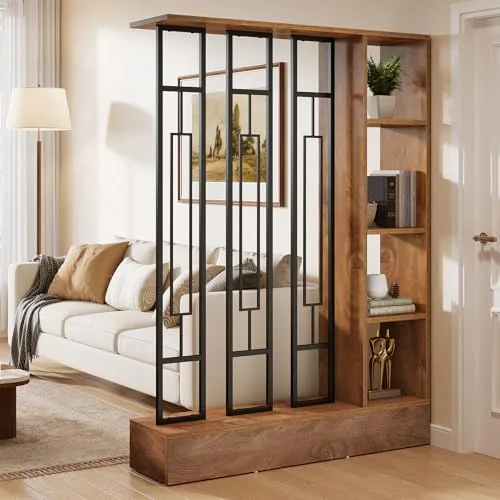
Wall Room Divider with Display Shelves, 70.9 in
- •One 70.9 in freestanding frame separates the room and reclaims floor with built-in shelves, the top DGH Dorm Privacy Score for a studio-style single, ,
SUNALLY
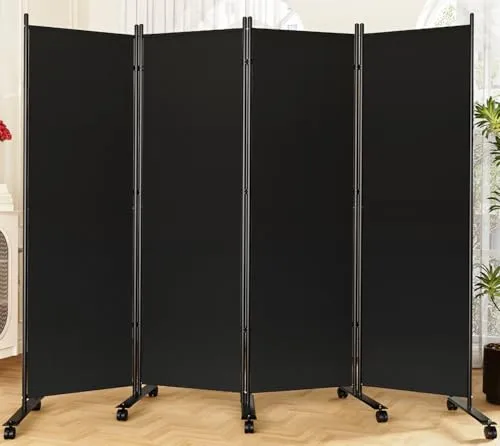
Room Divider 6FT Folding Privacy Screen, 4-Panel with Lockable Wheels
- •A solid fabric 6 ft, four-panel screen on lockable wheels blocks the most sight line and folds flat for a car trunk at move-out, ,
FDW
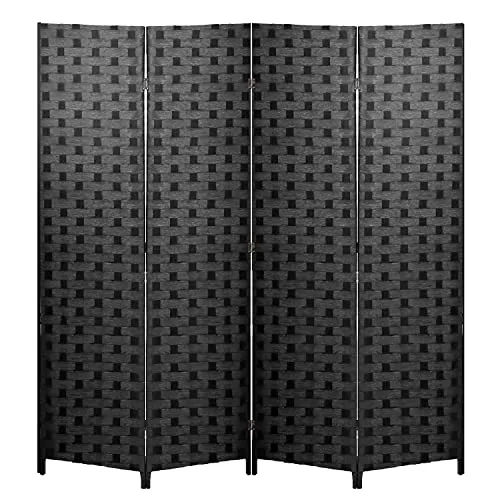
Room Divider 6FT Wood Screen, 4-Panel Freestanding
- •A hardwood 6 ft frame with a mesh insert reads as decor and hinges at an angle to brace itself against tipping, ,
SUNALLY
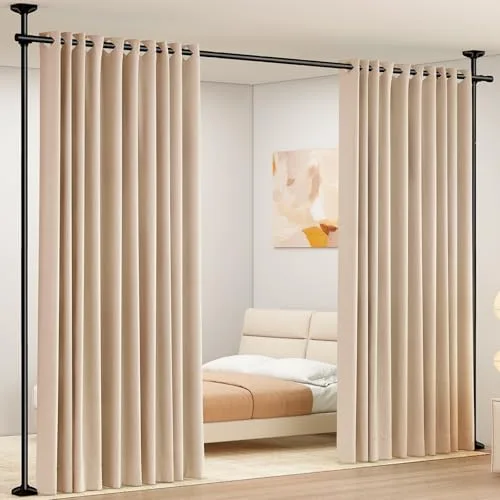
Room Divider Curtain Rod, No-Drilling Floor-to-Ceiling Tension Rod
- •A no-drill tension rod adjusts across a 4 ft to 10 ft range for well under $30, though you buy the curtain separately, ,
Roundhill
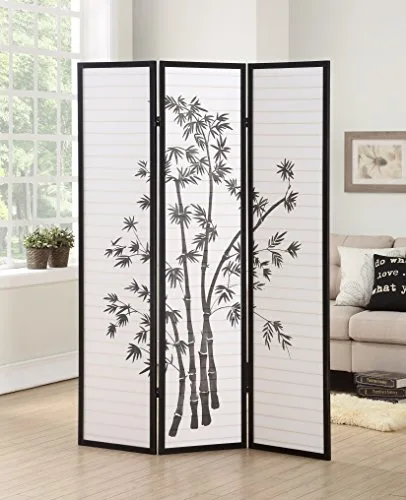
Furniture 3-Panel Oriental Shoji Room Divider Screen
- •Rice-paper shoji panels diffuse a roommate's lamp into a glow, the lightest screen here for one person to reposition alone, ,

WoodTuct
Teak-Tone Hanging Room Divider Panels, Set of 12
- •A set of 12 ceiling-hung teak slats marks a boundary and claims no floor area in a room already tight on square footage, ,
The Short Answer
The best no-drill dorm divider depends on the room: a shelf divider stores and separates, a solid 6 ft folding screen blocks the most sight line, and a tension rod hangs a curtain for the least money. All six clear the renter-safe no-modification rule, and none blocks sound — only the view between roommates.
A shared dorm double offers no built-in privacy, so a divider is the fastest way to carve out a personal zone without touching the walls, and every pick in this guide is no-drill — the renter-safe filter that clears the no-modification rule in most housing contracts, though you should check your own housing office first. The DGH Dorm Privacy Score is a weighted composite that scores four factors on a normalized scale and ranks each screen by tier: privacy coverage at 35%, renter-safe install at 25%, footprint fit at 20%, and value at 20%. Dorm Therapy, Good Housekeeping, HGTV, and Bob Vila all frame freestanding and tension-mounted screens as the divider category that works for a lease, and that category guidance anchors each factor. One honest caveat runs throughout: a 6 ft screen blocks a sight line, never sound between roommates.
Six Dividers Compared Side by Side
Storage & Organization
Chart
 DormGearHQ.com
Budding Joy Under Bed Storage with Wheels 2-Pack, 80L Height-Adjustable Underbed Containers with Clear Lids
$41.99RecommendedCheck price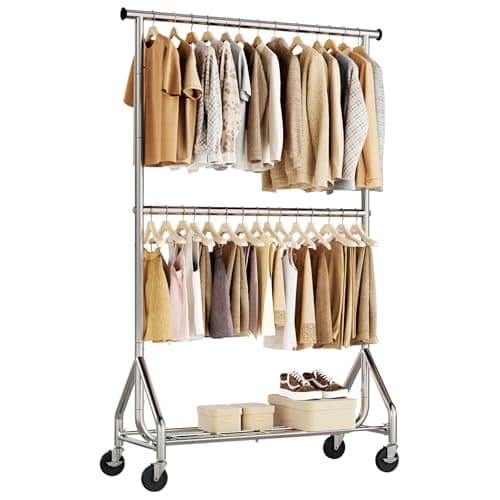
HYSEYY Heavy Duty Clothes Rack, Double Rod Rolling Garment Rack, Adjustable Freestanding Wardrobe Closet, Silver
$69.98RecommendedCheck price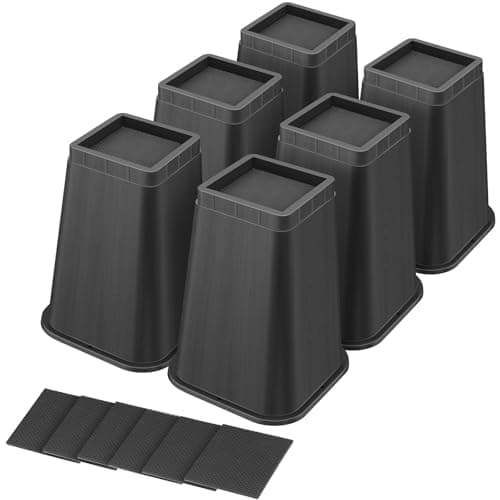
shouwuhho Bed Risers 8 Inch Heavy Duty, Furniture Risers 12"/8"/4" Adjustable, Supports Up to 6,000 Lbs, 6-Pack
$29.99RecommendedCheck price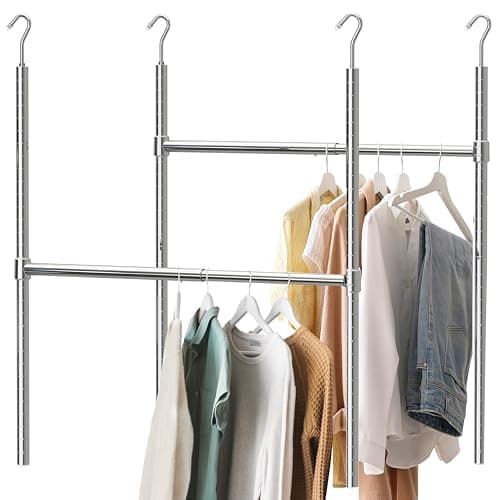
Simple Houseware Adjustable Closet Hanging Rod, Chrome - 2 Pack
$29.97RecommendedCheck price
StorageWorks Large Under Bed Storage Containers, 2-Pack Ultra-Thick Fabric Bins
$34.99RecommendedCheck price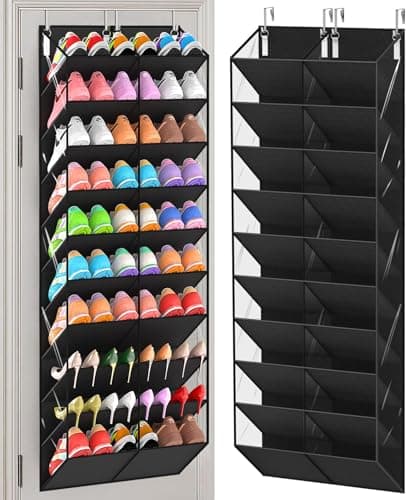
UVIAHOMI Over the Door Shoe Organizer, Clear Pockets, 10-Tier Hanging Shoe Storage for Closet, Black
$25.98RecommendedCheck price
Best overall — divides and stores: Tribesigns Wall Room Divider with Display Shelves, 70.9 in
Tribesigns Wall Room Divider with Display Shelves, 70.9 in
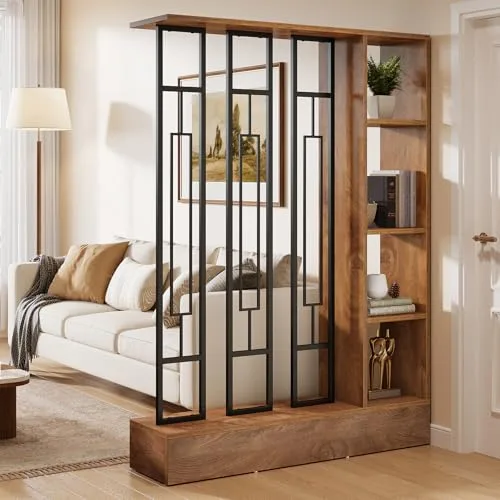
(Current price, subject to change)
- Freestanding room divider
- Integrated open display shelves
- 70.9 in overall height
- Bookcase-style metal frame
- No wall anchoring in most layouts
- Divides and stores from one footprint
Tribesigns tops this roundup because one 70.9 in freestanding frame, taller than a 6 ft folding screen, both divides a room and stores what a plain screen would leave on the floor. Good Housekeeping's organization guidance favors bookcase-style dividers in small spaces precisely because a single piece separates a room and adds storage, and Dorm Therapy frames a shelf divider as the pick when a student needs both storage and separation from one footprint. That dual purpose is why it earns the top DGH Dorm Privacy Score despite an open back: the shelving screens the view but leaves clear gaps, so it is an honest partial barrier rather than a solid wall. Compared to the fabric screens, it delivers far more function, though at roughly three times their price and as the heaviest unit to assemble. The composite weights that value factor against its coverage, and the score still lands highest because a studio-style single gains the most when one tall piece divides and stores at the same time. It needs no wall anchoring in most layouts, so it clears the renter-safe filter.
What We Love
- Built-in display shelves make the divider double as storage, reclaiming the floor a plain screen would waste
- At 70.9 in tall it screens a full standing sight line, more than most 6 ft folding screens
- A freestanding bookshelf-style frame needs no wall anchoring in most layouts, so it stays renter-safe
- The most functional pick for a studio-style single where one piece must both divide and store
- Open shelving turns dead partition space into usable storage for books, plants, and bins
What Could Be Better
- Roughly $190 — over three times the fabric screens
- Open shelving screens the view but leaves clear gaps — a partial barrier
- The heaviest unit here to assemble and reposition
The Verdict
If a studio-style single forces one piece to both split the room and hold your books, the Tribesigns Wall Room Divider with Display Shelves, 70.9 in is the pick. Good Housekeeping favors bookcase-style dividers in small spaces, and Dorm Therapy frames a shelf divider as the storage-plus-separation answer. Its top DGH Dorm Privacy Score reflects that dual purpose.
Best solid privacy screen: SUNALLY Room Divider 6FT Folding Privacy Screen, 4-Panel with Lockable Wheels
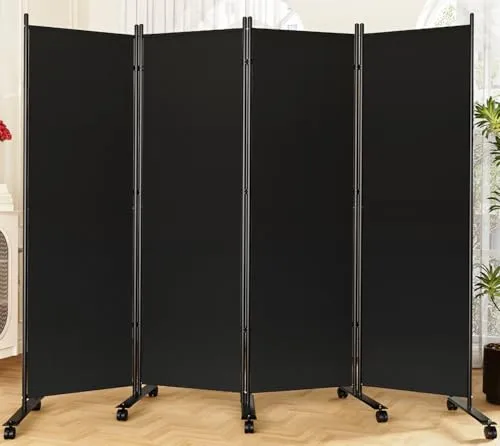
SUNALLY Room Divider 6FT Folding Privacy Screen, 4-Panel with Lockable Wheels
(Current price, subject to change)
- 4 folding fabric panels
- 6 ft overall height
- Lockable caster wheels
- Fabric-over-metal frame
- No-drill freestanding build
- Folds flat to store
The SUNALLY folding screen is the strongest pure privacy pick, a solid fabric 6 ft panel run that blocks a roommate's desk-lamp glare from a lofted bed where an open shelf cannot. Dorm Therapy ranks a freestanding folding screen as the fastest way to carve a private zone without touching the walls, and Good Housekeeping favors portable folding screens for renters because they come down without patching a wall. Lockable caster wheels roll the 6 ft divider aside for cleaning, then lock so it does not drift on move-in day — a detail that outperforms a fixed panel on flexibility. It folds flat for a car trunk at move-out, which enables a clean exit versus a bolted unit. The honest limits: fabric blocks sight lines but does little for sound, a tall freestanding screen can tip in a cramped room if it is not braced against furniture, and neutral fabric shows scuffs. Its renter-safe, no-drill build is why the DGH Dorm Privacy Score rates it a close second behind the shelf divider.
What We Love
- A solid fabric 6 ft panel run blocks a roommate's desk-lamp glare from a lofted bed where an open shelf cannot
- Lockable caster wheels roll the divider aside for cleaning, then lock so it does not drift on move-in day
- The fabric-over-frame build needs no wall drilling, so it clears the no-modification rule in most housing contracts
- It folds flat for a car trunk at move-out, unlike a fixed wall unit
- Four panels screen a wider span than a three-panel screen for the same footprint
What Could Be Better
- Fabric panels block sight lines but do little for sound
- A 6 ft freestanding screen can tip unbraced in a cramped room
- Neutral fabric shows scuffs in a shared room
The Verdict
If your real problem is a roommate's light and a shared sight line, the SUNALLY Room Divider 6FT Folding Privacy Screen, 4-Panel with Lockable Wheels blocks the most view for the money. Dorm Therapy ranks a freestanding folding screen as the fastest private-zone fix, and Good Housekeeping favors portable screens for renters. A strong DGH Dorm Privacy Score puts it a close second.
Best furniture-grade pick: FDW Room Divider 6FT Wood Screen, 4-Panel Freestanding
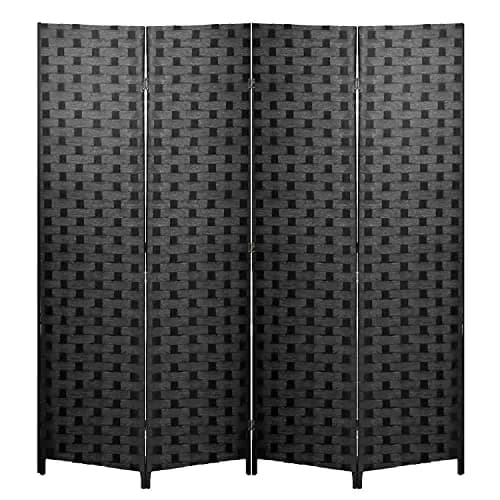
FDW Room Divider 6FT Wood Screen, 4-Panel Freestanding
(Current price, subject to change)
- Solid wood frame
- 6 ft, 4 panels
- Mesh screen insert
- Hinged self-bracing panels
- No-drill freestanding build
- Folds for summer storage
FDW's wood screen is the furniture-grade option, a hardwood frame with a mesh insert that reads more like decor than a utility panel across a 6 ft, four-panel run. HGTV treats a hinged wood screen as the divider that doubles as a design element rather than a barrier, and Good Housekeeping notes that angling a hinged multi-panel screen is the recommended way to keep a tall freestanding divider from tipping. Those hinged panels stand at an angle, which braces the 6 ft screen against tipping better than a straight run and delivers real stability in a shared room. Compared to the wheeled SUNALLY, it is heavier and less mobile, so you reposition it by hand, and the mesh top panels are decorative and let light and sound through. It contacts no wall and needs no tools, so it clears the same no-modification housing rule as the fabric screens. The DGH Dorm Privacy Score docks it for the light-passing mesh, yet its no-drill, furniture-grade build makes it the pick for a decorated room.
What We Love
- A solid wood frame with a mesh insert reads more like furniture than a fabric screen, so it suits a decorated room
- Four panels hinge to stand at an angle, which braces the 6 ft screen against tipping better than a straight run
- No wall contact and no tools, so it clears the same no-modification housing rule as the fabric screens
- Hinged panels fold for storage over summer break
- A hardwood build feels sturdier and more permanent than a fabric-over-frame panel
What Could Be Better
- Heavier and less mobile than a wheeled screen
- The decorative mesh top lets light and sound through
- Wood tone will not match every roommate's decor
The Verdict
If your side of the room is decorated and a plain fabric panel would clash, the FDW Room Divider 6FT Wood Screen, 4-Panel Freestanding doubles as a design element. HGTV treats a hinged wood screen as decor rather than a barrier, and Good Housekeeping recommends angling a multi-panel screen for stability. Its DGH Dorm Privacy Score reflects a furniture-grade, no-drill build.
Cheapest full-height option: SUNALLY Room Divider Curtain Rod, No-Drilling Floor-to-Ceiling Tension Rod
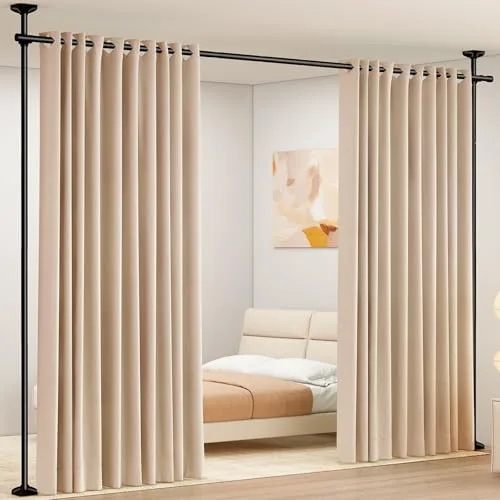
SUNALLY Room Divider Curtain Rod, No-Drilling Floor-to-Ceiling Tension Rod
(Current price, subject to change)
- Floor-to-ceiling tension rod
- 4 ft to 10 ft adjustable height
- No-drill tension mount
- Curtain rod (curtain sold separately)
- Pairs with a blackout curtain
- Under $30 before the curtain
The SUNALLY tension rod is the budget route to a full-height divider, a floor-to-ceiling mount that adjusts across a 4 ft to 10 ft range to fit standard and lofted dorm ceilings. Bob Vila points to floor-to-ceiling tension rods as the no-damage route to a curtained partition in a lease that bans drilling, and Dorm Therapy frames a hung curtain as the budget divider that also blocks a roommate's late-night light. It is the single most renter-safe install here because the rod jacks between floor and ceiling with zero drilling. Be honest about the real cost, though: the rod is a mount only, so you buy the curtain separately, and a hanging curtain sways and gaps more than a rigid screen. Paired with a blackout panel it doubles as light control, which is why it enables a curtained bed nook on the tightest budget — see Best Lease-Friendly Blackout Curtains for Dorms 2026 for the curtain to hang on it. Tension mounts can slip on textured or very high ceilings, so seat it carefully. Its low cost lifts the value factor in the DGH Dorm Privacy Score.
What We Love
- A floor-to-ceiling tension rod adjusts across a 4 ft to 10 ft range, so it fits standard and lofted dorm ceilings
- No drilling at all — the rod jacks between floor and ceiling, the single most renter-safe way to hang a privacy curtain
- It is the cheapest full-height privacy solution here, before you add your own curtain
- Pairs with a blackout curtain to double as light control for a mismatched sleep schedule
- The rod collapses to pack small and moves to any room next year
What Could Be Better
- The rod is a mount only — you buy the curtain separately, so the real cost runs higher
- Tension mounts can slip on textured or very high ceilings
- A hanging curtain sways and gaps more than a rigid screen
The Verdict
If your budget is tight and your lease bans drilling, the SUNALLY Room Divider Curtain Rod, No-Drilling Floor-to-Ceiling Tension Rod is the no-damage route to a curtained partition. Bob Vila points to floor-to-ceiling tension rods for exactly that, and Dorm Therapy frames a hung curtain as the budget divider that also blocks light. Its low cost lifts the value factor in the DGH Dorm Privacy Score.
Best for soft light: Roundhill Furniture 3-Panel Oriental Shoji Room Divider Screen
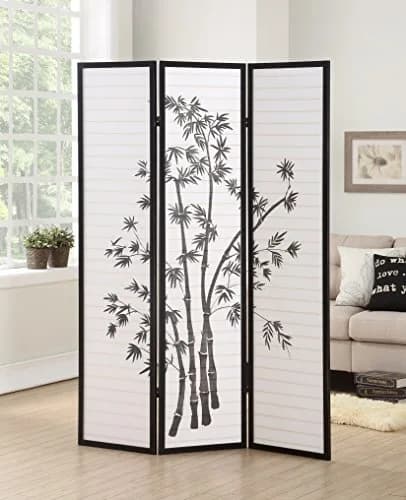
Roundhill Furniture 3-Panel Oriental Shoji Room Divider Screen
(Current price, subject to change)
- 3 rice-paper shoji panels
- Wood frame
- Light-diffusing panels
- Lightest freestanding screen here
- Folds flat to stow
- Calm study-nook backdrop
Roundhill's three-panel shoji screen trades maximum coverage for soft light, its rice-paper panels diffusing a roommate's lamp into a glow rather than casting a hard shadow. HGTV highlights shoji screens for filtering light into a soft glow rather than a hard partition shadow, and Dorm Therapy frames lighter three-panel screens as the easiest for one student to move and reset alone. As the lightest freestanding screen here, one person repositions it without help, and it folds flat to stow behind a door over break. Compared to the four-panel screens it covers a narrower span, and the rice paper is the least durable surface in this roundup and tears if snagged. Diffused light is a genuine feature for ambiance but a weakness if you want true darkness, so a sleeper on a mismatched schedule pairs it with a blackout layer. That trade-off is what the DGH Dorm Privacy Score captures: it scores lower on raw sight-line block yet delivers a calm study-nook backdrop no other pick matches. Its no-drill freestanding build keeps it renter-safe.
What We Love
- Rice-paper shoji panels diffuse light rather than blocking it, softening a roommate's lamp instead of casting a hard shadow
- The lightest freestanding screen here, so one person repositions it without help
- The classic look works as a backdrop for a bed or a study nook, not just a barrier
- Folds flat and stows behind a door over break
- A wood frame keeps it steadier than its light weight suggests
What Could Be Better
- Rice-paper panels are the least durable surface here and tear if snagged
- Only three panels, so it screens a narrower span than four-panel rivals
- Diffused light suits ambiance but not true darkness
The Verdict
If you want a calm, softly lit nook more than a hard wall, the Roundhill Furniture 3-Panel Oriental Shoji Room Divider Screen diffuses a lamp into a glow. HGTV highlights shoji screens for filtering light, and Dorm Therapy frames lighter three-panel screens as the easiest for one student to move alone. Its DGH Dorm Privacy Score trades raw coverage for ambiance.
Best for zero floor space: WoodTuct Teak-Tone Hanging Room Divider Panels, Set of 12
WoodTuct Teak-Tone Hanging Room Divider Panels, Set of 12

(Current price, subject to change)
- Set of 12 hanging teak-tone panels
- Ceiling-hook or tension-rod mount
- Modular slat design
- Zero floor footprint
- Custom-width runs
- Decorative boundary marker
WoodTuct's hanging teak panels are the answer when a room has no floor to spare, a set of 12 modular slats that hang from a ceiling hook or tension rod and claim zero floor space. HGTV picks hanging panel dividers for small rooms specifically because they claim no floor area, and Bob Vila describes slatted and hanging dividers as boundary markers that define a zone without fully walling it off. That honesty matters: a hanging slat panel is a partial screen that marks a boundary more than it blocks a sight line, and it does nothing for sound and little for light. Compared to a solid folding screen, it screens less but frees the whole floor, which enables a divided layout in a room already tight on square footage. It needs a ceiling anchor point or a tension rod, which not every room offers, so confirm your setup first. The teak-tone slats read as decor, a clear step up from a plain panel. It lands last on the DGH Dorm Privacy Score because partial coverage caps its privacy factor, not because it fails the renter-safe test.
What We Love
- It hangs from a ceiling hook or tension rod, so it takes zero floor space in a room already tight on square footage
- A set of 12 modular panels lets you size the run to the exact gap you want to screen
- Teak-tone slats read as decor, a step up from a plain fabric panel
- It adds a visual break and warmth without the footprint of a standing screen
- Modular panels adapt to an odd-width gap a fixed screen cannot cover
What Could Be Better
- A hanging slat panel is partial — it marks a boundary more than it blocks a sight line
- It needs a ceiling anchor or tension rod, which not every room offers
- It does nothing for sound and little for light
The Verdict
If your room has no floor to spare, the WoodTuct Teak-Tone Hanging Room Divider Panels, Set of 12 hang overhead and claim none of it. HGTV picks hanging dividers for small rooms because they claim no floor area, and Bob Vila calls slatted dividers boundary markers. Partial coverage is why it lands last on the DGH Dorm Privacy Score, not any renter-safe failure.
How We Score: DGH Dorm Privacy Score
DGH Dorm Privacy Score
Score Formula
weighted composite (0-10): privacy_coverage 35% + renter_safe_install 25% + footprint_fit 20% + value 20%, each factor scored 0-10 from listing specs and category reviews and normalized to a single composite. privacy_coverage credits height and opacity that block a standing sight line; renter_safe_install credits a freestanding or tension-mounted build that needs no wall damage; footprint_fit credits a ceiling-hung or shelf piece that claims little floor; value credits privacy and function per dollar across the roster.Score Factors
- Privacy Coverage (35%)The heaviest factor: how completely the divider blocks a roommate's sight line. A solid 6 ft folding panel screens a standing view where a hanging slat panel or an open shelf only marks a boundary. Height and opacity drive it, and sound is out of scope because none of these block noise.
- Renter-Safe Install (25%)Whether the divider goes up with zero wall damage. Freestanding and tension-mounted pieces score highest because they clear the no-modification rule in most housing contracts, while anything needing a ceiling anchor scores lower. This is the no-drill filter every pick had to pass.
- Footprint Fit (20%)Floor area claimed in a room already tight on space. A ceiling-hung panel or a shelf divider that also stores things scores well, while a wide freestanding screen that eats a walking path scores lower on this tier.
- Value (20%)Privacy and function per dollar across a roster that spans roughly 28 to 190 dollars. A sub-60-dollar folding screen is strong value, while a shelf divider earns its higher price only when it also replaces a bookcase you would otherwise buy and holds up across a 4-year degree.
DGH Dorm Privacy Score — Ranked
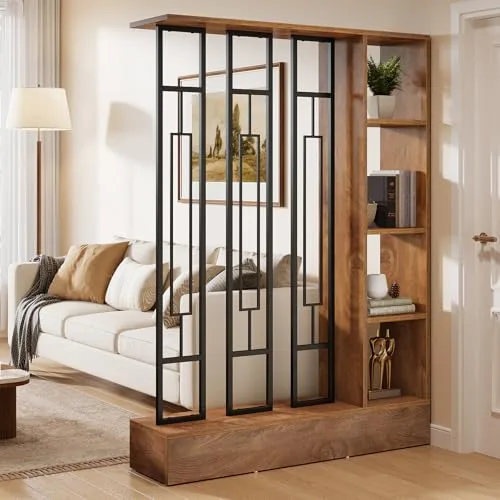
Tribesigns Wall Room Divider with Display Shelves, 70.9 in
8.5/10Divides and stores from one 70.9 in freestanding frame — the top composite for a studio-style single
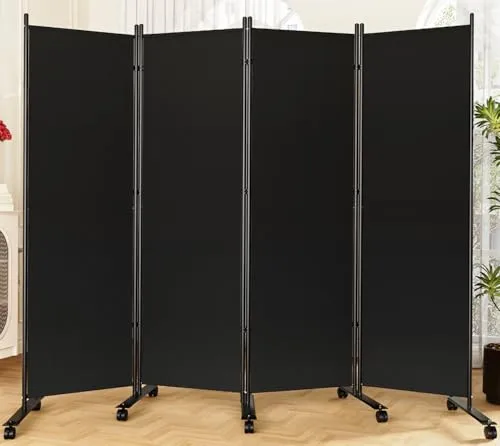
SUNALLY Room Divider 6FT Folding Privacy Screen, 4-Panel with Lockable Wheels
8.4/10Solid fabric 6 ft panels on lockable wheels, the strongest pure sight-line block on the roster
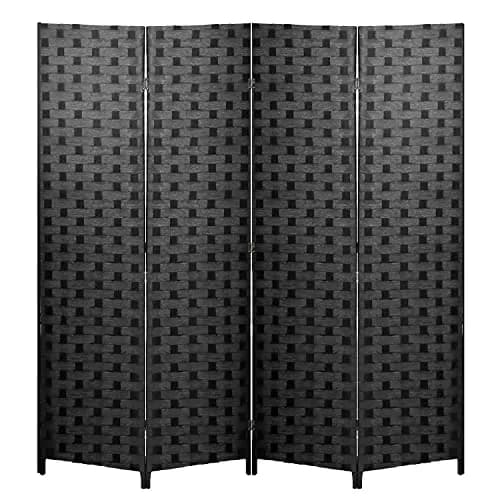
FDW Room Divider 6FT Wood Screen, 4-Panel Freestanding
8.0/10Furniture-grade 6 ft wood screen that braces itself at an angle, docked for a light-passing mesh top
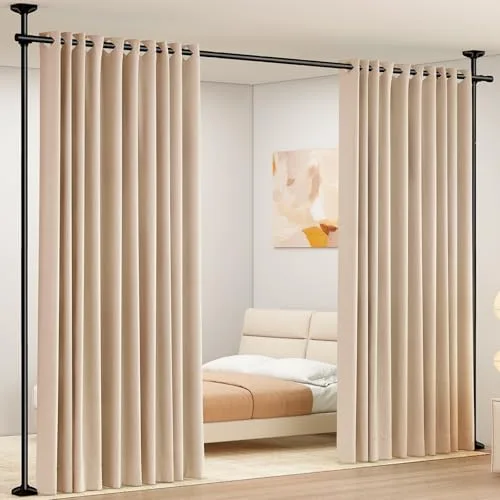
SUNALLY Room Divider Curtain Rod, No-Drilling Floor-to-Ceiling Tension Rod
7.8/10The most renter-safe mount and cheapest full-height option, though the curtain is sold separately
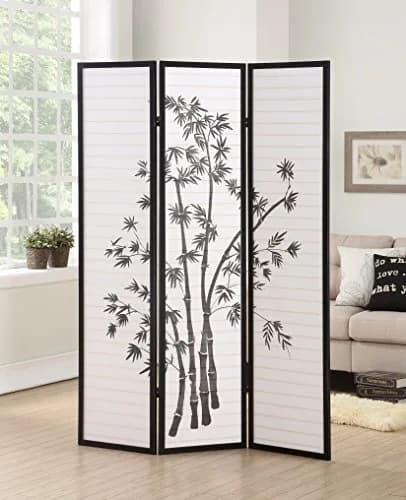
Roundhill Furniture 3-Panel Oriental Shoji Room Divider Screen
7.6/10Diffuses light into a soft glow and moves easily, but covers only three panels wide

WoodTuct Teak-Tone Hanging Room Divider Panels, Set of 12
7.2/10Claims zero floor space but marks a boundary more than it blocks a full standing view
DGH Dorm Privacy Score
How each no-drill divider balances sight-line coverage, renter-safe install, floor footprint, and value
DormGearHQ analysis of divider specs plus Dorm Therapy, Good Housekeeping, HGTV, and Bob Vila reviews, verified 2026
Which Divider Type Fits Your Room
The right divider is the one that matches your room's real constraint, and this guide sorts them by that constraint rather than by price alone. If you share a double and mainly want to block a roommate's light and sight line, a solid 6 ft folding screen from SUNALLY or a furniture-grade FDW wood panel is the honest answer, because Dorm Therapy and Good Housekeeping both rank freestanding screens as the fastest no-touch partition. If your budget is the constraint, a tension rod pairs with a blackout curtain for the cheapest full-height option — a natural pairing that funnels straight into your bedding plan. If your floor is already committed, a ceiling-hung WoodTuct panel that HGTV favors for exactly that reason claims none of it. Coordinate the buy with a roommate the same way you would a fridge or a rug, since one shared divider serves both sides — see What to Split With Your Roommate: Dorm 2026 for how to split the shared-room basket.
| Product | No-drill install | Solid sight-line block | Folds or packs flat | Doubles as storage or decor |
|---|---|---|---|---|
| tribesigns-divider-display-shelves | ✓ | – | – | ✓ |
| sunally-4panel-folding-divider | ✓ | ✓ | ✓ | – |
| fdw-4panel-wood-screen | ✓ | – | ✓ | ✓ |
| sunally-tension-rod-divider | ✓ | ✓ | ✓ | – |
| roundhill-3panel-shoji-divider | ✓ | ✓ | ✓ | ✓ |
| woodtuct-hanging-teak-panels | ✓ | – | ✓ | ✓ |
Every recommendation runs through the DGH Dorm Privacy Score rather than a flat cheapest-first list, because the four factors pull in different directions: privacy coverage at 35%, renter-safe install at 25%, footprint fit at 20%, and value at 20% rarely all peak in the same product. A shelf divider wins the composite on function and storage yet scores lower on raw coverage, while a wheeled fabric screen wins coverage but claims more floor. The normalized, weighted formula is what lets a 6 ft solid screen and a ceiling-hung slat panel share one honest ranking despite serving opposite rooms. Two caveats hold across every tier: none of these blocks sound, and a taller freestanding screen needs bracing against furniture so it does not tip. For roommate friction beyond a sight line — noise, schedules, shared space — see Roommate-Proofing a Shared Dorm 2026: Sleep & Privacy, and for the storage angle a shelf divider opens up, see Small Dorm Storage Ideas That Actually Work in 2026.
When NOT to Buy
Not every shared room needs a divider at all, and buying one you will not use is the wrong move. If your real problem is a roommate's light rather than the view, a blackout curtain over your own bed solves it for less than any screen here, so start with Best Lease-Friendly Blackout Curtains for Dorms 2026 before you buy a 6 ft panel. If your only complaint is clutter spilling across the room, more storage — not a partition — is the honest fix, and Small Dorm Storage Ideas That Actually Work in 2026 covers the bins and shelves that clear the floor. Measure your room before ordering, because a wide freestanding screen that eats a walking path can make a tight double feel smaller, not more private. And coordinate with your roommate first: one shared divider often serves both sides across a 4-year stay, so there is no reason for two of you to each haul a 6 ft screen up three flights on move-in day.
Who Should Buy What
Who Should Buy What
| If you are… | Recommended pick |
|---|---|
Studio-style single You want one freestanding piece that both divides the room and stores your books, and you can spend past fabric-screen money | Tribesigns Wall Room Divider with Display Shelves, 70.9 in |
Blocking a roommate's light You share a double and mainly need to block a desk-lamp glare and a shared sight line with a solid, movable screen | SUNALLY Room Divider 6FT Folding Privacy Screen, 4-Panel with Lockable Wheels |
A decorated side of the room You want a furniture-grade wood screen that reads as decor and braces itself at an angle without touching a wall | FDW Room Divider 6FT Wood Screen, 4-Panel Freestanding |
Tightest budget You need the cheapest full-height divider and the most renter-safe mount, and you will hang your own curtain on it | SUNALLY Room Divider Curtain Rod, No-Drilling Floor-to-Ceiling Tension Rod |
Soft-light study nook You want diffused light and a calm backdrop from a screen light enough to reposition alone | Roundhill Furniture 3-Panel Oriental Shoji Room Divider Screen |
No floor to spare Your floor is fully committed and you want a decorative boundary marker that hangs from the ceiling | WoodTuct Teak-Tone Hanging Room Divider Panels, Set of 12 |
Frequently Asked Questions
Do dorm room dividers block sound between roommates?
No. Every divider in this roundup blocks a sight line, not noise. A fabric folding screen, a wood panel, a shoji screen, and hanging slats all screen the view but do little for sound. If noise is your real problem, a divider will not fix it — earplugs, a white-noise machine, or a schedule conversation with your roommate does more. Treat privacy dividers as visual barriers only, and set expectations accordingly.
Are room dividers allowed in dorms?
Freestanding and tension-mounted dividers are generally allowed because they install with no wall damage, which clears the no-modification rule many housing contracts set. Every pick in this guide is no-drill for that reason. Anything that requires screwing an anchor into the wall or ceiling is where you should pause and check your housing office first, since permanent fixtures are commonly restricted. When in doubt, choose a freestanding screen or a tension rod.
What is the best room divider for a small dorm?
For a room already tight on floor space, a ceiling-hung panel like the WoodTuct teak set claims zero floor area, and a shelf divider like the Tribesigns unit reclaims floor by adding storage. HGTV and Good Housekeeping both favor those two approaches in small rooms. If you can spare a little floor, a folding screen gives more solid coverage. Match the divider to your room's tightest constraint rather than to price alone.
How tall are dorm privacy dividers?
The folding and wood screens here stand about 6 ft tall, enough to block a standing sight line and a lofted-bed lamp. The Tribesigns shelf divider is taller at 70.9 in. A tension rod adjusts across a 4 ft to 10 ft range to fit both standard and lofted ceilings. Taller is not always better in a cramped room, since a tall freestanding screen needs bracing against furniture so it does not tip.
Tension rod or folding screen for dorm privacy?
A tension rod is the cheaper, most renter-safe option, but the rod is only a mount — you buy the curtain separately, so the real cost runs higher than the sticker. A folding screen costs more up front yet arrives ready to stand, blocks a sight line rigidly, and does not sway or gap the way a hung curtain does. Choose the rod for budget and a blackout-curtain pairing, and the screen for solid, standalone coverage.
Bottom Line
Get the Tribesigns Wall Room Divider with Display Shelves, 70.9 in if you want one freestanding piece that both divides the room and stores your books, and you can spend past a fabric screen.
Get the SUNALLY Room Divider 6FT Folding Privacy Screen, 4-Panel with Lockable Wheels if you need the strongest solid sight-line block on wheels and a screen that folds flat to travel home at move-out.
Get the FDW Room Divider 6FT Wood Screen, 4-Panel Freestanding if your side of the room is decorated and you want a furniture-grade wood screen that braces itself at an angle.
Get the SUNALLY Room Divider Curtain Rod, No-Drilling Floor-to-Ceiling Tension Rod if your budget is tight and your lease bans drilling — pair the no-drill rod with your own blackout curtain.
Get the Roundhill Furniture 3-Panel Oriental Shoji Room Divider Screen if you want soft, diffused light and a calm nook from a screen light enough to move without help.
Get the WoodTuct Teak-Tone Hanging Room Divider Panels, Set of 12 if your floor is fully committed and you want a decorative boundary marker that hangs from the ceiling.
Match the divider to your room's real constraint: the Tribesigns Wall Room Divider with Display Shelves, 70.9 in for storage plus separation, the SUNALLY Room Divider 6FT Folding Privacy Screen, 4-Panel with Lockable Wheels for the most solid coverage, and the SUNALLY Room Divider Curtain Rod, No-Drilling Floor-to-Ceiling Tension Rod for the cheapest no-drill route. Skip a divider entirely if a blackout curtain solves your light problem or more storage solves your clutter — and never buy two when one shared screen serves both sides of the room.
Sources & Methodology
Methodology: DGH Dorm Privacy Score — Formula: weighted composite (0-10): privacy_coverage 35% + renter_safe_install 25% + footprint_fit 20% + value 20%, each factor scored 0-10 from listing specs and category reviews and normalized to a single composite. privacy_coverage credits height and opacity that block a standing sight line; renter_safe_install credits a freestanding or tension-mounted build that needs no wall damage; footprint_fit credits a ceiling-hung or shelf piece that claims little floor; value credits privacy and function per dollar across the roster.. Factors: Privacy Coverage (35%) · Renter-Safe Install (25%) · Footprint Fit (20%) · Value (20%). Full factor definitions appear in the How We Score section above.
Expert review sources used in this analysis:
- DormGearHQ aggregates listing specifications and category expert guidance to produce consensus-based recommendations, and does not perform first-party product testing
- The divider category reasoning draws on Dorm Therapy's room-divider guide, Good Housekeeping's home-organization roundups, HGTV's design coverage of wood and shoji screens, and Bob Vila's renter-focused divider guidance — each cited at the category level, not as a lab test of any single SUNALLY, FDW, Roundhill, WoodTuct, or Tribesigns unit
- Heights of 6 ft, the 70.9 in shelf divider, panel counts, the set of 12 hanging slats, and the 4 ft to 10 ft rod range come from manufacturer listings
- The DGH Dorm Privacy Score is a weighted, normalized composite across four factors — privacy coverage at 35%, renter-safe install at 25%, footprint fit at 20%, and value at 20% — with its formula and factor tiers documented at the methodology page linked above
- Two honest caveats carry through this guide: none of these dividers blocks sound, only the view, and a tension rod is a mount that needs a separately purchased curtain
- Amazon prices, ratings, and availability verified 2026, in July 2026
- Dorm Therapy, Good Housekeeping, HGTV, and Bob Vila are the load-bearing category sources behind these six recommendations.
Nicholas Miles is the founder of DormGearHQ and a longtime smart home enthusiast focused on helping everyday homeowners make better technology decisions. He researches, compares, and writes about products across security, climate, lighting, leak prevention, sensors, home energy, and automation, with an emphasis on real-world usefulness, ecosystem compatibility, reliability, privacy, and long-term value.
Affiliate disclosure: DormGearHQ earns affiliate commissions on qualifying Amazon purchases. Our scoring methodology is independent of affiliate relationships.