
Power-Outage & Severe-Weather Prep for a Dorm Room (2026)
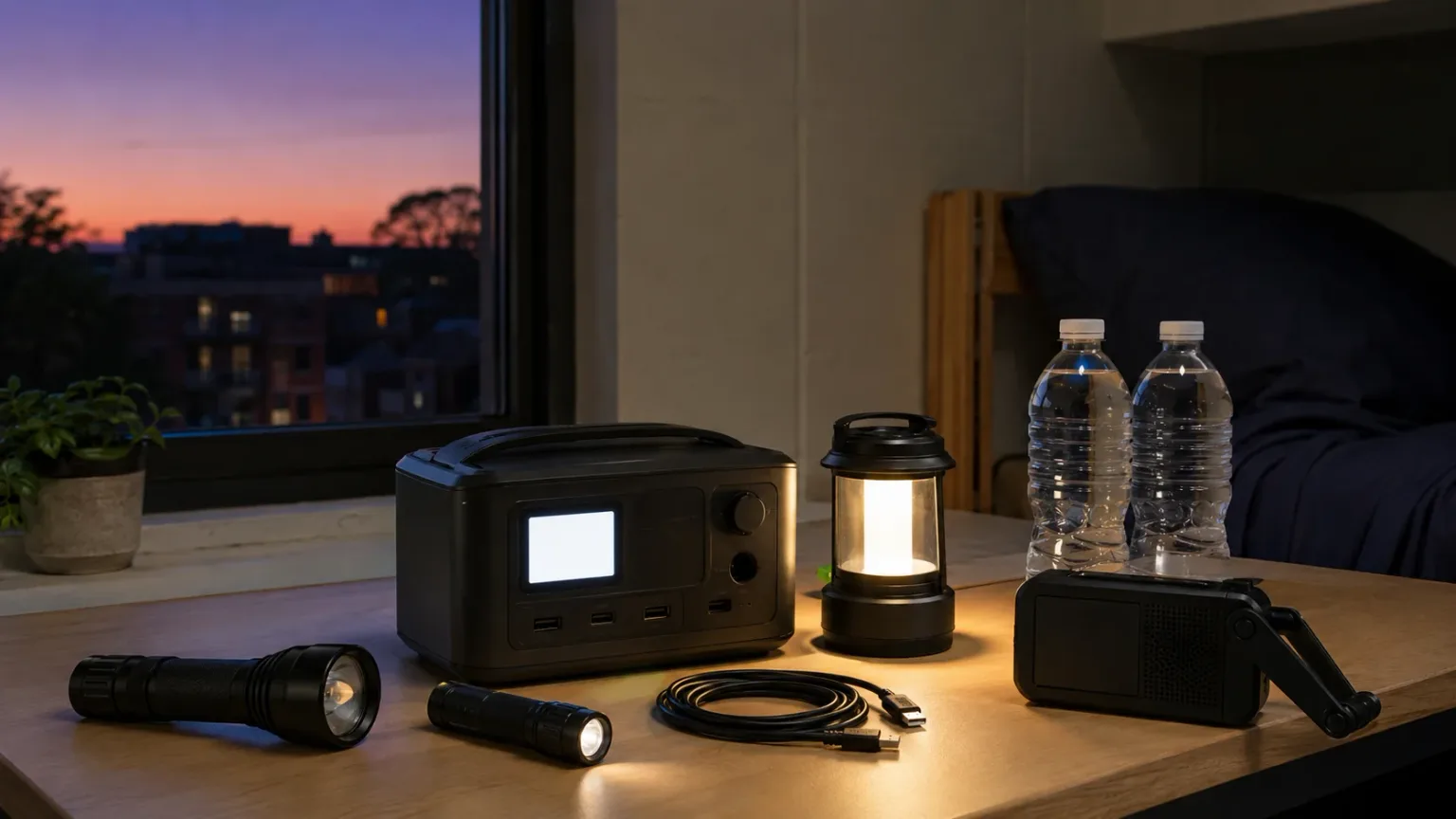
Finals week and storm season overlap in most of the country. A portable power station, a NOAA weather radio, a rechargeable headlamp, and a first-aid kit keep a dorm room running, informed, and safe through a multi-hour outage — none of them need a wall outlet to work.
This article contains affiliate links. We may earn a commission at no extra cost to you. Learn more
Featured in this Guide

Jackery
Explorer 300 Portable Power Station, 292Wh
- •292Wh, pure sine wave AC, silent and fume-free indoor operation, $259.00, ,

RunningSnail
Solar Hand Crank Emergency Weather Radio, NOAA
- •NOAA Weather Radio All Hazards reception, hand-crank and solar charged, $42.49, ,

Foxelli
USB-C Rechargeable LED Headlamp
- •180-lumen USB-C rechargeable, red-light mode, $24.97, ,

DormDoc
College First Aid Kit
- •Student-specific first-aid case, ready before an outage rather than after;
- •currently unavailable on Amazon, so check back, ,
Currently Unavailable
Read ReviewThe Short Answer
A power station, a NOAA-band weather radio, a rechargeable headlamp, and a compact first-aid kit collectively cover a multi-hour dorm outage without requiring a functioning wall outlet: Jackery Explorer 300 ($259.00), RunningSnail radio ($42.49), Foxelli headlamp ($24.97), DormDoc kit (unavailable on Amazon for now).
Storm season overlaps the fall semester across much of the country, and finals week does not pause for a downed line. Power-outage preparedness rarely makes a move-in checklist, yet a dorm room loses power the same way any building does, and a student without a car or a home generator has fewer fallback options than a family at home.
This kit is built around what actually helps during a multi-hour outage, weighed by the DGH Power-Outage Preparedness Score. A power station keeps a phone and laptop running past where a phone's battery would die. A weather radio keeps a student informed when cell towers go down in the same event. A headlamp frees both hands, and a first-aid kit covers a cut before it becomes a dark-stairwell trip. Four items, verified 2026-07-27 against the Amazon Creators API.
Head-to-Head: Outage Impact, Portability, and Value
Dorm Safety
Chart
 DormGearHQ.com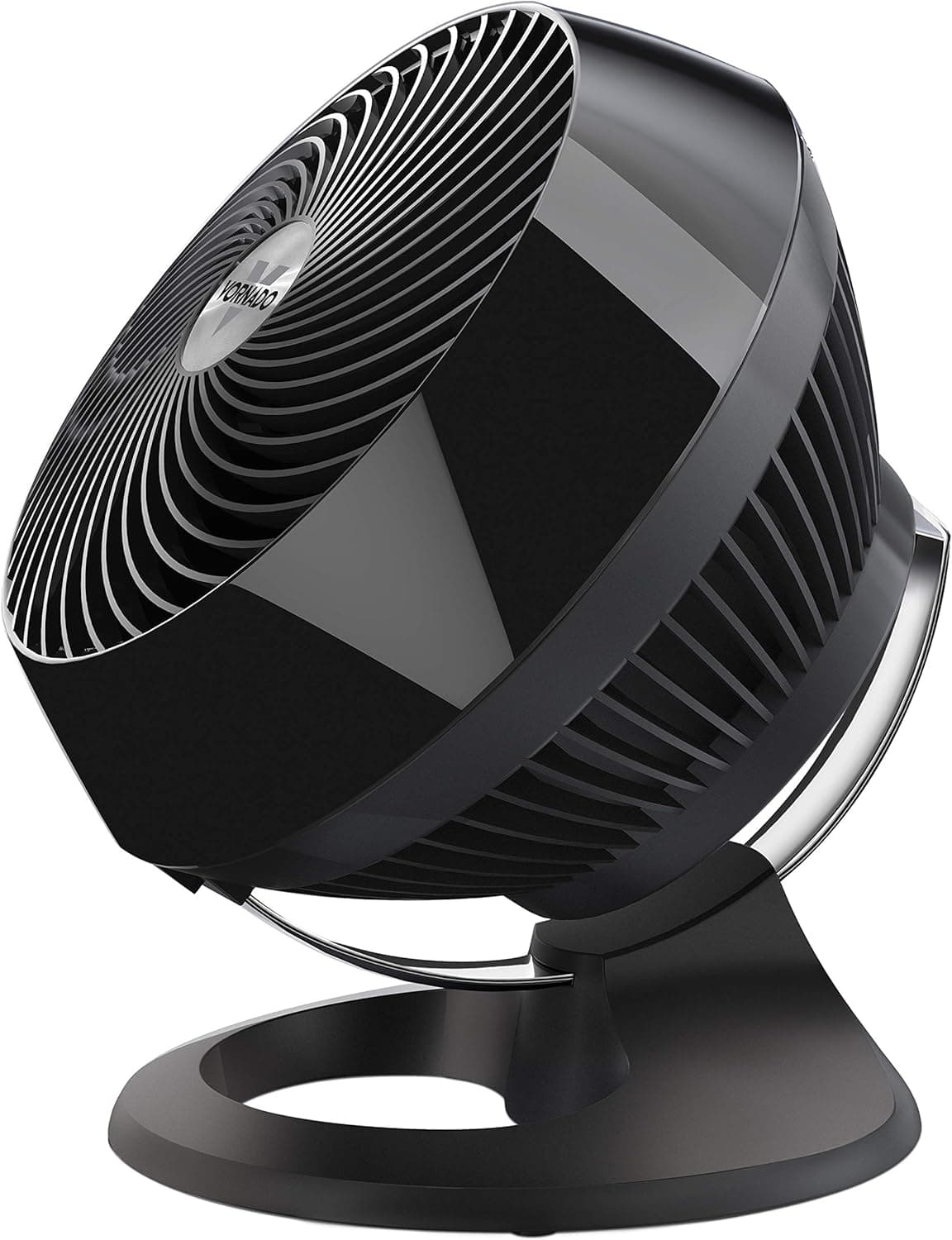
Vornado 660 Large Air Circulator Fan
$119.99Must BuyCheck price
Tempur-Pedic TEMPUR-Topper Supreme Twin XL
$269Must BuyCheck price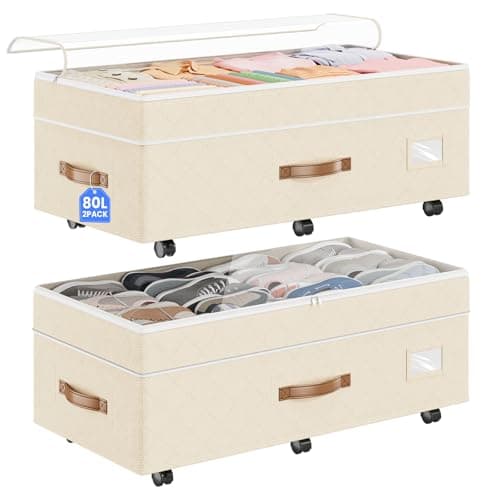
Budding Joy Under Bed Storage with Wheels 2-Pack, 80L Height-Adjustable Underbed Containers with Clear Lids
$41.99RecommendedCheck price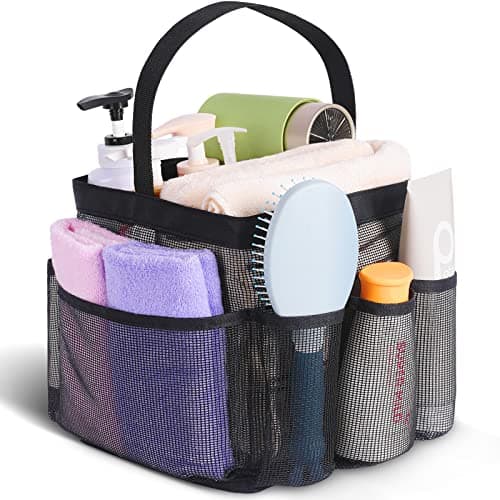
EUDELE Mesh Shower Caddy Portable for College Dorm, 8-Pocket Large Capacity
$8.54Must BuyCheck price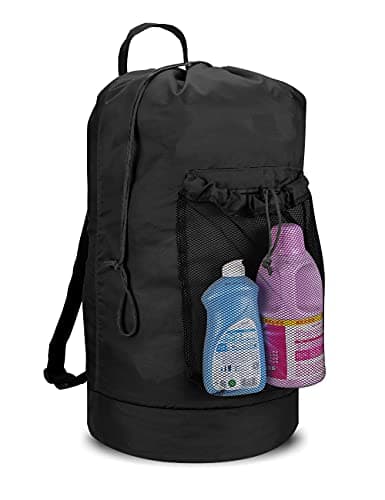
Dalykate Backpack Laundry Bag with Shoulder Straps and Mesh Pocket
$17.97Must BuyCheck price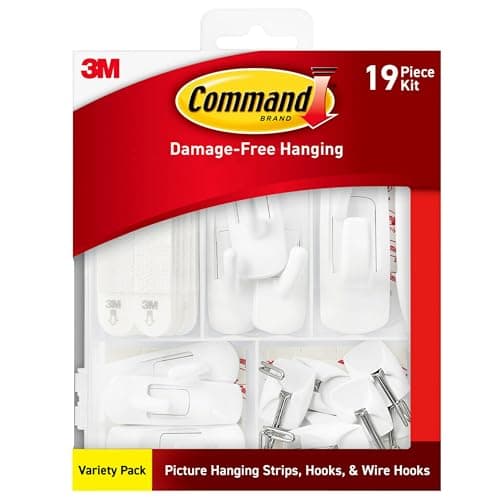
Command Variety Pack (10 Pairs Picture Hanging Strips, 6 Wire Hooks, 8 Utility Hooks)
$14.84Must BuyCheck price
Best Power Backup Anchor: Jackery Explorer 300 Portable Power Station, 292Wh
Jackery Explorer 300 Portable Power Station, 292Wh
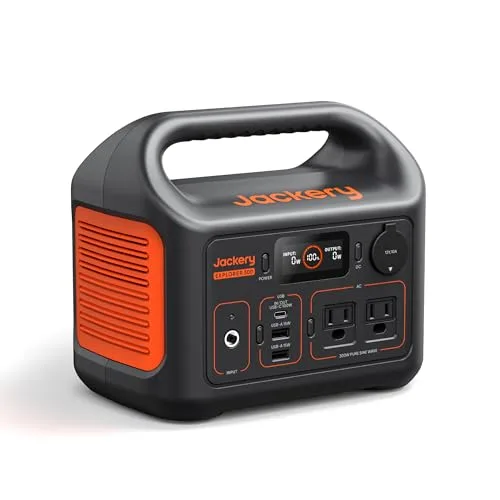
(Current price, subject to change)
- 292Wh portable power station
- Pure sine wave AC output
- Silent, fume-free operation
- Recharges from a wall outlet or car
- From Jackery
- $259.00 at check
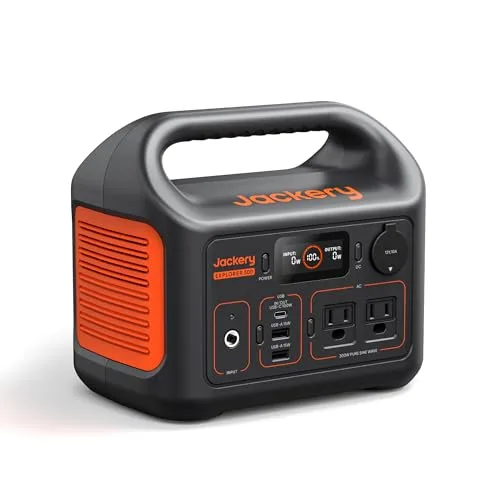
A dorm room cannot run a gas generator — the fumes and fire-code violation rule it out entirely — which is exactly why a silent, fume-free power station is the only realistic backup-power category available indoors. This Jackery unit delivers 292Wh through a pure sine wave AC inverter, safe for a laptop charger and other sensitive electronics in a way a cheaper modified-wave inverter is not, per the manufacturer listing.
The practical case is straightforward: a phone alone rarely survives a multi-hour outage, especially serving as the only flashlight and the only way to reach a parent. This unit charges a phone dozens of times over, runs a laptop for hours, and keeps desk lights on without an open flame or exhaust fumes. The honest tradeoff is price: at $259.00 it is this kit's most expensive item, and it will not run a mini fridge or a space heater — it is built for the devices that matter most. Recharge it ahead of a forecast storm rather than waiting for the power to already be out.
Per Jackery's own product page, this unit carries a 2-year manufacturer warranty, reflected in the DGH Power-Outage Preparedness Score's portability-and-reliability factor.
What We Love
- 292Wh capacity keeps a phone, a laptop, and a string of lights running through a multi-hour outage without hunting for a shared common-room outlet
- Pure sine wave AC output is safe for sensitive electronics, unlike a raw-inverter generator
- Silent, fume-free operation — the backup-power class a dorm's fire code and housing policy will actually allow indoors, where a gas generator is banned
- Recharges from a wall outlet ahead of a forecast storm, or from a car, so it is ready before power drops rather than after
- From Jackery, a category-leading portable power station brand
What Could Be Better
- At about $259 it is the highest-ticket item in this kit, deliberately so — the anchor purchase for whole-room backup power
- 292Wh runs small electronics for hours, not a mini fridge or a space heater for a full outage — set expectations before buying
- The verified Buy Box on this ASIN is not shipped-and-sold-by Amazon.com directly (Jackery's own storefront), disclosed here
The Verdict
For the single highest-impact item in this kit, the Jackery Explorer 300 Portable Power Station, 292Wh is the anchor. It tops the DGH Power-Outage Preparedness Score at 8.4 because 292Wh of pure sine wave AC power keeps the devices that matter most — a phone and a laptop — running for hours, silently and without fumes — unlike the gas generators dorm fire codes ban indoors.
Best for Staying Informed: RunningSnail Solar Hand Crank Emergency Weather Radio, NOAA
RunningSnail Solar Hand Crank Emergency Weather Radio, NOAA
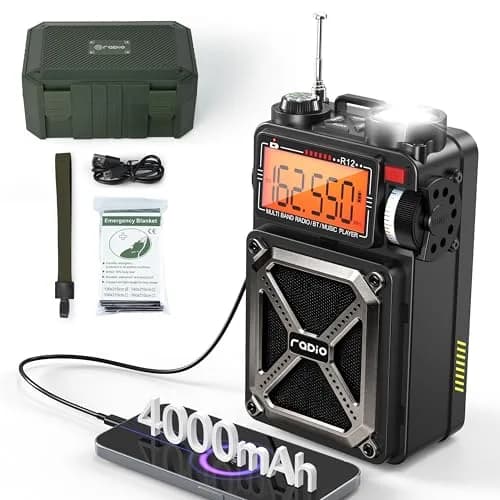
(Current price, subject to change)
- Solar and hand-crank emergency radio
- NOAA weather-alert band reception
- AM/FM/SW bands
- From RunningSnail
- $42.49 at check
NOAA's own page on Weather Radio All Hazards is direct about what the network does: it broadcasts official National Weather Service warnings, watches, forecasts, and hazard information 24 hours a day, 7 days a week, across more than 1,000 transmitters nationwide, and — through cooperation with the FCC's Emergency Alert System — carries alerts beyond weather, including AMBER alerts and 911-outage notices. A phone covers the same ground only as long as cell towers and data stay up, which is not guaranteed in the same severe-weather event that took the power out in the first place.
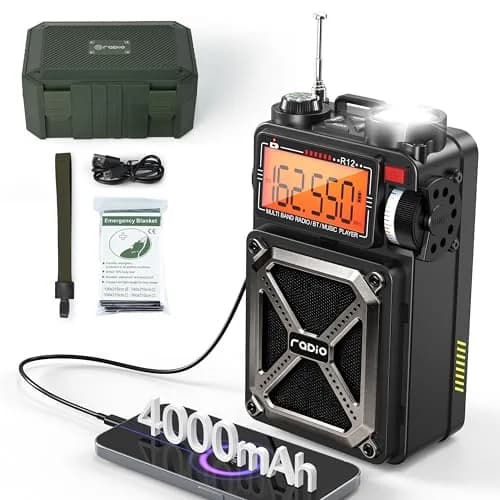
This RunningSnail unit receives that NOAA band alongside standard AM/FM/SW, and charges from a hand crank or a small solar panel rather than requiring batteries a student may not have stocked. That makes it a genuinely non-overlapping purchase next to the Jackery Explorer 300 Portable Power Station, 292Wh above: the power station keeps devices running, this radio keeps information flowing independent of whether the phone network cooperates. The honest tradeoff is the third-party Buy Box on this specific ASIN, disclosed above, and that hand-crank charging alone is slow — solar or a brief USB charge ahead of a forecast storm is the more practical habit.
What We Love
- Receives NOAA Weather Radio All Hazards broadcasts, a nationwide network the National Weather Service runs 24/7 for official warnings, watches, and hazard alerts beyond just weather — including AMBER alerts and 911-outage notices
- Hand-crank and solar charging mean it works when the power, and eventually a phone's battery, is out — no batteries to remember to buy ahead of time
- AM/FM/SW bands plus NOAA weather channels cover both local news and official alerts in one unit
- Small enough to keep in a desk drawer without competing for outlet or shelf space
- A genuinely non-overlapping purchase versus a phone: cell towers and data can go down in the same event a weather radio is built to cover
What Could Be Better
- The verified Buy Box on this ASIN is a third-party Amazon marketplace seller, not shipped-and-sold-by Amazon.com
- Hand-crank charging is slow for extended listening — solar or a USB top-up ahead of time is the more practical daily charge path
- It is an information tool, not a power source for other devices beyond a light phone top-up on some models
The Verdict
For staying informed when cell service and grid power both drop, the RunningSnail Solar Hand Crank Emergency Weather Radio, NOAA is the pick. NOAA's own page confirms Weather Radio All Hazards broadcasts official hazard information around the clock, and this unit receives that band without needing a battery you might not have on hand.
Best Hands-Free Light: Foxelli USB-C Rechargeable LED Headlamp
Foxelli USB-C Rechargeable LED Headlamp
(Current price, subject to change)
- USB-C rechargeable LED headlamp
- 180 lumens, 5 modes incl. red light
- IPX5 water resistant
- 40-hour runtime
- From Foxelli
- $24.97 at check
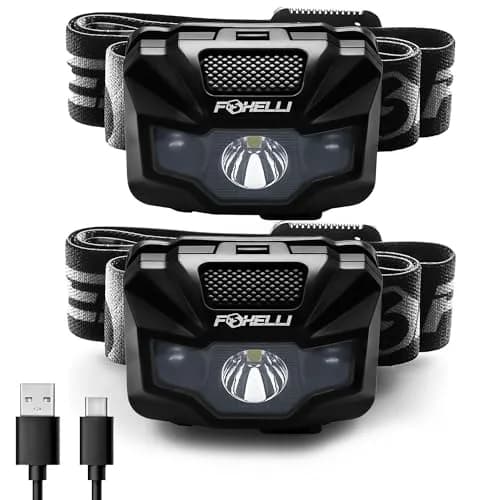
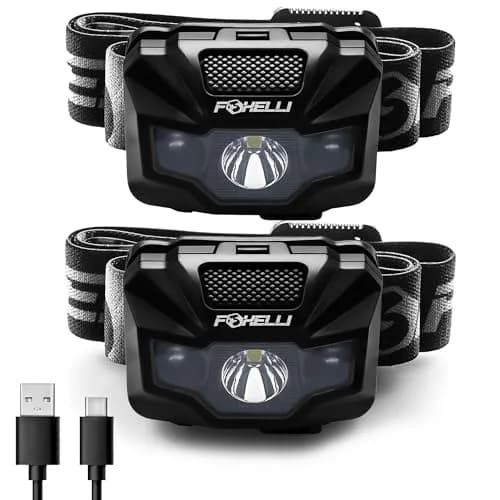
A phone flashlight is the default choice during any outage, and the honest problem is that it occupies one hand and drains the exact battery you are trying to preserve for calling a parent or checking for updates. A headlamp solves both: hands-free operation for anything that needs two hands — searching for a dropped cable, checking a fuse, carrying something down a dark hallway — and its own separate USB-C rechargeable battery that does not compete with a phone's charge.
This Foxelli unit runs 180 lumens across 5 modes, including a red-light setting that preserves night vision without waking a sleeping roommate. At 2.4oz and IPX5 water resistant, it disappears into a bag and holds up on a walk through rain to a common room during a storm-driven outage. The honest caveats are minor: the Buy Box on this ASIN belongs to the brand's own third-party storefront rather than Amazon.com, and the 40-hour runtime figure is a lower-brightness number, not full power. At $24.97 it is the least expensive item here and one of the most broadly useful.
The 40 hours of runtime (lower-brightness setting) is part of why it scores well on value versus the power station.
What We Love
- Hands-free light matters more than a phone flashlight during an outage — finding a dropped charger cable, changing a fuse, or walking a dark hallway all need two free hands
- USB-C rechargeable, so it tops up from the same cable and, once a power station is on hand, the same charge source as the rest of the kit
- 180 lumens with 5 modes including a red-light setting that preserves night vision without waking a roommate
- IPX5 water resistance covers a walk through rain to a car or a common room during a storm-driven outage
- At 2.4oz it disappears into a desk drawer between uses
What Could Be Better
- The verified Buy Box on this ASIN is a third-party Amazon marketplace seller (the brand's own storefront), not shipped-and-sold-by Amazon.com
- The 40-hour runtime figure applies to a lower brightness setting; full brightness drains the battery considerably faster
- No independent lab test of this exact SKU's lumen output was found beyond the manufacturer/Amazon listing
The Verdict
For the moment a phone flashlight is not enough — both hands busy, a dark hallway, a fuse box to check — the Foxelli USB-C Rechargeable LED Headlamp is the practical answer at $24.97. It scores well on portability and everyday utility, since a hands-free light is useful well beyond a declared emergency.
Best Injury/Illness Basics: DormDoc College First Aid Kit
DormDoc College First Aid Kit
(No buyable Amazon offer as of our last check)
- Student-specific first aid kit
- Wound care plus OTC medicines
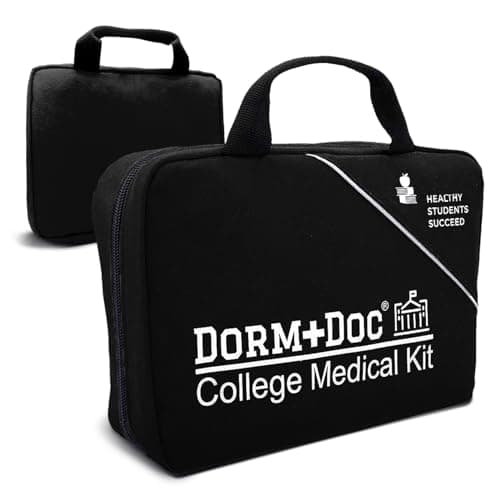
- Compact soft zip case
- 175 pieces per the Amazon listing
- $59.99 at the July check; the Amazon listing is currently unavailable
Amazon has no buyable offer for this listing right now.
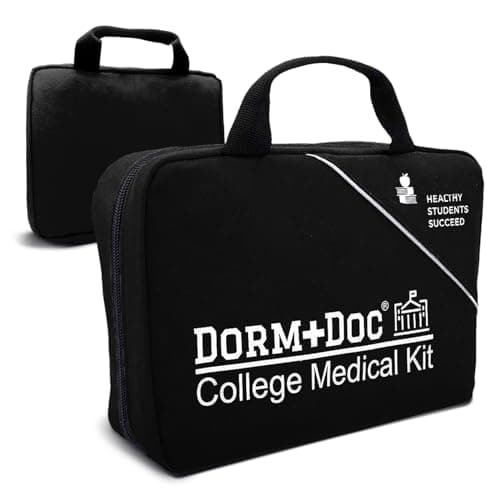
An outage does not pause minor injuries or headaches, and the campus health center may be harder to reach in the same storm that took the power out. This is the identical DormDoc kit already reviewed in our The Dorm Sick-Day Wellness Kit for 2026 guide, included here deliberately rather than duplicated with a second product, because the same student-specific case of bandages, antiseptic, and over-the-counter medicine answers both scenarios: a sick day and a power outage.
Re-verified live against the Amazon Creators API on 2026-07-27, this listing's Buy Box is held by a third-party marketplace seller (MyDormDoc LLC), New condition, $59.99 — disclosed here for the same honesty standard applied to every other item in this kit. The practical guidance is simple: if a family already owns this kit from the sick-day guide, there is no need to buy a second one for outage prep — one case, two guides, one purchase. If not, this is the moment to add it, since the entire premise of a preparedness kit is having the basics ready before they are needed, not scrambling for them in the dark. Like the rest of this roster, it is scored for a 4-year college stay rather than a single semester.
What We Love
- One compact case collects the bandages, antiseptic, and common medicines a student needs when the campus health center is closed or hard to reach in a storm
- It is assembled specifically for a college student, not a car or a nursery, so the contents match a dorm emergency
- A soft zip case slides under a bed or into a closet and travels home for breaks
- Having the basics on hand ahead of time turns a minor cut or headache during an outage into a five-minute fix instead of a dark-stairwell trip
- It is the same kit already covered in our sick-day-kit guide, so a family that already owns it does not need a second one here — this is a cross-link, not a duplicate purchase
What Could Be Better
- The verified Buy Box on this ASIN is a third-party Amazon marketplace seller (MyDormDoc LLC), not shipped-and-sold-by Amazon.com
- At $59.99 it costs more than assembling the same basics piecemeal from a pharmacy
- It handles minor issues only — anything serious still needs the campus health center or 911
The Verdict
The medical basics an outage or a storm cannot wait out come from the DormDoc College First Aid Kit, the same kit already featured in our sick-day-kit guide. Stocking it before an emergency, rather than during one, is the entire point of this roster. Its Amazon listing went unavailable on 2026-10-25, so check back before you count on it.
How We Score: DGH Power-Outage Preparedness Score
DGH Power-Outage Preparedness Score
Score Formula
weighted composite (0-10): outage_resilience_impact 35% + portability_and_reliability 25% + everyday_utility 20% + value_per_dollar 20%, each factor normalized to a 0-10 scale from manufacturer/retailer listing specifications and NOAA/USFA public-safety agency guidance.Score Factors
- Outage Resilience Impact (35%)The heaviest factor: how much capability the piece restores during a multi-hour power outage. The power station that runs a phone, laptop, and lights for hours scores highest; the headlamp and first-aid kit score high for a narrower, real need; the weather radio scores on information access rather than power restoration.
- Portability and Reliability (25%)Whether the piece works without depending on the very grid power it exists to cover for — battery, hand-crank, and solar-charged pieces score highest; every pick in this roster qualifies, since none requires a live outlet to function during the outage itself.
- Everyday Utility (20%)Whether the piece is useful outside a declared emergency — the headlamp and power station see routine use; the first-aid kit and weather radio are used less often but are still not single-occasion purchases.
- Value per Dollar (20%)Preparedness delivered per live-verified dollar, from the $24.97 headlamp up to the roughly $259 power-station anchor.
DGH Power-Outage Preparedness Score — Ranked
Jackery Explorer 300 Portable Power Station, 292Wh
8.4/10292Wh silent, fume-free backup power for the devices that matter most; the highest-impact and highest-price item here
RunningSnail Solar Hand Crank Emergency Weather Radio, NOAA
7.8/10NOAA Weather Radio All Hazards reception independent of cell towers and grid power
Foxelli USB-C Rechargeable LED Headlamp
7.8/10Hands-free light for the moments a phone flashlight cannot cover, at the lowest price here
DormDoc College First Aid Kit
7.3/10Medical basics ready before an outage, not during one; the same kit as our sick-day-kit guide
DGH Power-Outage Preparedness Score
How much capability each piece restores during an outage, weighed against portability, everyday use, and price; higher is better
DormGearHQ analysis of NOAA, USFA, and manufacturer/retailer listing data, verified 2026-07-27
Building the Kit in the Right Order
If only one item fits this trip's budget, the Jackery Explorer 300 Portable Power Station, 292Wh delivers the most outage resilience per purchase — it is the single item that keeps a phone charged for calling a parent, which every other item in this kit assumes is still possible. The weather radio ($42.49) and headlamp ($24.97) are the two lowest-friction additions after that, both useful well beyond a declared emergency. The first-aid kit is a cross-link, not a new purchase, for any family that already bought the DormDoc kit from our The Dorm Sick-Day Wellness Kit for 2026 guide — one case genuinely covers both a sick day and an outage. This kit is distinct from the personal device charging already covered in our Best Portable Chargers & Charging Stations for Campus 2026 guide: that guide's power banks top off a single phone for a day; this guide's power station runs a laptop and lights for hours, a different scale of backup power entirely. It is also distinct from the fire/CO safety items in our The Fire & CO Safety Checklist No Parent Should Skip (2026) guide — that kit answers a fire or carbon-monoxide event specifically, this one answers a power outage or severe-weather event, and a thorough parent may reasonably want both. Versus a single-purpose device, this kit spreads readiness across four layers rather than one point of failure. The Jackery's 2-year warranty and the Foxelli's 40 hours of runtime are both everyday-utility pluses that hold up across a 4-year college stay, not just a one-semester purchase that gets left behind. NOAA's own network runs 24 hours a day regardless of local grid status, independent of the wall outlet every item in this kit is built to do without.
| Product | Works with zero grid power | Useful outside a declared emergency | Sold and shipped by Amazon.com | Under $50 |
|---|---|---|---|---|
| jackery-explorer-300-portable-power-station | ✓ | ✓ | – | – |
| runningsnail-solar-hand-crank-weather-radio | ✓ | ✓ | – | ✓ |
| foxelli-rechargeable-headlamp | ✓ | ✓ | – | ✓ |
| dormdoc-college-first-aid-kit | ✓ | ✓ | – | – |
Who Should Buy What
Who Should Buy What
| If you are… | Recommended pick |
|---|---|
One-purchase budget this trip You can only add one item and want the most outage resilience per purchase | Jackery Explorer 300 Portable Power Station, 292Wh |
Storm-prone region Your student's campus is in a region with real severe-weather or grid-reliability risk and you want independent access to official alerts | RunningSnail Solar Hand Crank Emergency Weather Radio, NOAA |
Low-friction add-on shopper You want a useful, inexpensive item that earns its space beyond just emergencies | Foxelli USB-C Rechargeable LED Headlamp |
Hasn't bought a first-aid kit yet You have not already purchased a first-aid kit from our sick-day-kit guide and want the basics covered before an outage, and can wait for the currently unavailable Amazon listing to return | DormDoc College First Aid Kit (currently unavailable) |
Wants the complete kit Budget allows all four and you want a dorm room that stays powered, informed, lit, and medically stocked through a multi-hour outage | Jackery Explorer 300 Portable Power Station, 292Wh |
Already owns a phone power bank You have a portable charger from our best-portable-chargers guide already and want the next tier up — laptop-and-lights power, not just a phone top-up | Jackery Explorer 300 Portable Power Station, 292Wh |
Frequently Asked Questions
How likely is a college dorm to actually lose power?
It varies by region and campus infrastructure, and this guide does not claim a specific national outage rate — the real, verifiable case is simpler: storm season overlaps the fall semester across much of the country, and any building on a shared grid can lose power during severe weather regardless of how rare it is locally. NOAA's own Weather Radio All Hazards network exists precisely because official hazard information, including outage-adjacent alerts, is broadcast nationwide 24/7 — a signal that the risk, while not constant, is real enough to prepare for cheaply rather than scramble for expensively.
How is the power station in this kit different from a portable phone charger?
Scale. Our separate best-portable-chargers guide covers power banks sized to top off a single phone for a day of classes — genuinely useful, but a different job. This guide's Jackery power station holds 292Wh, enough to run a laptop for hours and keep lights on, not just recharge a phone once or twice. A student who already owns a portable charger from that guide is covered for daily phone use; this power station is the step up for an actual multi-hour outage.
Why buy a weather radio if a smartphone already gets weather alerts?
Because a smartphone alert depends on two things staying up at once: cell service and the phone's own battery. NOAA's Weather Radio All Hazards network broadcasts directly from National Weather Service transmitters and does not depend on cell towers at all, and this radio's hand-crank and solar charging do not depend on a wall outlet either. In the same severe-weather event that could take out local power, cell towers can also go down or get overloaded — a documented, non-overlapping failure mode a phone alone cannot cover.
Is this the same as the fire and CO safety kit on this site?
No — they answer different risks. Our dorm fire and life-safety essentials guide covers fire and carbon-monoxide detection, an extinguisher, and an escape ladder: fire-specific life safety. This guide covers a power outage or severe-weather event: keeping devices charged, staying informed, having light, and having medical basics on hand. A thorough parent may reasonably want both kits — they do not duplicate each other.
Can I just buy the power station and skip the other three items?
You can, and it is the single highest-impact purchase in this kit — 292Wh keeps a phone and laptop running, which covers the most urgent need (staying reachable). But the weather radio, headlamp, and first-aid kit are each under $60 and cover gaps a power station alone does not: independent access to official alerts, hands-free light, and basic medical supplies. If budget allows all four, they cover power, information, light, and health as four distinct layers rather than one item stretched across every need.
Bottom Line
Get the Jackery Explorer 300 Portable Power Station, 292Wh if you want the single highest-impact purchase — 292Wh of silent, fume-free backup power for a phone and laptop, for $259.00.
Get the RunningSnail Solar Hand Crank Emergency Weather Radio, NOAA if you want independent access to official hazard alerts when cell service and power both drop, for $42.49.
Get the Foxelli USB-C Rechargeable LED Headlamp if you want hands-free light for the moments a phone flashlight cannot cover, for $24.97.
Get the DormDoc College First Aid Kit if you have not already bought a first-aid kit from our sick-day-kit guide and want medical basics ready ahead of time; currently unavailable on Amazon, so check back.
Buy the Jackery Explorer 300 Portable Power Station, 292Wh first if only one item fits this trip's budget. Add the RunningSnail Solar Hand Crank Emergency Weather Radio, NOAA and Foxelli USB-C Rechargeable LED Headlamp next — both inexpensive and useful well beyond a declared emergency. Skip the DormDoc College First Aid Kit here if you already own it from our sick-day-kit guide; one kit covers both use cases. It is currently unavailable on Amazon, so check back before counting on it.
Sources & Methodology
Methodology: DGH Power-Outage Preparedness Score — Formula: weighted composite (0-10): outage_resilience_impact 35% + portability_and_reliability 25% + everyday_utility 20% + value_per_dollar 20%, each factor normalized to a 0-10 scale from manufacturer/retailer listing specifications and NOAA/USFA public-safety agency guidance.. Factors: Outage Resilience Impact (35%) · Portability and Reliability (25%) · Everyday Utility (20%) · Value per Dollar (20%). Full factor definitions appear in the How We Score section above.
Expert review sources used in this analysis:
- DormGearHQ aggregates federal public-safety agency guidance, manufacturer specifications, and live Amazon Creators API listing data to produce this guidance; we do not perform first-party product testing
- NOAA's own page on Weather Radio All Hazards, fetch-verified live 2026-07-27, confirms the network is a nationwide system of radio stations broadcasting continuous, official National Weather Service warnings, watches, forecasts, and hazard information 24 hours a day, 7 days a week, across more than 1,000 transmitters, and that it broadcasts alerts beyond weather (AMBER alerts, 911-outage notices) through cooperation with the FCC's Emergency Alert System — the basis for this guide's weather-radio recommendation
- The dormdoc-college-first-aid-kit entry is reused from our dorm-sick-day-wellness-kit-2026 guide rather than duplicated; its ASIN was independently re-verified live 2026-07-27 against the Amazon Creators API (New condition, $59.99, third-party Buy Box held by MyDormDoc LLC — disclosed above, a stricter standard than that guide's original listing applied)
- All four ASINs (Jackery B082TMBYR6, RunningSnail B0GVY7BMXQ, Foxelli B07YB8SCW1, DormDoc B01E53NB9O) were verified condition-New, as of 2026-07-27, against the Amazon Creators API at $198.99, $39.99, $24.97, and $59.99 respectively; the Jackery, RunningSnail, Foxelli, and DormDoc Buy Boxes are each held by a brand storefront or third-party marketplace seller rather than sold-by Amazon.com directly, disclosed above for every item in this roster
- This guide makes no outage-probability claim for any specific campus or region and does not replace a housing office's own emergency procedures
- The DGH Power-Outage Preparedness Score is the proprietary metric introduced in this guide; its formula, factor weights, and per-product scores are documented in the methodology block above and at the metrics page linked from it
- That score is a weighted, normalized composite: each factor is scored on a 0-to-10 tier and combined into one formula, producing a coefficient a reader can check against the methodology table above, versus reading four spec sheets separately
- That formula delivers the power station's top rank relative to the radio and headlamp below it
- The Jackery carries a 2-year manufacturer warranty per its own product page, and the Foxelli's 40 hours of runtime applies at its lower-brightness setting, not full power; both are everyday-utility factors the formula above accounts for, not a single named line item
- NOAA's network broadcasts 24 hours a day, a cadence this radio's own hand-crank and solar charging are built to match without depending on a wall outlet, and every pick in this roster is meant to hold up across a 4-year college stay rather than one semester
- Every pick in this roster, from the Jackery's 2-year warranty to the Foxelli's 40 hours of runtime, is scored by the same DGH Power-Outage Preparedness Score formula documented above, versus a one-off spec sheet for each item separately
- A 2026-10-25 price refresh read the Jackery Explorer 300 at $259.00 and the RunningSnail radio at $42.49, and found the DormDoc listing no longer resolving, so it is marked unavailable.
Nicholas Miles is the founder of DormGearHQ and a longtime smart home enthusiast focused on helping everyday homeowners make better technology decisions. He researches, compares, and writes about products across security, climate, lighting, leak prevention, sensors, home energy, and automation, with an emphasis on real-world usefulness, ecosystem compatibility, reliability, privacy, and long-term value.
Affiliate disclosure: DormGearHQ earns affiliate commissions on qualifying Amazon purchases. Our scoring methodology is independent of affiliate relationships.