
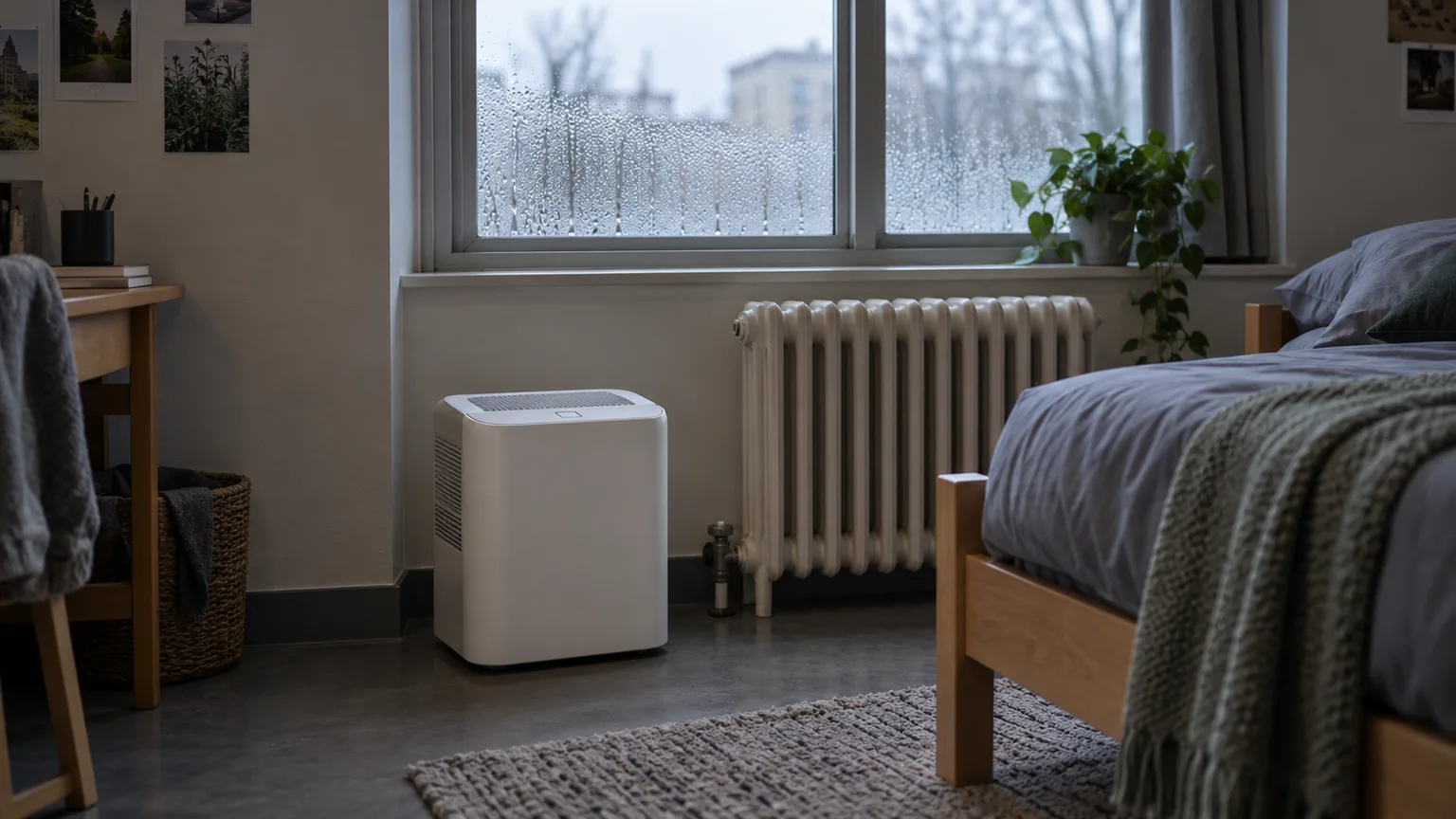
Best Compact Dehumidifiers for Damp Dorm Rooms in 2026
When the window sweats every morning and the closet smells like a basement, the Midea Cube 20 ($179.91) is the one here actually sized for a dorm. That is 20.16 pints a day on the EPA's test, in a 13.5-inch cube.
This article contains affiliate links. We may earn a commission at no extra cost to you. Learn more
Featured in this Guide
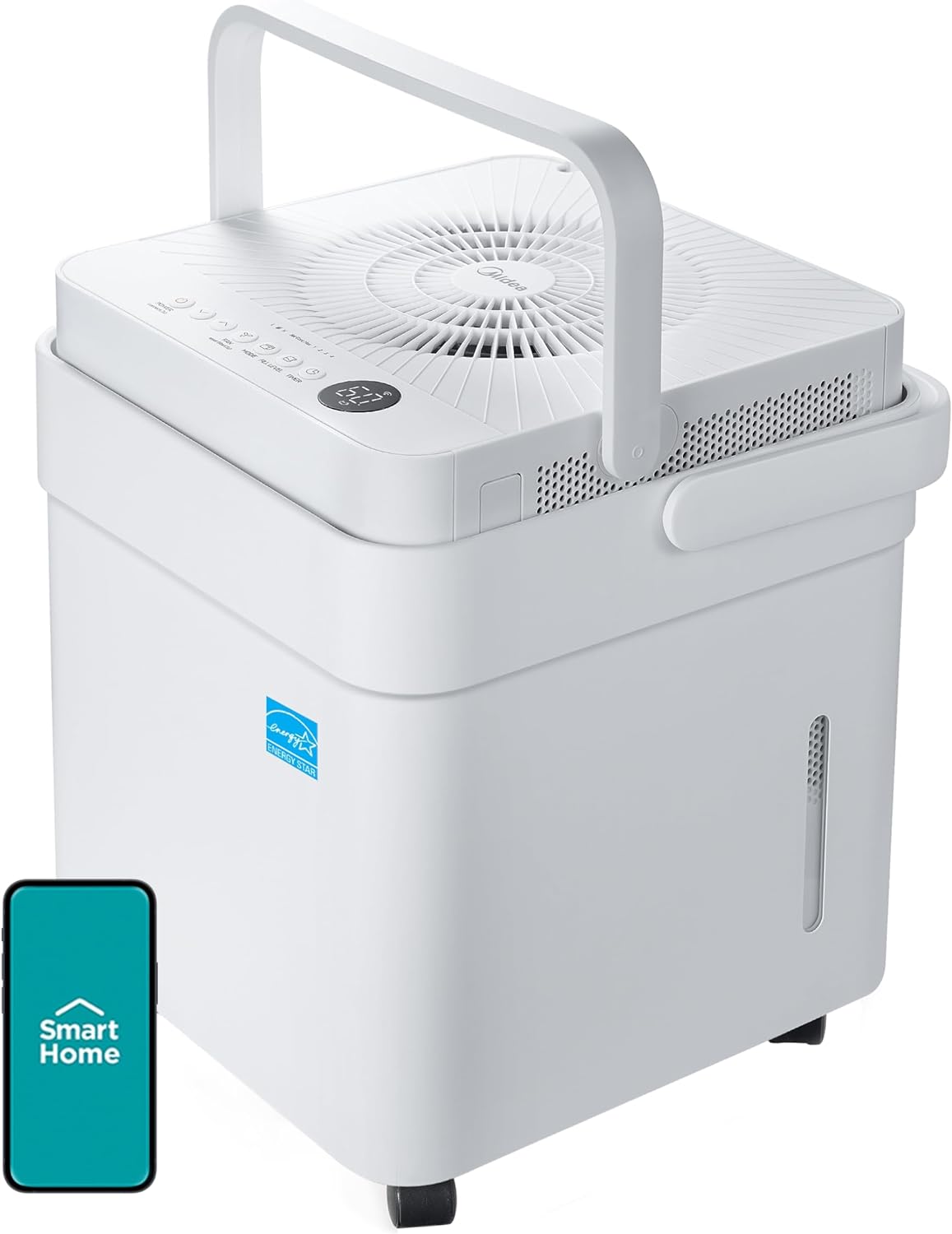
Midea
Cube 20 Pint Dehumidifier (MAD20S1QWT), 1,500 Sq. Ft., ENERGY STAR
- •20.16 measured pints a day in a 13.5-inch cube that fits under a desk, and the longest gap between empties here at about 1.27 days — $179.91, ,
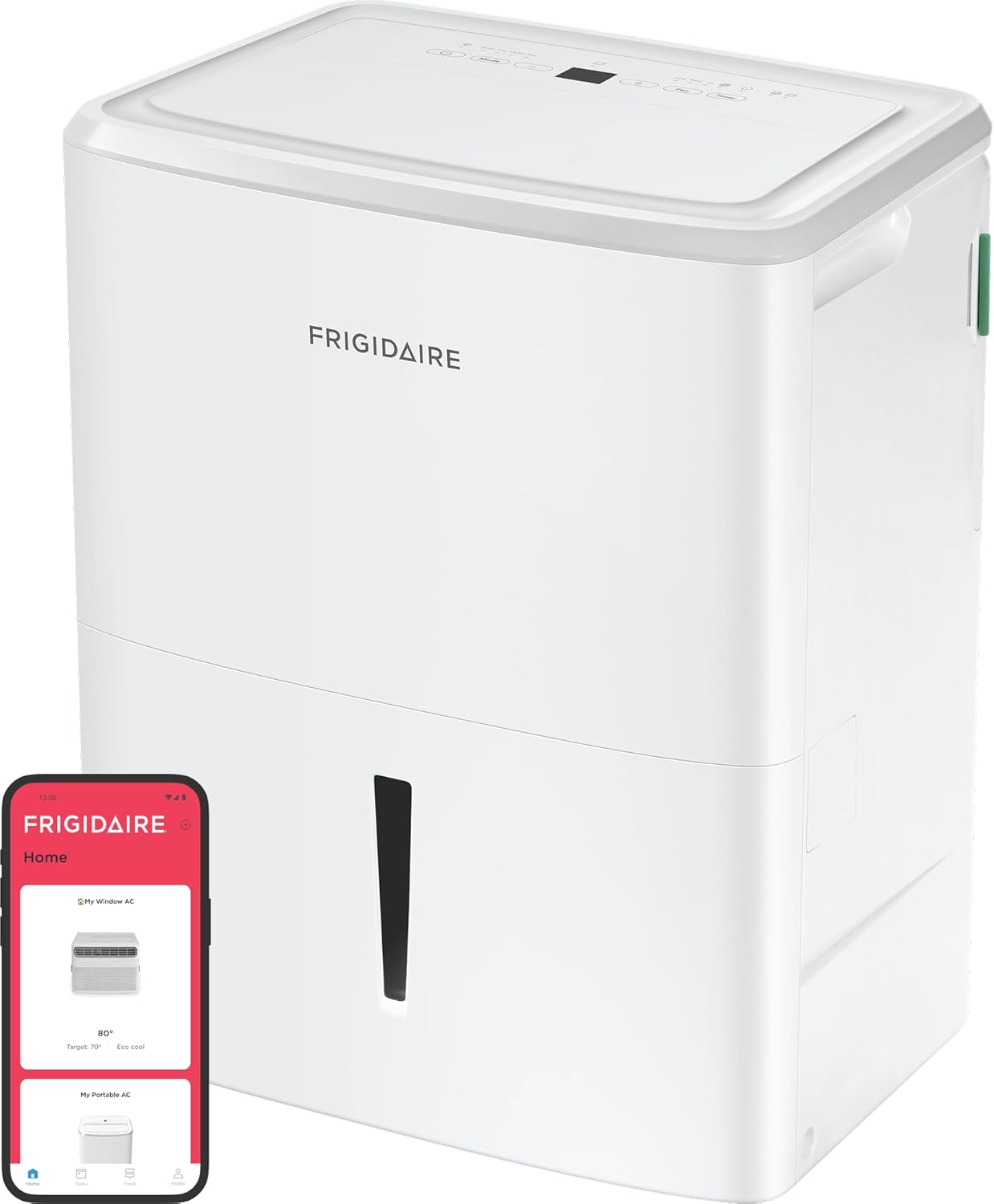
Frigidaire
22-Pint Wi-Fi Dehumidifier (FHDD2234W1), 1,500 Sq. Ft., ENERGY STAR
- •176 square inches of floor on an 11.34-inch depth for $189.00 — the least floor space here, though it stands 19.78 inches tall on a 1.7 gallon tank, ,
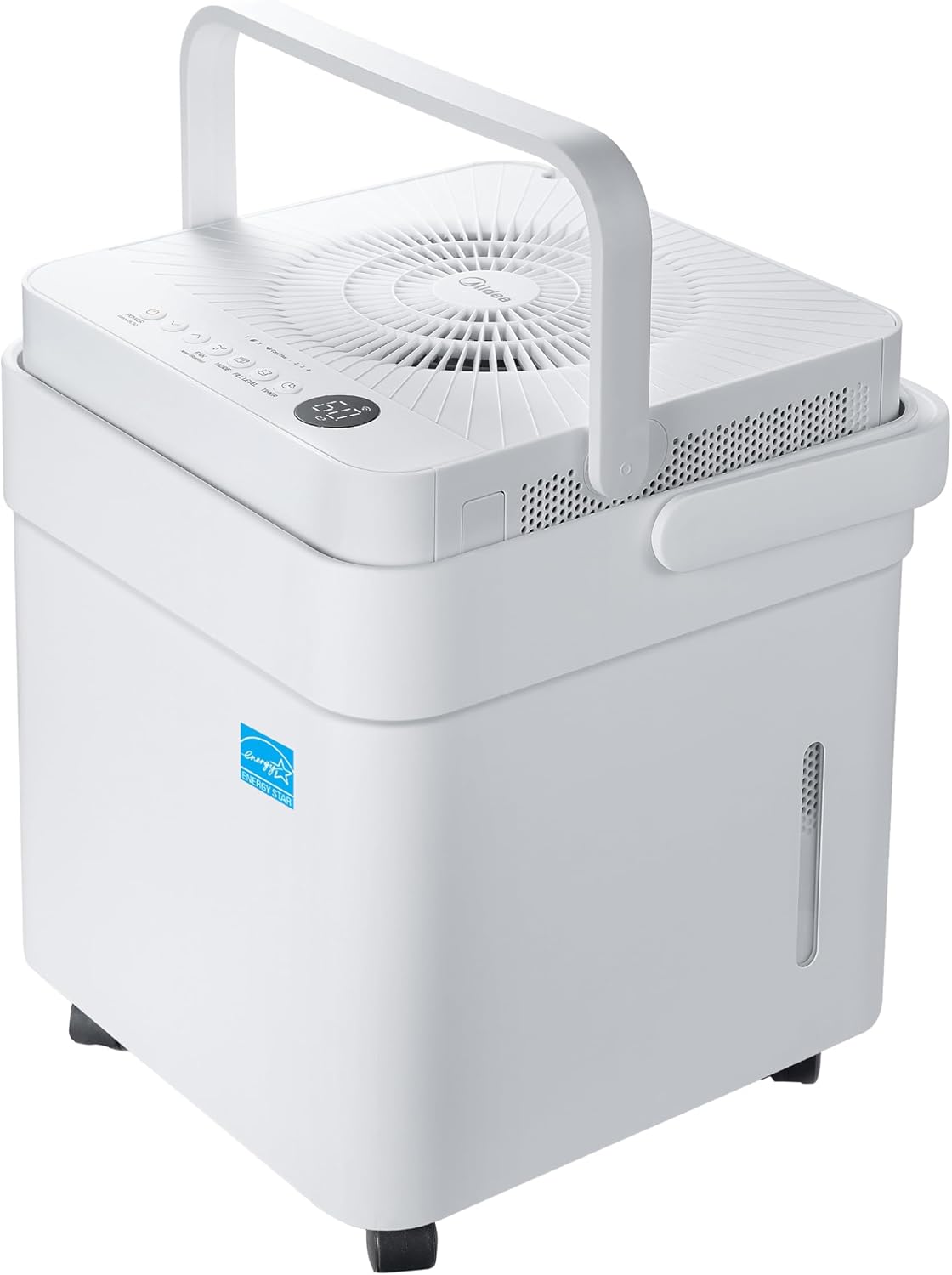
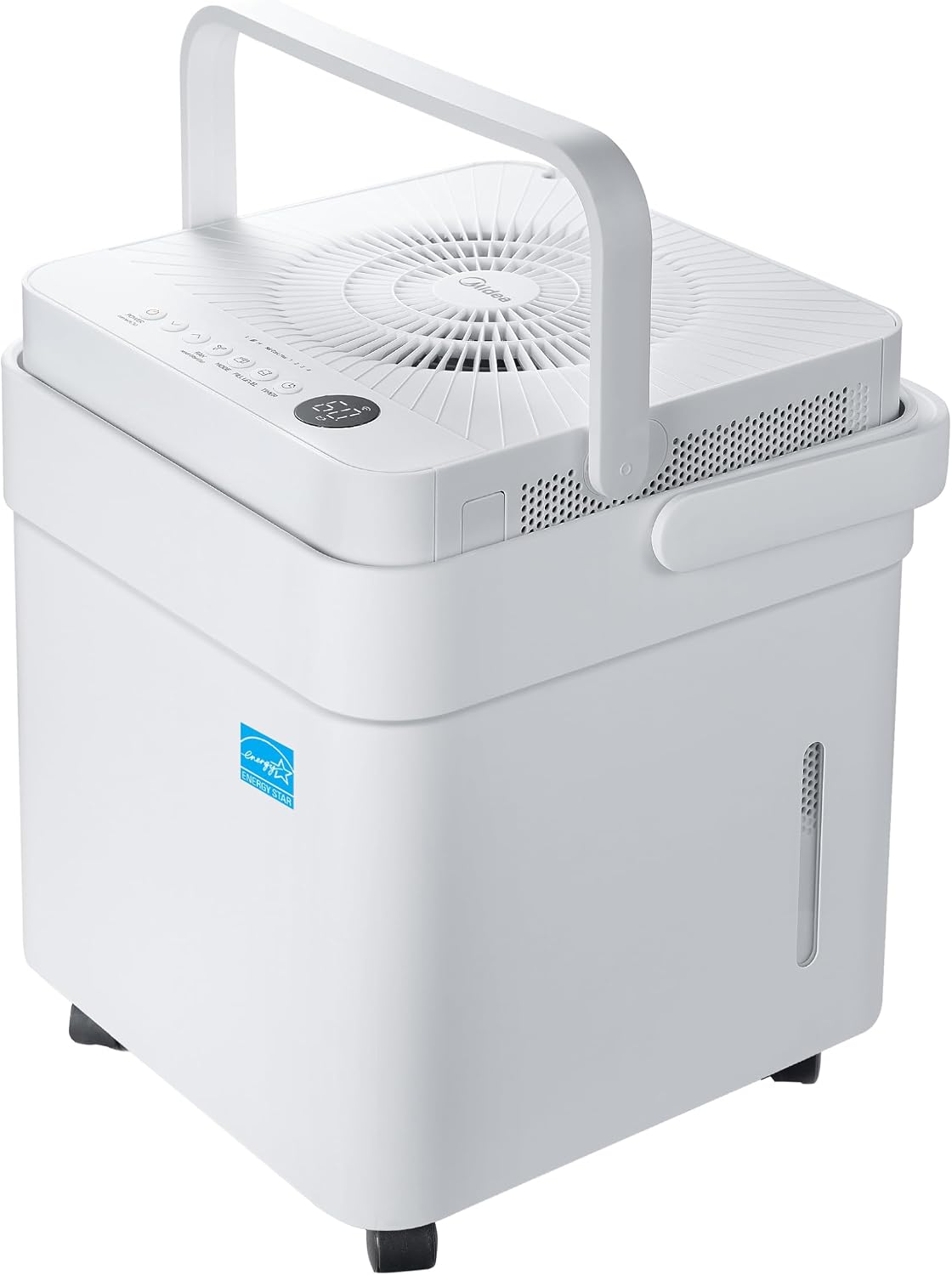
Midea
Cube 35 Pint Dehumidifier (MAD35S1QWT-A), 3,500 Sq. Ft., ENERGY STAR
- •RTINGS' Best Upper Mid-Range pick at $219.97;
- •HouseFresh measured 54.1 dB, under the 60-70 dBA it reports for comparable units, ,
Midea
Cube 50 Pint Dehumidifier (MAD50S1QWT-A), 4,500 Sq. Ft., ENERGY STAR
- •90% to 40% humidity in 7 min 39 s.
- •The quickest 50-pint DehumidifierBuyersGuide has tested, on 512 watts — $249.99, ,
Frigidaire
50 Pint Wi-Fi Dehumidifier (FHDD5034Y1), 4,500 Sq. Ft., ENERGY STAR
- •Second-fastest 50-pint in that same test at 8 min 32 s, and 48.2 dB at ten feet on low — $255.55, on the biggest footprint here at 296 sq in, ,
The Short Answer
The Midea Cube 20 ($179.91) is the dorm pick: 20.16 pints/day measured, a 13.5-inch cube, about 1.27 days between empties.
Shopping for a damp room pushes you toward the largest number on the box, and in a dorm that instinct backfires. RTINGS puts a 50-pint unit at up to 1,200 square feet and a 20-pint at up to 400, while a dorm room runs 100 to 250. Its buyer guide warns that an oversized unit will make smaller rooms feel hot and stuffy, because heat output scales with capacity.
So this guide ranks five units two ways. The consensus score records what independent testers concluded. The DGH Damp-Dorm Fit Score is a weighted composite of what a small room rewards: right-sized capacity, floor space, height, tank life and running cost. Every factor in the formula draws on an EPA measurement or a listing dimension, captured 2026-09-18.
Head-to-Head: Measured Capacity, Footprint, Tank and Running Cost
Air Quality
Chart
 DormGearHQ.com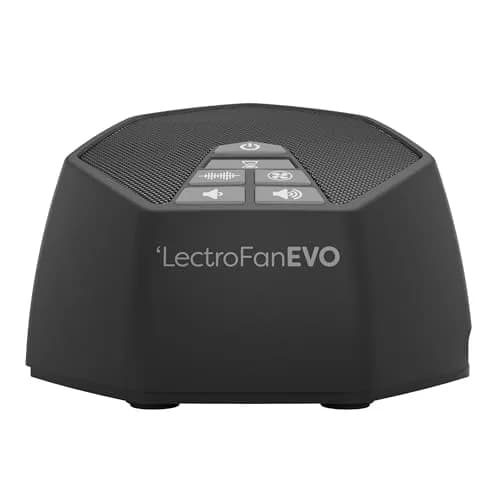
LectroFan EVO White Noise Machine
$65.95Must BuyCheck price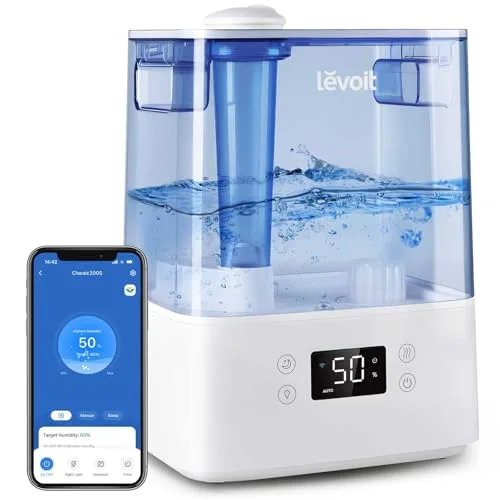
LEVOIT Classic300S Ultrasonic Smart Top Fill Humidifier
$80Must BuyCheck price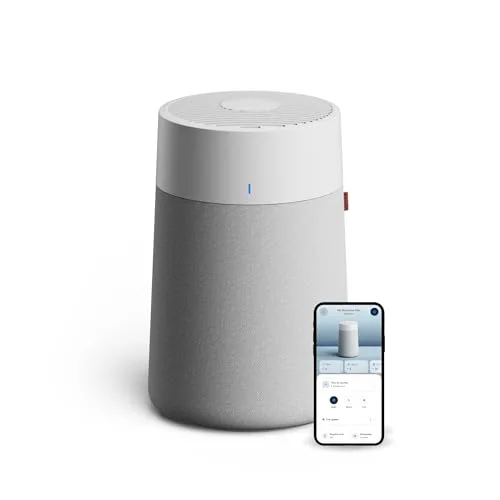
Blueair Blue Pure 511i Max Air Purifier
$139.99RecommendedCheck price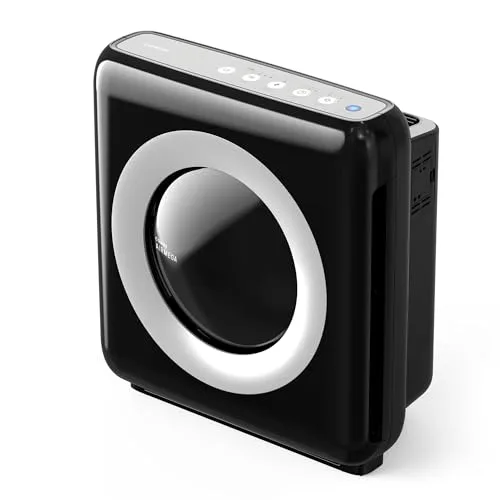
Coway AP-1512HH Mighty Air Purifier
$160-$230RecommendedCheck price
Dreo 4L Top Fill Humidifier 36H Runtime
$35.98RecommendedCheck price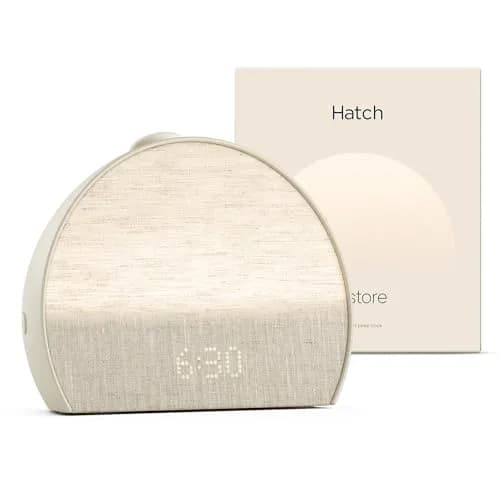
Hatch Restore 3 Sunrise Alarm Clock & Sound Machine
$170RecommendedCheck price
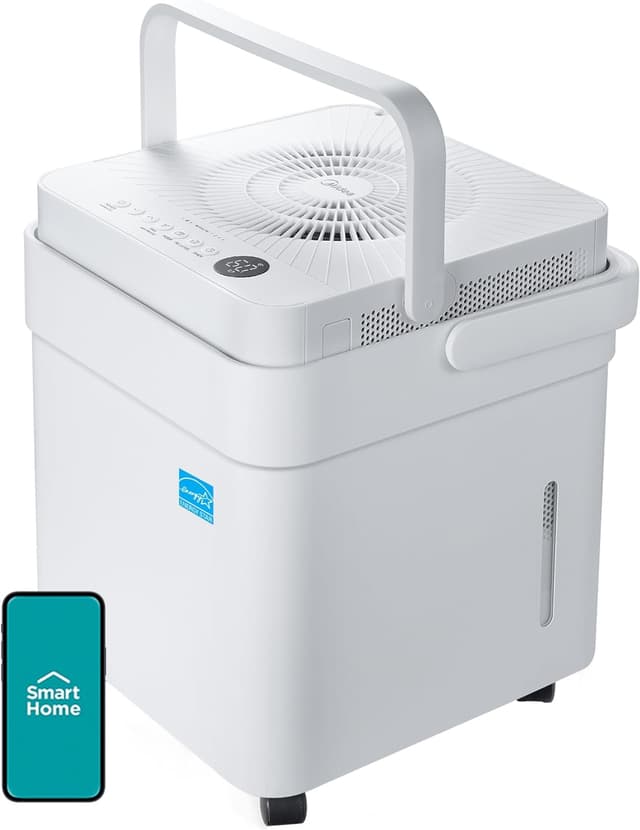
Best for a Dorm Room: Midea Cube 20 Pint Dehumidifier (MAD20S1QWT), 1,500 Sq. Ft., ENERGY STAR
Midea Cube 20 Pint Dehumidifier (MAD20S1QWT), 1,500 Sq. Ft., ENERGY STAR
(Current price, subject to change)
- Midea Cube 20 Pint dehumidifier, model MAD20S1QWT
- 3.2 gallon water tank with level window
- Drain hose connection for gravity drainage
- Washable air filter
- Two fan speeds and an adjustable humidistat
- Midea Air app over Wi-Fi
ENERGY STAR measures this unit at 20.16 pints a day. That measured figure is the one the formula uses. It matters because the number on the box is not always what the machine delivers. DehumidifierBuyersGuide documents makers quoting capacity at 95 degrees and 95 percent humidity. Your room will never see those conditions. It ranks the Cube 20 first among the small units it has tested. In its chamber it took a 50-square-foot room from 90 percent humidity down to 40 percent in 13 and a half minutes. The older Frigidaire 22-pint it replaced needed over 24.
The trade is efficiency. Its Integrated Energy Factor is 1.70 litres per kilowatt-hour against 2.01 for the 35- and 50-pint Cubes, because a small compressor is simply less efficient per litre removed. In absolute terms it still costs the least to run here, 249 kilowatt-hours a year on the ENERGY STAR record, since it moves far less air. Tom's Guide put it at about 55 decibels and called it their budget pick. The body rotates and drops inside its own bucket, which makes it the one unit here that goes home in May without a second box.
What We Love
- ENERGY STAR measures 20.16 pints a day, which is the 20-pint class RTINGS sizes for rooms up to 400 square feet — the right bracket for a dorm rather than a basement
- DehumidifierBuyersGuide ranks it first among the small units it has tested, clocking 90 to 40 percent humidity in 13 and a half minutes
- Tom's Guide named it their budget pick and measured about 55 decibels, which is roughly a quiet fan
- A 3.2 gallon tank on a 20-pint machine gives about 1.27 days between empties at rated capacity, the longest stretch in this guide
- 13.54 inches tall in a 13.5-inch square, so it lives under a desk instead of beside the bed
What Could Be Better
- The 1.70 L/kWh Integrated Energy Factor trails the 2.01 of the larger units, because efficiency scales with capacity
- At 33.3 pounds it is heavy for its size, and the nesting trick helps storage rather than carrying
The Verdict
If your RA keeps knocking about the mildew smell, you want something compact enough to live under the desk. The Midea Cube 20 Pint Dehumidifier (MAD20S1QWT), 1,500 Sq. Ft., ENERGY STAR lines up with what you actually need. Its 9.9 DGH Damp-Dorm Fit Score is the highest here. It wins on all five things a dorm rewards. The one you notice is the tank: about a day and a quarter between trips to the sink.
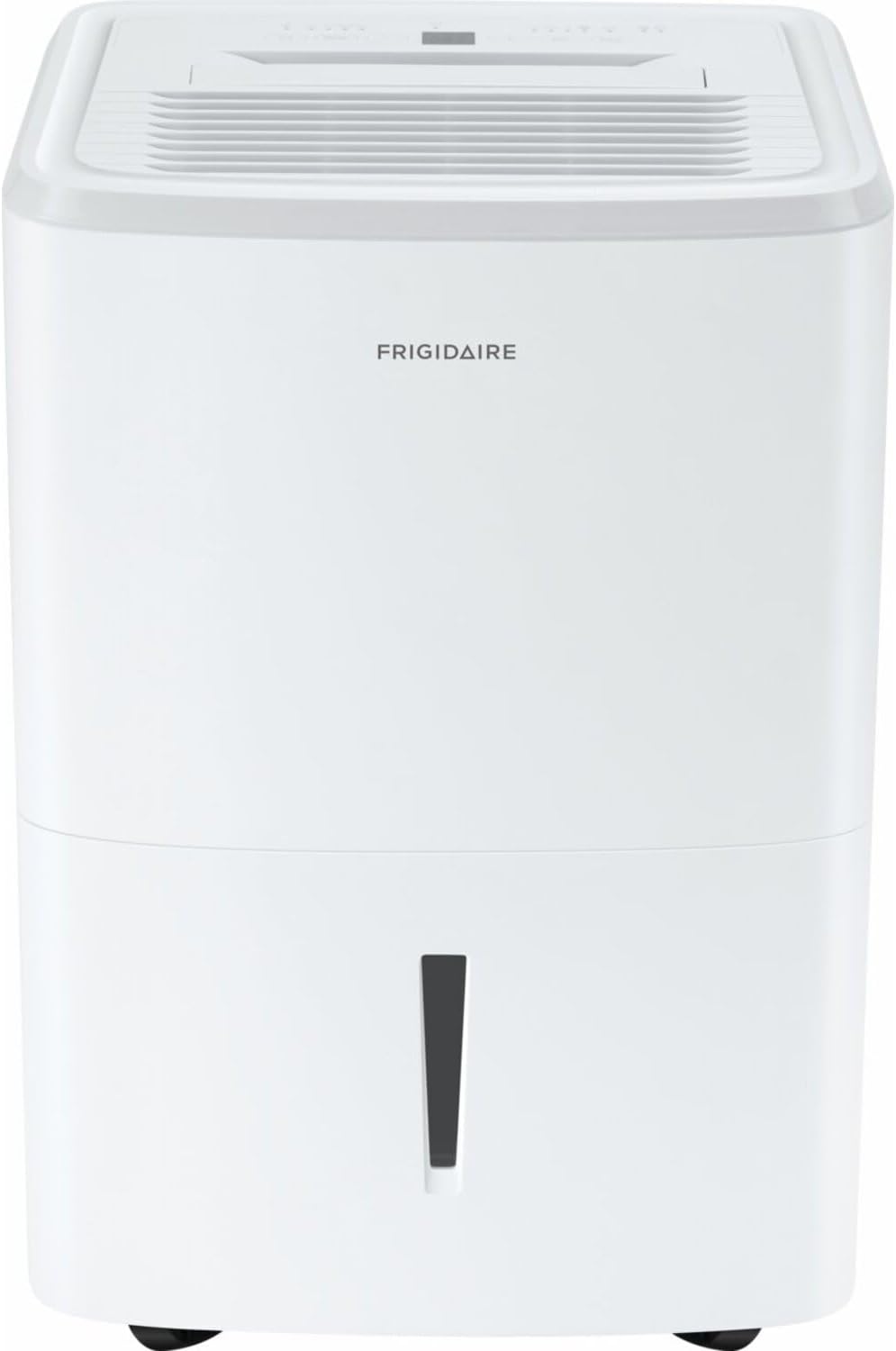
Smallest Floor Footprint: Frigidaire 22-Pint Wi-Fi Dehumidifier (FHDD2234W1), 1,500 Sq. Ft., ENERGY STAR
Frigidaire 22-Pint Wi-Fi Dehumidifier (FHDD2234W1), 1,500 Sq. Ft., ENERGY STAR
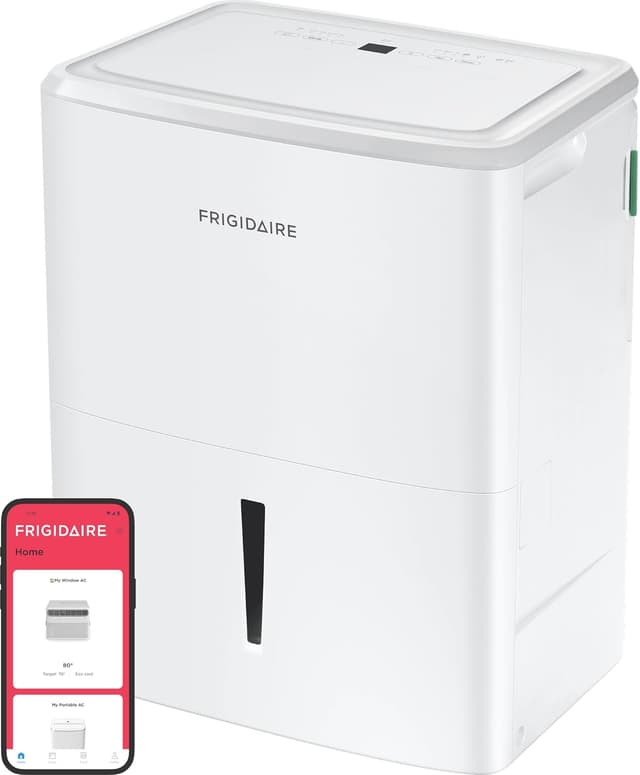
(Current price, subject to change)
- Frigidaire 22-Pint dehumidifier, model FHDD2234W1
- 1.7 gallon bucket with carry handle
- Continuous drain port
- Washable filter with a clean alert
- Wi-Fi with the Frigidaire app
- Adjustable humidistat and auto shut-off
This is the one product in the guide with a thin evidence file, and it is better to say that plainly than to dress it up. The EPA's ENERGY STAR database gives a measured 22.57 pints a day for model FHDD2234W1, at an Integrated Energy Factor of 1.70. That is the whole of the independent record. No laboratory result for this exact model was located. DehumidifierBuyersGuide does recommend the older Frigidaire 22-pint, the FFAD2233W1, and measured it needing over 24 minutes on the same test the Cube 20 finished in 13 and a half. Versus the unit reviewed here that is a different model, so its result is context rather than evidence.
What the listing does establish is the shape, and the shape earns it a place. At 11.34 by 15.5 inches it occupies 176 square inches, less floor than anything else here. The cost of that narrow base is height: 19.78 inches rules out the under-desk position. The bucket holds 1.7 gallons, roughly 0.60 days at full load. Relative to the others here, it is a machine you visit more often.
What We Love
- ENERGY STAR measures 22.57 pints a day, the most capacity of the two dorm-scale picks and still inside the right bracket
- An 11.34 by 15.5 inch base is 176 square inches, the least floor area of any unit in this guide
- An 11.34-inch depth lets it sit in a gap the 14.45-inch-square Midea Cubes cannot use
- 283 kilowatt-hours a year, the second lowest running cost of the five
What Could Be Better
- No independent laboratory has tested this exact model, so its score rests on the EPA measurement alone
- The 1.7 gallon bucket runs about 0.60 days between empties at rated capacity, roughly half the Cube 20's interval
- At 19.78 inches tall it will not slide under a desk, so it takes floor space in the open
The Verdict
If you have shortlisted this because the floor plan is the problem rather than the humidity, this is a sensible pick for that setup. The Frigidaire 22-Pint Wi-Fi Dehumidifier (FHDD2234W1), 1,500 Sq. Ft., ENERGY STAR takes less floor than anything else here, on the shallowest depth of the five. Its 8.1 DGH Damp-Dorm Fit Score sits second because of the bucket: at 1.7 gallons you empty it about twice as often.
Best for a Suite or Small Basement: Midea Cube 35 Pint Dehumidifier (MAD35S1QWT-A), 3,500 Sq. Ft., ENERGY STAR
Midea Cube 35 Pint Dehumidifier (MAD35S1QWT-A), 3,500 Sq. Ft., ENERGY STAR
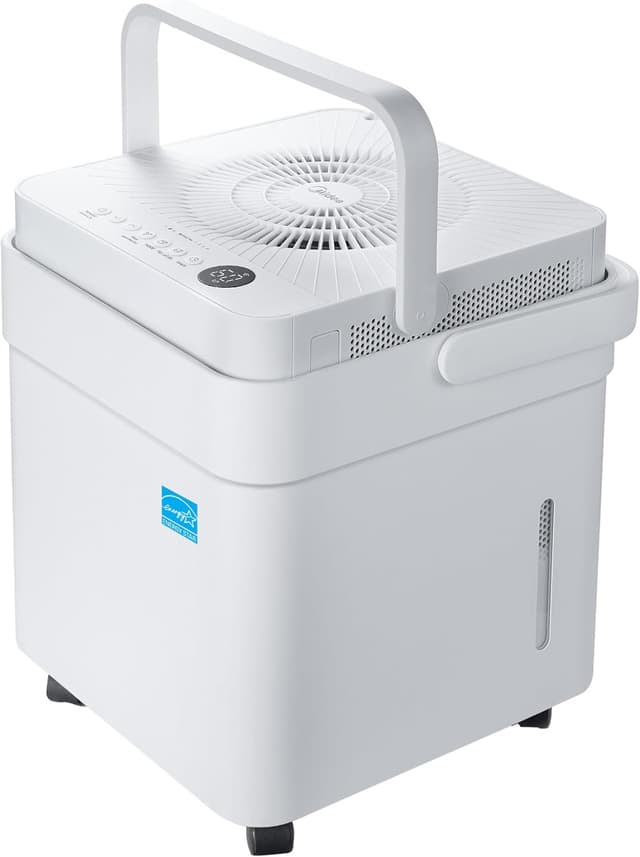
(Current price, subject to change)
- Midea Cube 35 Pint dehumidifier, model MAD35S1QWT-A
- 4.2 gallon water tank
- Drain hose and garden hose adapter
- Three fan speeds, 345 watts
- Washable air filter
- Midea Air app over Wi-Fi
This is the unit the testing world actually agrees on. RTINGS calls it Best Upper Mid-Range Dehumidifier and publishes component scores rather than a verdict alone. It rates the unit 7.6 for basement use and 7.0 for a bedroom, with 6.6 for noise and 7.2 for capacity. It records airflow of 189 cubic feet per minute at top fan speed and 155 at the lowest. It also singles out the collapsible design. HouseFresh, testing independently, measured 54.1 decibels and removed 0.99 litres over three hours.
Compared to the Cube 20, the composite advantage is efficiency and capacity. The Integrated Energy Factor rises from 1.70 to 2.01, and measured extraction nearly doubles to 35.82 pints daily. Against the Cube 50 it surrenders speed in larger spaces, retaining most of the quiet. The complication is arithmetic. RTINGS sizes this capacity class for approximately 800 square feet. Positioned in a 150-square-foot bedroom, it operates as a machine built for five times the room, consuming 378 kilowatt-hours annually. HouseFresh lists the bucket at 4.35 gallons where this listing specifies 4.2; we use the listing figure.
What We Love
- RTINGS names it Best Upper Mid-Range Dehumidifier and publishes the panel behind it: Basement 7.6, Bedroom 7.0, Noise 6.6, Capacity 7.2
- HouseFresh measured 54.1 decibels, against the 60 to 70 dBA it reports for comparable large units
- HouseFresh also ran it in the lab, removing 0.99 litres in three hours
- ENERGY STAR measures 35.82 pints a day at a 2.01 L/kWh Integrated Energy Factor, a real efficiency step over the 20-pint class
- RTINGS measured 189 CFM at top speed and 155 at the lowest, a wide range that lets it run quietly when it can
What Could Be Better
- 35.82 pints a day suits roughly 800 square feet, several times a dorm room, and RTINGS warns an oversized unit makes small rooms hot and stuffy
- No drain pump, so continuous drainage needs gravity and somewhere lower than the machine
- RTINGS notes it is sometimes unavailable from major online marketplaces
The Verdict
For the student whose damp problem is bigger than one bedroom — a suite common room, a ground-floor share with one bad wall — this checks the boxes that matter. The Midea Cube 35 Pint Dehumidifier (MAD35S1QWT-A), 3,500 Sq. Ft., ENERGY STAR is the best-evidenced machine here, with a full RTINGS panel behind it. Its 7.6 DGH Damp-Dorm Fit Score is held down by capacity alone, which is the point.
Fastest in a Basement: Midea Cube 50 Pint Dehumidifier (MAD50S1QWT-A), 4,500 Sq. Ft., ENERGY STAR
Midea Cube 50 Pint Dehumidifier (MAD50S1QWT-A), 4,500 Sq. Ft., ENERGY STAR
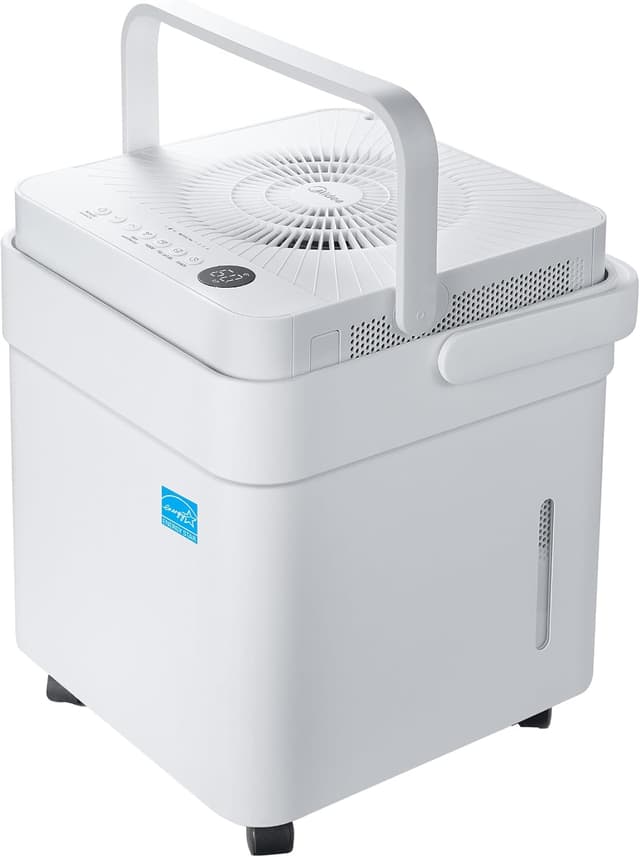
(Current price, subject to change)
- Midea Cube 50 Pint dehumidifier, model MAD50S1QWT-A
- 4.2 gallon tank with selectable fill levels
- Drain hose connection, bucketless gravity mode
- Two fan speeds, 490 watts
- Washable air filter
- Midea Air app over Wi-Fi
DehumidifierBuyersGuide has tested 34 high-capacity dehumidifiers, and this is the one at the top. In a 50-square-foot room it took humidity from 90 percent to 40 percent in 7 minutes 39 seconds. That is ahead of the Frigidaire at 8 minutes 32, and of the hOmeLabs unit at 9 minutes 17. The same outlet measured its draw at 512 watts at 50 percent humidity and reports that most 50-pint units pull over 600. Speed and low draw together are what efficiency means here, because a faster machine achieves the same drop in less running time. Compared to a slower unit at equal wattage, that yields a lower bill.
Noise is the pleasant surprise. It measured 66.4 decibels on high fan at the control panel where the Frigidaire read 69.8, which the outlet credits to a large top-facing exhaust. On low fan the Frigidaire is marginally quieter. The tank is the other standout, at 4.2 gallons against the 12 to 13 pints that outlet calls typical, with fill levels you can cap. HouseFresh lists a 6.25 gallon Cube bucket, matching neither figure, so we do not use it.
What We Love
- DehumidifierBuyersGuide clocked 90 to 40 percent humidity in 7 minutes 39 seconds, the fastest 50-pint unit it has tested across 34 high-capacity machines
- It draws 512 watts at 50 percent humidity, which that outlet reports is lower than any other 50-pint unit it measured
- 66.4 decibels on high fan at the control panel, against 69.8 for the Frigidaire 50 in the same test
- Selectable fill levels let you cap the bucket at 2.25, 3 or 3.75 gallons so a full tank is liftable
- It runs bucketless on a gravity hose, which is the sane setup in a basement with a floor drain
What Could Be Better
- 49.67 measured pints a day is basement capacity, roughly five times what a 150-square-foot bedroom needs
- 515 kilowatt-hours a year, more than double the Cube 20's running cost
- About 42 pounds, and a full 4.2 gallon tank is heavy enough that the fill-level feature exists
The Verdict
If the damp is in a basement rather than a bedroom, and you want the machine that clears it quickest, you can stop the search here. The Midea Cube 50 Pint Dehumidifier (MAD50S1QWT-A), 4,500 Sq. Ft., ENERGY STAR holds the fastest time DehumidifierBuyersGuide has recorded here. Its 6.0 DGH Damp-Dorm Fit Score is a comment on dorm rooms, not on this machine: in the space it was built for, it is the strongest here.
Quietest Basement Unit: Frigidaire 50 Pint Wi-Fi Dehumidifier (FHDD5034Y1), 4,500 Sq. Ft., ENERGY STAR
Frigidaire 50 Pint Wi-Fi Dehumidifier (FHDD5034Y1), 4,500 Sq. Ft., ENERGY STAR
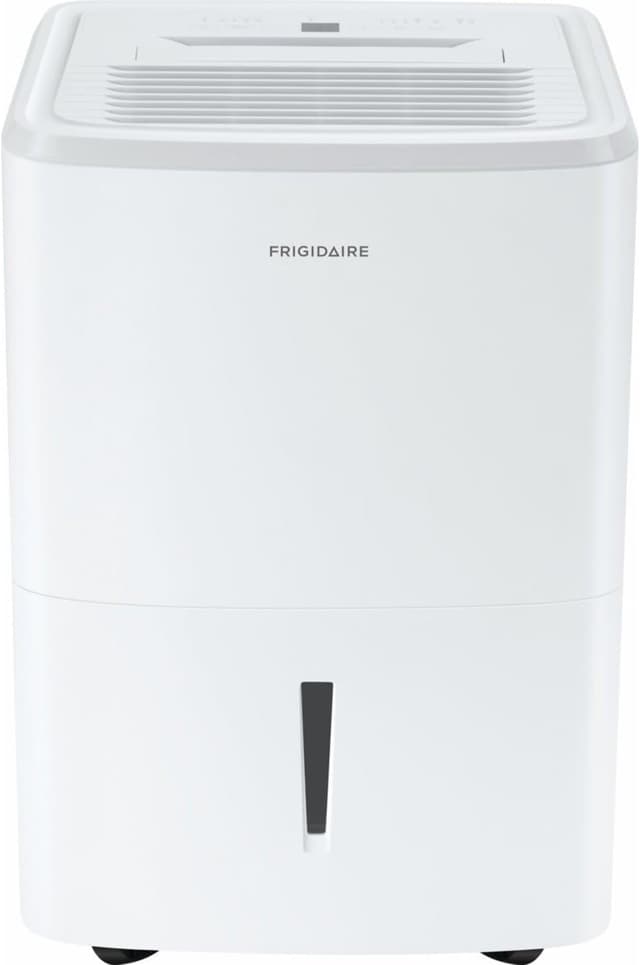
(Current price, subject to change)
- Frigidaire 50 Pint Wi-Fi dehumidifier, model FHDD5034Y1
- 2.7 gallon bucket with a carry handle
- Continuous drain port
- Three fan speeds, 470 watts, 235 CFM
- Washable filter with a clean alert
- Wi-Fi scheduling through the Frigidaire app
The evidence comes with a caveat worth stating first. DehumidifierBuyersGuide reviewed the FHDD5034W1 and addresses the Y1 directly. The Y1 draws 8.8 amps at an Integrated Energy Factor of 2.01. The two are otherwise all but identical, and the review applies just as much to one as the other. Its figure for the Y1 matches the EPA's certified record exactly. That is the strongest cross-check available here: an independent tester and a government database arriving at the same number by different routes.
On speed it took 8 minutes 32 seconds to move a 50-square-foot room from 90 to 40 percent humidity. That is second best of the 16 non-discontinued 50-pint units that outlet has tested. Noise is a better story than the raw numbers suggest. It read 69.8 decibels on high at the control panel and 62.7 on low, falling to 54.4 and 48.2 at ten feet. The outlet rates its noise profile among the most pleasant in the class, crediting a high-airflow top exhaust that masks the compressor. RTINGS has not tested this unit. A staff member named it in September 2026 as a successor to a former top pick. We record that as the expectation it is.
What We Love
- DehumidifierBuyersGuide measured 8 minutes 32 seconds from 90 to 40 percent humidity, second best of the 16 non-discontinued 50-pint units it tested
- Its stated Integrated Energy Factor for this model, 2.01 L/kWh, matches the EPA record exactly — two independent sources landing on one measured number
- 48.2 decibels on low fan measured from ten feet, the quietest ten-foot reading that outlet published for the class
- Three fan speeds against the Cube 50's two, so it has a genuinely quieter setting to sit next to
- That outlet rates its build quality as excellent compared with most compressor dehumidifiers it has tested
What Could Be Better
- 69.8 decibels on high fan at the control panel — loud enough to be a presence in the room you are standing in
- The 2.7 gallon bucket runs about 0.43 days between empties at rated capacity, the shortest interval in this guide
- 24.25 inches wide and tall, or 296 square inches of floor, the largest footprint here
The Verdict
If you have shortlisted a basement unit and quiet matters, you will be well-served here. The Frigidaire 50 Pint Wi-Fi Dehumidifier (FHDD5034Y1), 4,500 Sq. Ft., ENERGY STAR posted the second-fastest time in the chamber test that ranked the Cube 50 first. Its 48.2 dB at ten feet on low is the quietest in that class here. Its 4.5 DGH Damp-Dorm Fit Score reflects one thing: at 24 inches tall it never suited a bedroom.
How We Score: DGH Damp-Dorm Fit Score
DGH Damp-Dorm Fit Score
Score Formula
additive composite (0-10), five components of 0-2. Sizing fit = 2 if ENERGY STAR measured capacity is 25 pints/day or less, else 2 - 0.06 x (capacity - 25), floored at 0. Floor footprint = 2 x (smallest depth x width in the roster) / (this depth x width). Height = 2 x (shortest height in the roster) / (this height). Tank endurance = 2 x (this days-per-empty) / (best days-per-empty), where days = tank gallons x 8 / ENERGY STAR measured capacity. Running cost = 2 x (lowest ENERGY STAR kWh/yr in the roster) / (this kWh/yr).Score Factors
- Right-Sized for a Dorm (2 points)EPA ENERGY STAR measured capacity under DOE Appendix X1, never the pint number on the box. Full marks at or below 25 pints a day, then 0.06 off per pint above. The measured figures are 20.16 for the Cube 20, 22.57 for the Frigidaire 22, 35.82 for the Cube 35, 49.67 for the Cube 50 and 49.71 for the Frigidaire 50. RTINGS sizes those classes at roughly 400, 800 and 1,200 square feet, against a dorm's 100 to 250. It warns that an oversized unit makes small rooms feel hot and stuffy.
- Floor Footprint (2 points)Depth times width from each ASIN's listing, scored against the smallest in the roster. The Frigidaire 22 is smallest at 176 square inches, then the Cube 20 at 182, both Midea Cube 35 and 50 at 213, and the Frigidaire 50 at 296. Floor area is the scarcest resource in a shared room, and unlike capacity it cannot be traded against anything.
- Height (2 points)Listing height, scored against the shortest here. The Cube 20 at 13.54 inches is the only unit that clears a standard dorm desk. The Cube 35 and 50 stand 14.96, the Frigidaire 22 is 19.78, and the Frigidaire 50 is 24.25. A unit that fits under the desk is out of the walkway, which is a different question from how much floor it covers.
- Tank Endurance (2 points)Tank gallons times eight pints, divided by the ENERGY STAR measured capacity — days between empties at rated capacity. That works out to 1.27 days for the Cube 20 and 0.94 for the Cube 35. The Cube 50 gives 0.68, the Frigidaire 22 0.60, and the Frigidaire 50 0.43. Rated capacity is the lab condition; a real room at moderate humidity stretches every interval. It is a comparative index, not a promise, and it matters because a dorm has no floor drain to run a hose into.
- Running Cost (2 points)ENERGY STAR annual consumption, scored against the lowest in the roster. The figures are 249 kWh/yr for the Cube 20, 283 for the Frigidaire 22, 378 for the Cube 35, 515 for the Cube 50 and 521 for the Frigidaire 50. Many halls cap or bill electricity, and the gap between the top and bottom of that list is more than double.
DGH Damp-Dorm Fit Score — Ranked
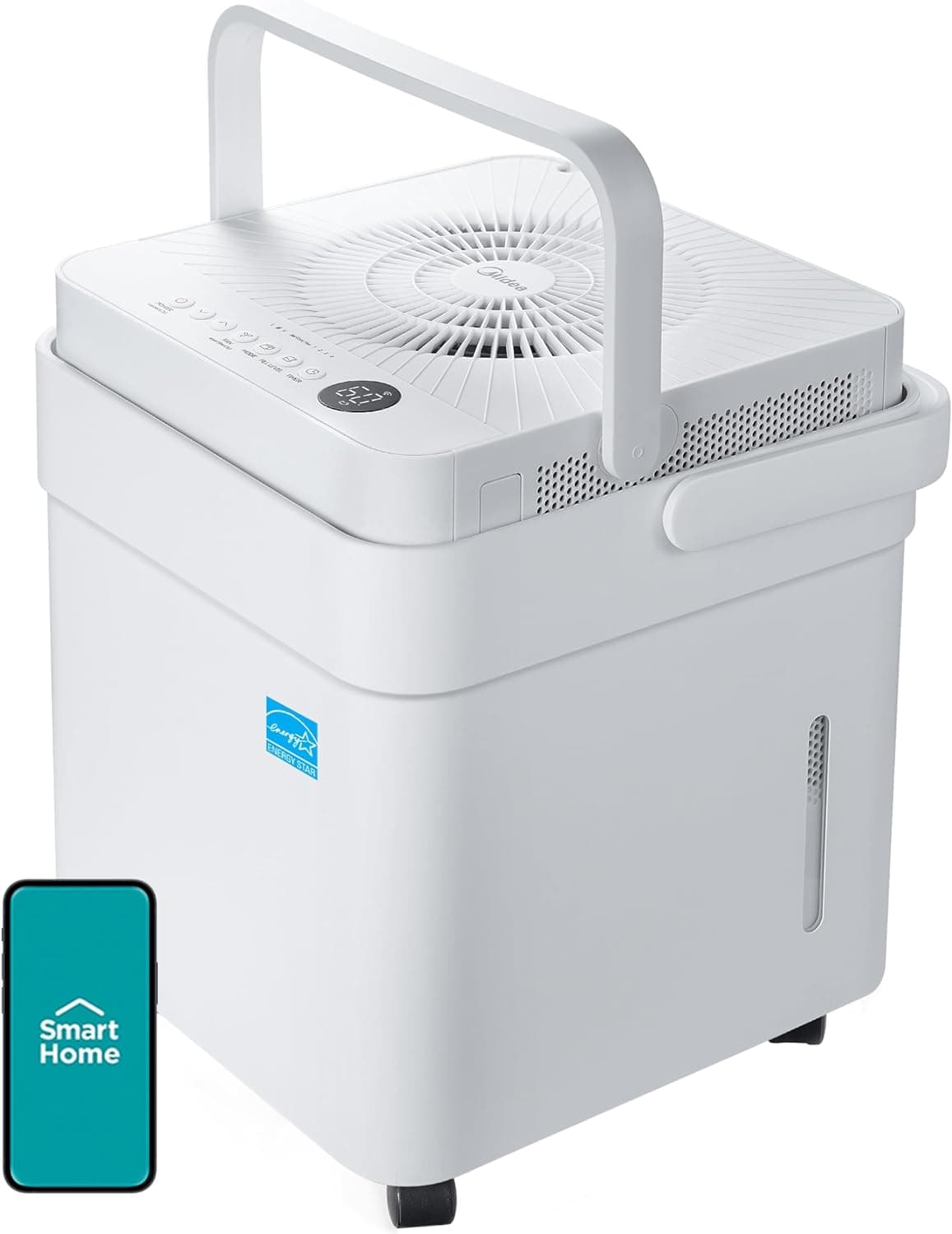
Midea Cube 20 Pint Dehumidifier (MAD20S1QWT), 1,500 Sq. Ft., ENERGY STAR
9.9/10The only unit that wins on all five dorm factors: right-sized, short, long tank interval, cheapest to run
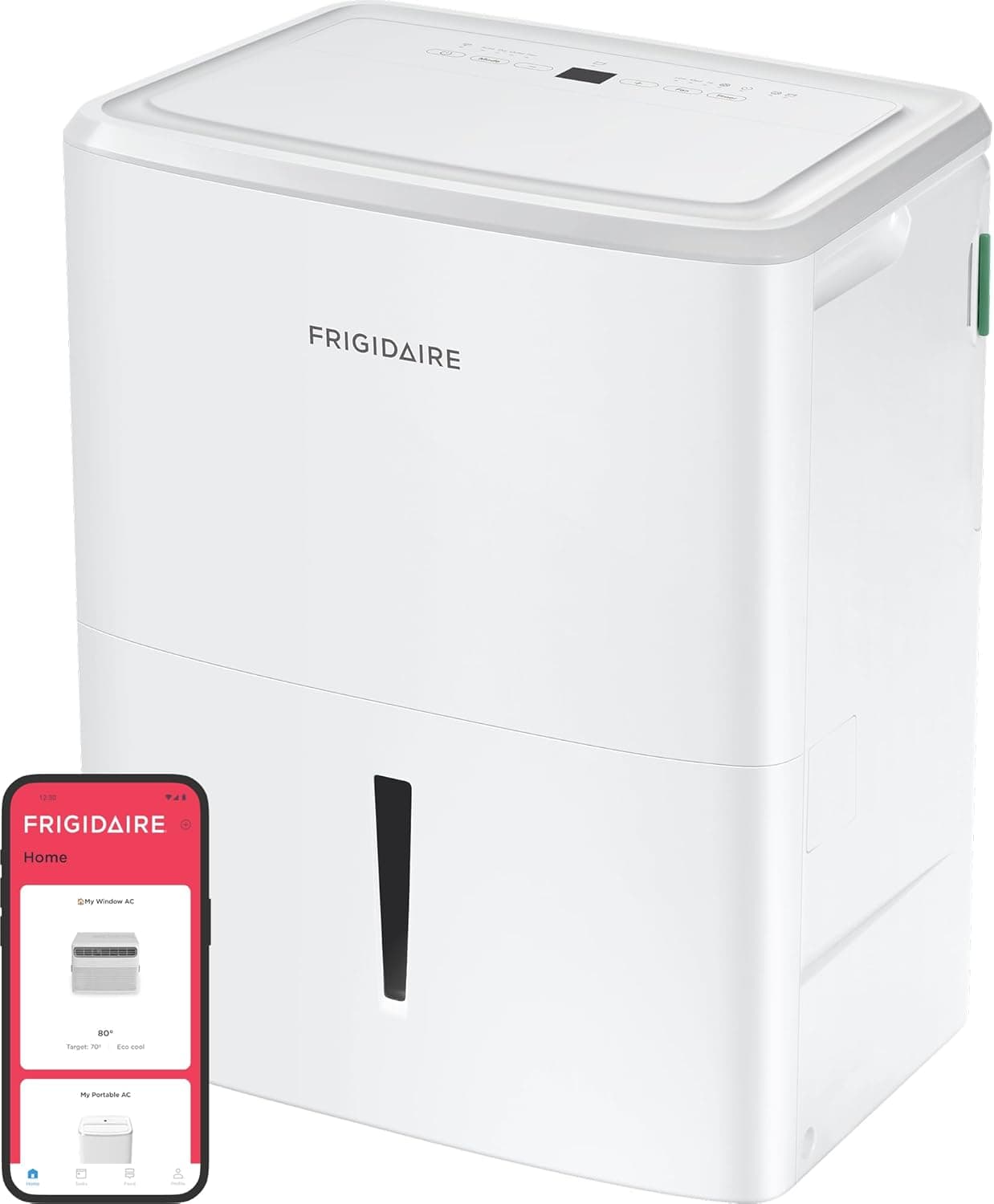
Frigidaire 22-Pint Wi-Fi Dehumidifier (FHDD2234W1), 1,500 Sq. Ft., ENERGY STAR
8.1/10Smallest floor area and right-sized capacity, held back by a 1.7 gallon bucket and 19.78 inches of height
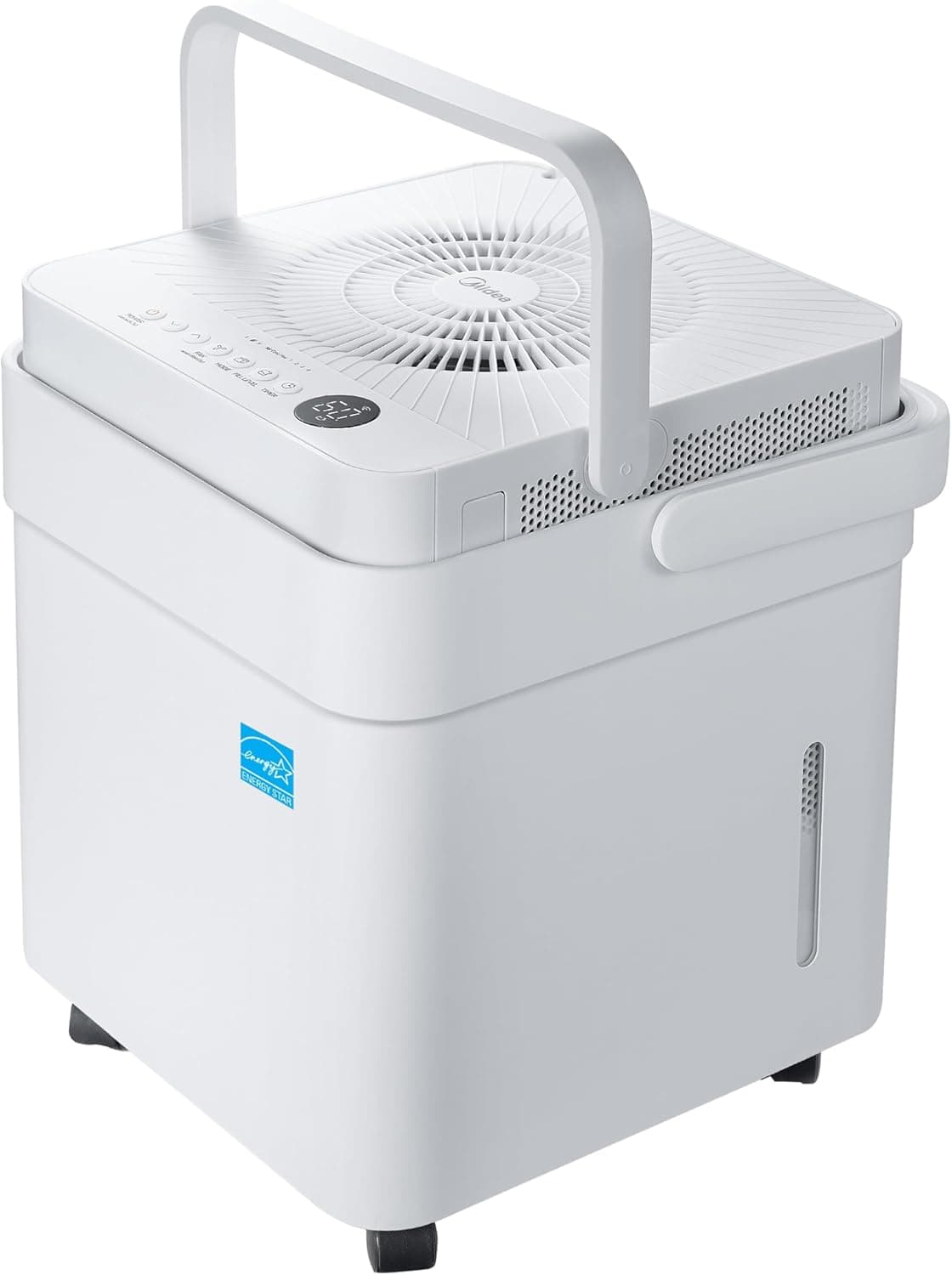
Midea Cube 35 Pint Dehumidifier (MAD35S1QWT-A), 3,500 Sq. Ft., ENERGY STAR
7.6/10Best-evidenced machine here, scored down only for being sized for roughly 800 square feet
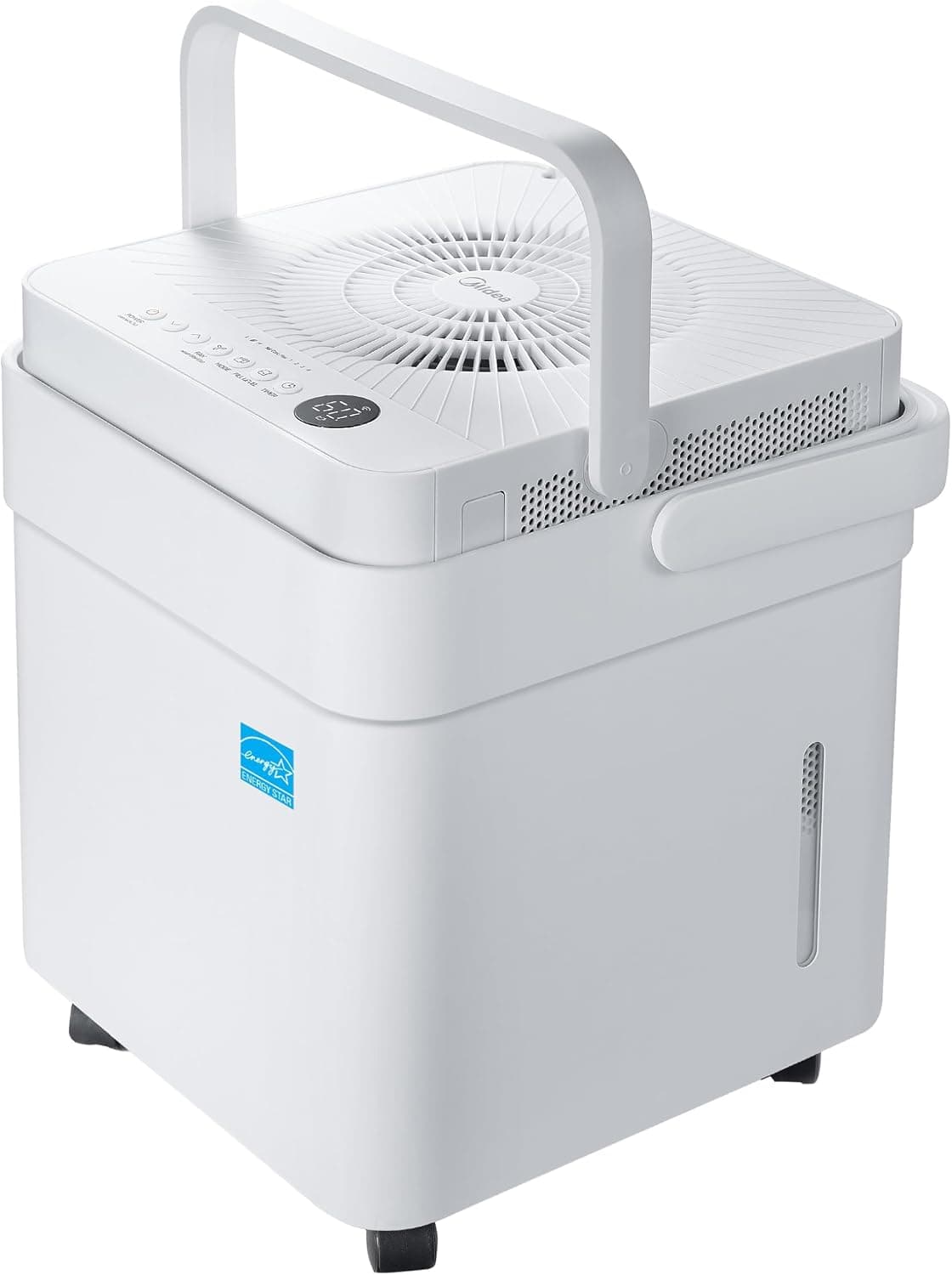
Midea Cube 50 Pint Dehumidifier (MAD50S1QWT-A), 4,500 Sq. Ft., ENERGY STAR
6.0/10The fastest unit in this guide, and roughly five times the capacity a single bedroom needs
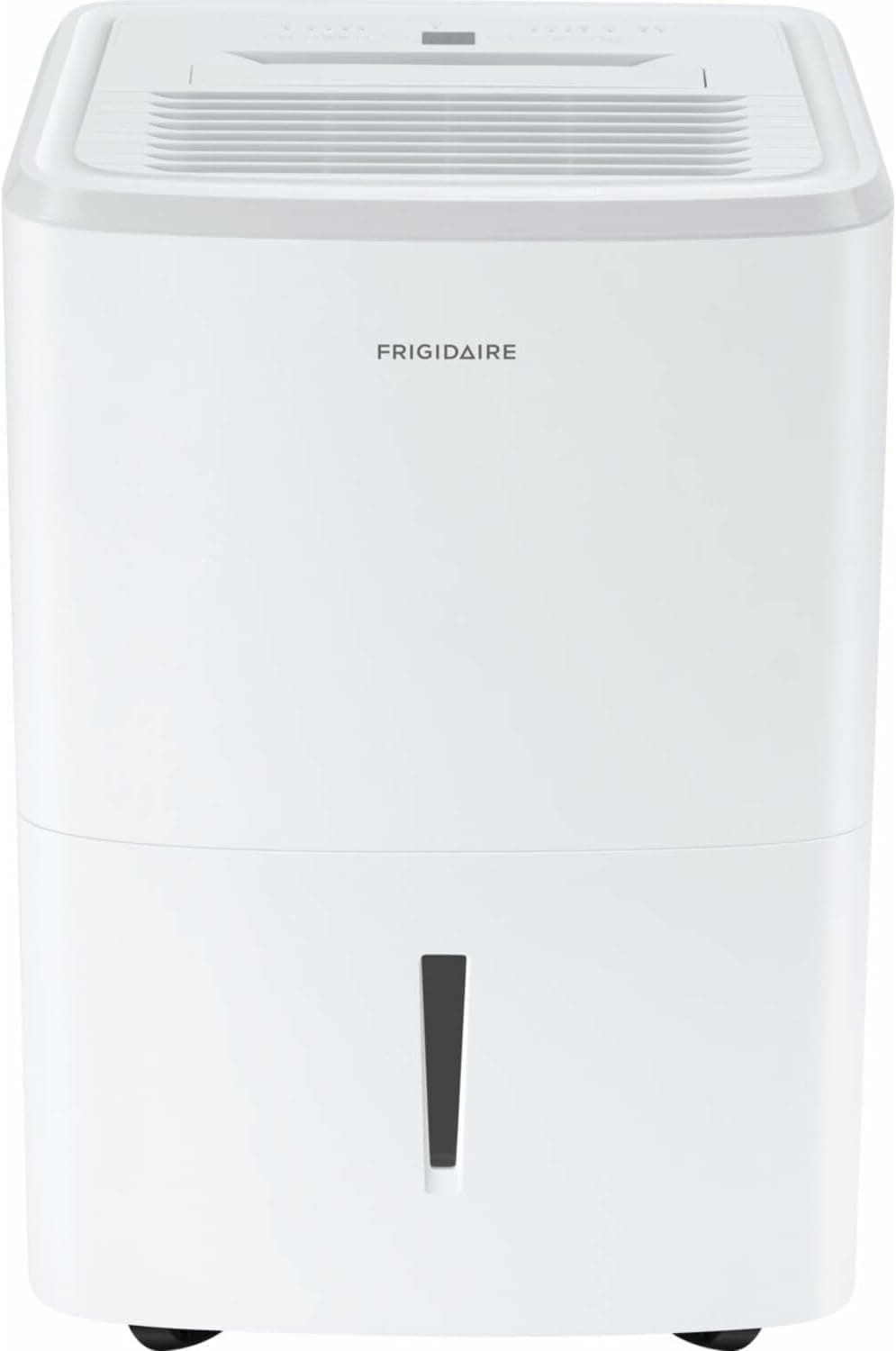
Frigidaire 50 Pint Wi-Fi Dehumidifier (FHDD5034Y1), 4,500 Sq. Ft., ENERGY STAR
4.5/10Basement capacity in the largest and tallest body here, with the shortest gap between empties
DGH Damp-Dorm Fit Score
Composite of right-sized capacity, floor footprint, height, tank endurance and running cost — weighted for a 150 sq ft room with no floor drain
DormGearHQ analysis of EPA ENERGY STAR certified data and Amazon listing specifications, captured 2026-09-18
Matching the Unit to Your Room: Size, Drain and Outlet
Read the score column and one thing needs saying out loud: a low DGH Damp-Dorm Fit Score is not a bad dehumidifier. The Frigidaire 50 sits at 4.5 and, compared to every other unit here, posted the second-fastest clearing time anyone has measured. It scores low because this composite asks a single question, which is how well a machine suits a small bedroom. Three facts about your own room settle it faster than any specification. The first is square footage, because capacity should match the space rather than exceed it. The second is whether a drain exists. With one nearby, tank size stops mattering, and continuous drainage delivers the hands-off setup that makes a 50-pint unit easy to live with. The third is where the unit can physically stand. A desk with 14 inches of clearance turns the Cube 20 into furniture you stop noticing, while 24 inches of Frigidaire has to go somewhere you will walk past.
| Product | Right-sized for a dorm bedroom | Fits under a standard desk | Over a day between empties | Nests or collapses for storage | Independently lab-tested |
|---|---|---|---|---|---|
| midea-cube-20-dehumidifier | ✓ | ✓ | ✓ | ✓ | ✓ |
| frigidaire-22-pint-wifi-dehumidifier | ✓ | – | – | – | – |
| midea-cube-35-dehumidifier | – | – | – | ✓ | ✓ |
| midea-cube-50-dehumidifier | – | – | – | ✓ | ✓ |
| frigidaire-50-pint-wifi-dehumidifier | – | – | – | – | ✓ |
When NOT to Buy
Search this category and the first results are small white boxes at 57 to 95 dollars. None is in this guide, and the reason is performance rather than price. These units are thermoelectric, or Peltier, moving moisture with a solid-state plate rather than a compressor. RTINGS tested the class and its summary is blunt: its top small pick will be very slow at removing moisture from even modestly sized rooms. The scale gap is the point. Compressor units here are measured by the EPA at between 20 and 50 pints a day, whereas a thermoelectric mini is rated in ounces. For a single damp closet or a gun safe, a desiccant box remains the appropriate tool, and it produces a perfectly satisfactory result in that particular space.
Which Capacity: 20, 35 or 50 Pints
Capacity drives the DGH Damp-Dorm Fit Score more than any other factor, and there are two numbers to keep apart. RTINGS sizes a 20-pint unit for approximately 400 square feet, a 35-pint for 800, and a 50-pint for 1,200. Manufacturers on these identical listings claim 1,500, 3,500 and 4,500 square feet for the same three capacity classes. Both figures appear on this page and we have deliberately not blended them, because they answer different questions. Relative to the marketing ceiling, the RTINGS figures are the conservative ones, and choosing on them produces a machine that clears the room it was bought for.
For a single dorm bedroom of 100 to 250 square feet, the 20-pint category is the answer and the remainder of this page is context. Escalate to the Cube 35 when dehumidifying more than one room. A suite common area, or a ground-floor apartment with a persistently wet wall, occupies that bracket. Escalate to a 50-pint only for a basement or a large open floor, and ideally only where a floor drain exists. At that capacity you would otherwise empty a bucket twice daily. Versus a correctly sized unit, the penalty for oversizing is not merely financial. Heat output scales predictably with capacity, so an oversized machine warms the room it is dehumidifying. The ENERGY STAR running cost also moves from 249 kilowatt-hours a year to 521 across this guide.
Who Should Buy What
Who Should Buy What
| If you are… | Recommended pick |
|---|---|
One damp dorm bedroom, no drain Your room is 100 to 250 sq ft and every drop is carried to a sink. Right-sized, fits under the desk, about 1.27 days between empties | Midea Cube 20 Pint Dehumidifier (MAD20S1QWT), 1,500 Sq. Ft., ENERGY STAR |
Floor space is the real constraint Two beds, two desks and a walkway leave 12 inches of clear floor. The least floor area here, at 176 sq in on an 11.34-inch depth | Frigidaire 22-Pint Wi-Fi Dehumidifier (FHDD2234W1), 1,500 Sq. Ft., ENERGY STAR |
Suite, common room or a wet wall The damp is bigger than one bedroom and you want the deepest test record — RTINGS' Best Upper Mid-Range pick, with a HouseFresh lab run behind it | Midea Cube 35 Pint Dehumidifier (MAD35S1QWT-A), 3,500 Sq. Ft., ENERGY STAR |
Basement, and you want it dry fast You have a floor drain and a real moisture problem — the fastest 50-pint DehumidifierBuyersGuide has tested, and it runs bucketless on a hose | Midea Cube 50 Pint Dehumidifier (MAD50S1QWT-A), 4,500 Sq. Ft., ENERGY STAR |
Basement you would rather not visit The unit lives downstairs and you want the quietest big machine — 48.2 dB at ten feet on low, and second-fastest in that chamber test | Frigidaire 50 Pint Wi-Fi Dehumidifier (FHDD5034Y1), 4,500 Sq. Ft., ENERGY STAR |
Frequently Asked Questions
What size dehumidifier does a dorm room actually need?
The 20-pint class. RTINGS sizes a 20-pint unit for rooms up to about 400 square feet from a starting humidity near 60 percent, and a dorm room is typically 100 to 250. Manufacturers on these same listings claim 1,500 square feet for the identical class, which is a marketing ceiling rather than a working figure. Going larger is not a safe default either: RTINGS warns that heat output scales with capacity and an oversized unit will make smaller rooms feel hot and stuffy. Running cost scales too, from 249 kilowatt-hours a year for the 20-pint Cube to 521 for the 50-pint Frigidaire.
Will a $60 mini dehumidifier work in my room?
Almost certainly not, and the reason is the technology rather than the price. Those units are thermoelectric, or Peltier. RTINGS says of its own top small pick that it will be very slow at removing moisture from even modestly sized rooms. It describes the class as suited to a closet, a cabinet or an RV. The compressor units in this guide are measured by the EPA at 20 to 50 pints a day; a Peltier mini is rated in ounces. For one damp closet or a gun safe they are the correct tool. For a room with a sweating window and mildew on a wall, they are not.
How often will I be emptying the tank?
Less often than the numbers here suggest, but the ranking holds. Dividing tank volume by measured capacity gives days between empties at rated capacity. That is about 1.27 for the Midea Cube 20 and 0.94 for the Cube 35. The Cube 50 gives 0.68, the Frigidaire 22 0.60, and the Frigidaire 50 0.43. Those are full-load lab conditions. A real room sitting at moderate humidity draws far less water, so every interval stretches, often by a lot. Treat the figures as a comparison between machines rather than a schedule. If a floor drain is within hose reach, tank size stops mattering entirely.
Are dehumidifiers allowed in dorm rooms?
Usually yes, but check your own housing contract before buying, because rules are set per institution and we cannot verify yours. Dehumidifiers are generally treated differently from the appliances halls commonly ban, since they have no exposed heating element and no open flame. The questions that do come up are electrical draw and water. These units pull between 214 and 490 watts on their listings, so they want a wall outlet rather than a shared extension lead. Anything with a tank should sit where a spill will not reach electronics. If your room already has a documented damp or mould problem, tell housing first: the repair may be theirs to make.
Why do you use ENERGY STAR capacity instead of the pint number on the box?
Because the box number depends on conditions the maker chooses. DehumidifierBuyersGuide documents the practice directly. It reports an AEOCKY model rated at 80 pints a day whose actual capacity is nearer 25, and a Vellgoo rated at 70 that delivers 22. Both are quoted at around 95 degrees and 95 percent humidity. The EPA's ENERGY STAR database publishes a measured result per exact model number under one DOE test procedure, which makes the figures comparable. Every capacity number in our scoring comes from there: 20.16, 22.57, 35.82, 49.67 and 49.71 pints a day for the five units here.
Will a dehumidifier stop mould in my room?
It removes the condition mould needs rather than the mould itself. Keeping a room in the 40 to 50 percent humidity range is what these machines are for, and every unit here has an adjustable humidistat to hold a target. What a dehumidifier cannot do is fix a leak, a failed seal or a cold bridge in an outside wall. A unit running constantly against real water ingress is treating a symptom. Clean any existing growth before you start, and keep the filter washed, since a blocked filter cuts airflow and the machine quietly gets worse at its job.
Bottom Line
Get the Midea Cube 20 Pint Dehumidifier (MAD20S1QWT), 1,500 Sq. Ft., ENERGY STAR if the problem is one dorm bedroom and there is no drain — 20.16 measured pints a day, 13.54 inches tall, about 1.27 days between empties, $179.91.
Get the Frigidaire 22-Pint Wi-Fi Dehumidifier (FHDD2234W1), 1,500 Sq. Ft., ENERGY STAR if floor area is the binding constraint — 176 square inches on an 11.34-inch depth, the smallest base here, $189.00.
Get the Midea Cube 35 Pint Dehumidifier (MAD35S1QWT-A), 3,500 Sq. Ft., ENERGY STAR if you are drying a suite or a wet ground floor and want the deepest test record — RTINGS' Best Upper Mid-Range pick at $219.97.
Get the Midea Cube 50 Pint Dehumidifier (MAD50S1QWT-A), 4,500 Sq. Ft., ENERGY STAR if it is a basement and you want it dry fastest — 7 minutes 39 seconds on the reference test, on 512 watts, $249.99.
Get the Frigidaire 50 Pint Wi-Fi Dehumidifier (FHDD5034Y1), 4,500 Sq. Ft., ENERGY STAR if the unit lives downstairs and you want the quietest of the big machines — second-fastest in that same test, $255.55.
Skip all five if your damp comes from a leak, a failed window seal or a cold outside wall rather than from the air. A dehumidifier will run continuously, cost you between 249 and 521 kilowatt-hours a year, and never fix the cause. That repair belongs to your landlord or housing office, and is worth a maintenance request before a purchase.
Sources & Methodology
Methodology: DGH Damp-Dorm Fit Score — Formula: additive composite (0-10), five components of 0-2. Sizing fit = 2 if ENERGY STAR measured capacity is 25 pints/day or less, else 2 - 0.06 x (capacity - 25), floored at 0. Floor footprint = 2 x (smallest depth x width in the roster) / (this depth x width). Height = 2 x (shortest height in the roster) / (this height). Tank endurance = 2 x (this days-per-empty) / (best days-per-empty), where days = tank gallons x 8 / ENERGY STAR measured capacity. Running cost = 2 x (lowest ENERGY STAR kWh/yr in the roster) / (this kWh/yr).. Factors: Right-Sized for a Dorm (2 points) · Floor Footprint (2 points) · Height (2 points) · Tank Endurance (2 points) · Running Cost (2 points). Full factor definitions appear in the How We Score section above.
Expert review sources used in this analysis:
- We aggregated independent expert testing with EPA certification data and live Amazon availability checks, verified September 2026
- Consensus scores follow a fixed band rubric written before any score was assigned
- A 9.0 means a named number-one pick by an independent testing outlet, backed by published measured numbers and EPA data
- An 8.5 means measured numbers exist for the exact model, or for a sibling the outlet itself states is equivalent
- A 7.0 means EPA measured data is the only third-party record
- Each independent outlet that first-hand tested the exact model adds 0.1, capped at 0.3
- The DGH Damp-Dorm Fit Score uses only EPA ENERGY STAR measured capacity and annual consumption, plus dimensions and tank volume from each listing
- No opinion score is an input
- Prices are the Amazon.com listing price captured 2026-09-18 (UTC) for the exact model linked, and are the figures shown on this page
- This site's price syncing runs manually rather than on a schedule, so treat every figure as a capture and confirm before buying
- Where sources disagree we say so on the page rather than averaging
- HouseFresh lists the Midea Cube bucket at 4.35 and 6.25 gallons against the listings' 4.2
- The Cube 50's airflow is measured at 430 CFM by one tester against 253 on its listing
- One product, the Frigidaire 22-Pint, has no independent laboratory test of its exact model and is marked as such in its own section
- Sources consulted, as plain text
- ENERGY STAR (U.S
- Environmental Protection Agency), "ENERGY STAR Certified Dehumidifiers", dataset mgiu-hu4z, data.energystar.gov
- Queried per exact model number on 2026-09-18 for MAD20S1QWT, FHDD2234W1, MAD35S1QWT-A, MAD50S1QWT-A and FHDD5034Y1
- Fields used: water removal capacity per DOE Appendix X1, integrated energy factor, annual energy consumption
- RTINGS, "The 5 Best Dehumidifiers of 2026" (updated Aug 25, 2026), rtings.com/dehumidifier/reviews/best/dehumidifiers
- RTINGS, "The 3 Best Small Dehumidifiers of 2026" (updated Jul 27, 2026), rtings.com/dehumidifier/reviews/best/small
- RTINGS' per-model numeric test results sit behind its membership; only its public verdicts, score panels, buyer's-guide figures and staff comments are cited
- DehumidifierBuyersGuide, "Midea Cube Review", dehumidifierbuyersguide.com/midea-cube-review
- DehumidifierBuyersGuide, "Frigidaire FHDD5034W1 and FHDD5034Y1 Review", dehumidifierbuyersguide.com/frigidaire-fhdd5034w1-review
- DehumidifierBuyersGuide, "Small Dehumidifier Reviews, 20, 22 Pint", dehumidifierbuyersguide.com/low-capacity-dehumidifier-reviews
- HouseFresh, "The best dehumidifiers you can buy in 2026", housefresh.com/best-dehumidifiers-we-tested
- Tom's Guide, "We've tested the best dehumidifiers and these are the 3 I recommend right now", tomsguide.com/home/home-appliances/best-dehumidifiers
- Amazon.com product listings for each of the five units, captured 2026-09-18 for price, availability, dimensions, tank volume and model number
- All checked 2026-09-18.
Nicholas Miles is the founder of DormGearHQ and a longtime smart home enthusiast focused on helping everyday homeowners make better technology decisions. He researches, compares, and writes about products across security, climate, lighting, leak prevention, sensors, home energy, and automation, with an emphasis on real-world usefulness, ecosystem compatibility, reliability, privacy, and long-term value.
Affiliate disclosure: DormGearHQ earns affiliate commissions on qualifying Amazon purchases. Our scoring methodology is independent of affiliate relationships.